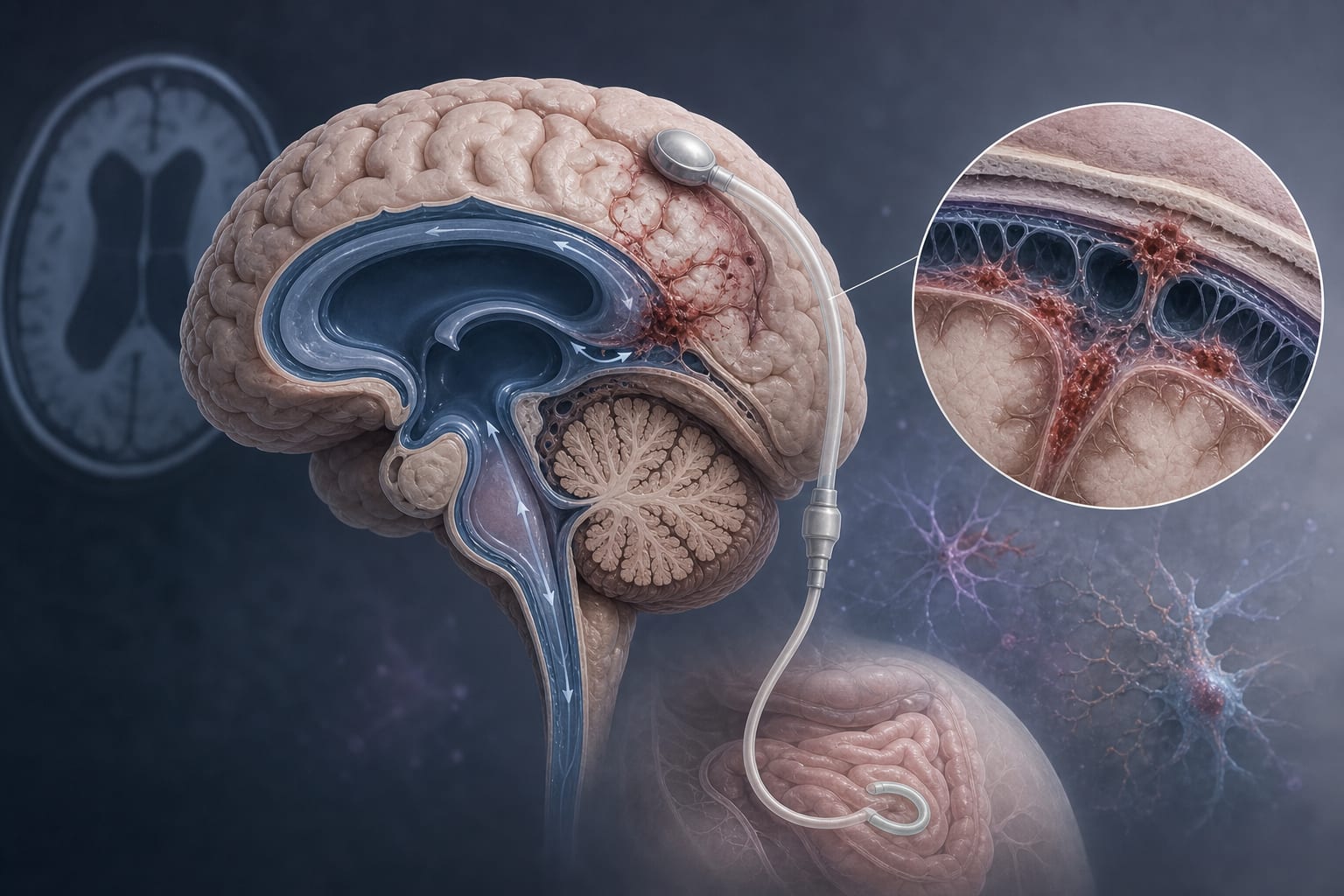
Post-traumatic hydrocephalus in adults: the mechanisms of development, predictors of progression and management strategies. A narrative review and case series analysis - Summary - MDSpire
Advertisement
Post-traumatic hydrocephalus in adults: the mechanisms of development, predictors of progression and management strategies. A narrative review and case series analysis
To discuss and examine the mechanisms of post-traumatic hydrocephalus (PTH) development in adults, predictors of its outcome/progression, and the modalities and effectiveness of its surgical management.
Approach:
Literature Review: A comprehensive review of relevant literature on PTH.
Retrospective Analysis: A single-center retrospective analysis of a cohort of adult PTH patients over 1 year.
Key Findings:
PTH occurred in 20 (21.05%) out of a series of 95 patients who sustained a TBI for 1 year.
Acute subdural hematoma was present in 14 (70.0%) of PTH patients.
Midline shift/cisternal compression was found in 13 (65.0%) of PTH patients.
Low admission Glasgow Coma Score (GCS), severe TBI, and older age correlated with increased intracranial pressure (ICP) and unfavorable outcomes.
Interpretation:
Low admission GCS, acute subdural hematoma, brain edema, elevated ICP, and older age are strong predictors of unfavorable outcomes in TBI patients who develop PTH.
Limitations:
The study is based on a single-center retrospective analysis, which may limit generalizability.
The clinical presentation of PTH is often atypical, complicating diagnosis.
Conclusion:
Only PTH patients with increased ICP require unconditional surgery, while those with chronic symptoms may be observed for progression.