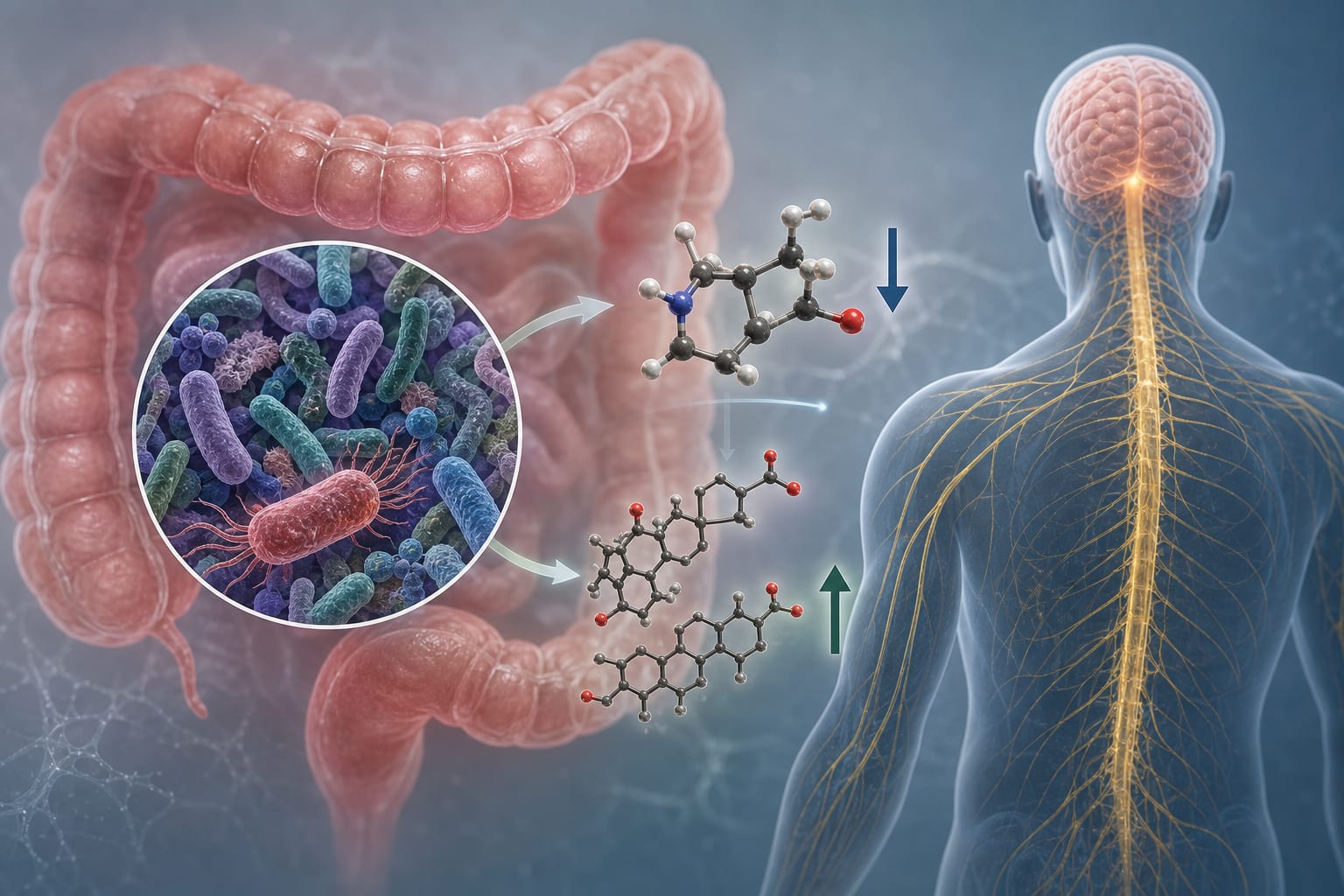
To evaluate the association between gut microbiota structure and serum metabolic profile in Guillain-Barré syndrome (GBS), with implications for understanding disease mechanisms.
Key Findings:
GABA metabolism was significantly increased (approximately 14.3-fold) in GBS subjects.
Multiple secondary cholic acids, including methyl deoxycholate, glycodeoxycholic acid, glycolithocholic acid, taurolithocholic acid, and coprocholic acid, were significantly decreased in GBS subjects.
Certain gut microbes, including Ligilactobacillus salivarius and Klebsiella pneumoniae, were more abundant in GBS subjects.
Correlation analysis revealed associations between changes in GABA and specific gut microbes.
Interpretation:
GABA metabolism and secondary cholic acid metabolism disturbances in GBS may result from gut microbiota dysbiosis, with potential implications for inflammatory responses and clinical management.
Limitations:
The study does not establish causation between gut microbiota changes and GBS.
The sample size and diversity of subjects may limit the generalizability of findings.
Potential biases in sample selection could affect the results.
Conclusion:
The findings suggest that GABA may serve as a promising biomarker for GBS diagnosis, and modulation of gut microbiota might influence the clinical course of GBS, warranting further research.