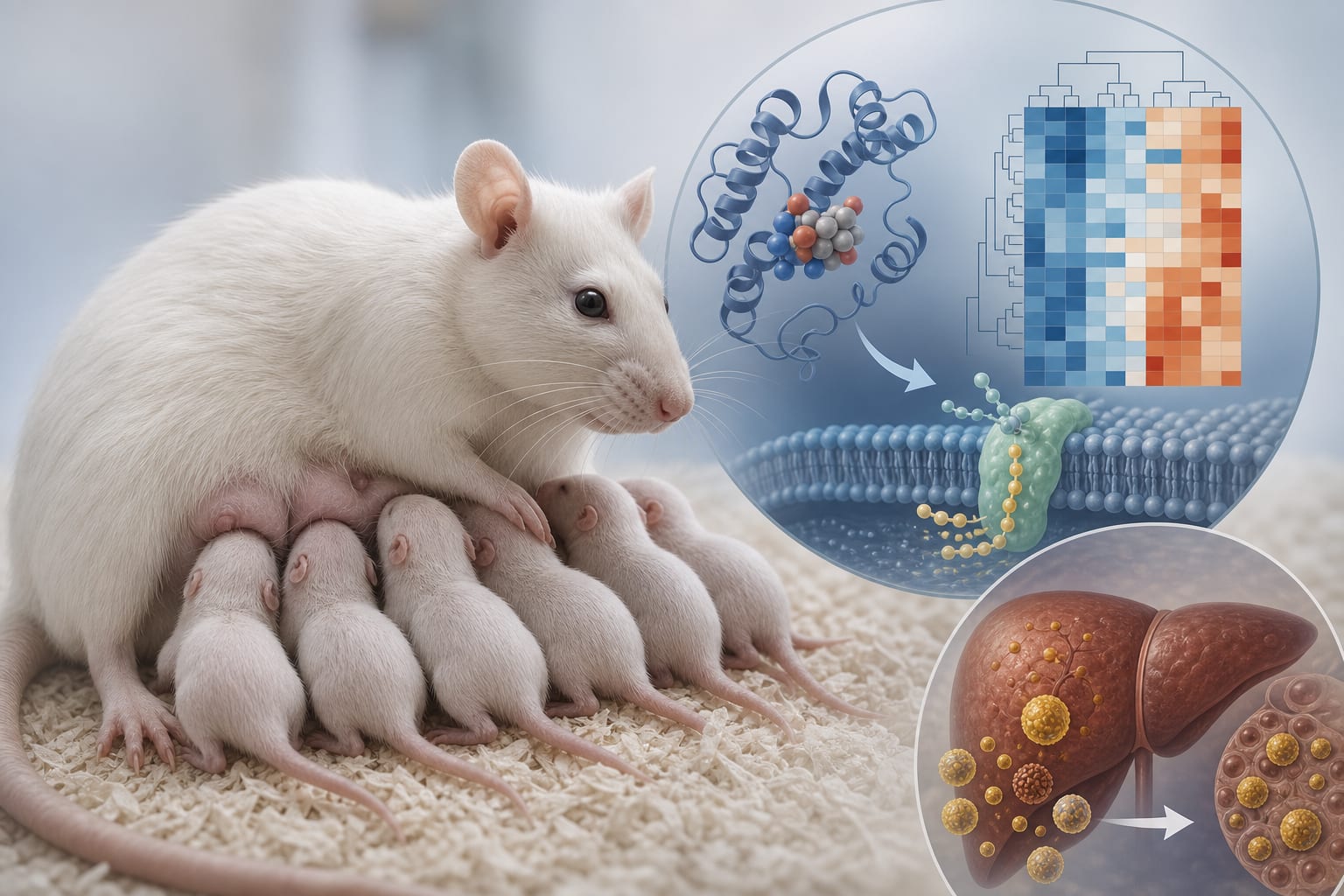
To investigate the effects of maternal dietary restriction after childbirth on growth and lipid metabolism in Sprague-Dawley rat offspring and explore underlying mechanisms through transcriptomic analysis.
Key Findings:
EUGR pups exhibited significantly lower body weight and length compared to controls (p < 0.01).
Serum triglycerides were reduced in EUGR rats (p < 0.05), while total cholesterol and HDL-C were elevated.
rhIGF-1 treatment did not improve growth but significantly reduced HDL-C levels compared to PBS treatment.
Liver transcriptomics showed altered expression of lipid-metabolism genes, with increased LPL expression in EUGR animals.
In vitro, LPL overexpression downregulated lipogenic genes ACACA and SCD (p < 0.01).
Interpretation:
Maternal dietary restriction leads to EUGR characterized by growth impairment and dyslipidemia, with rhIGF-1 modulating HDL-C levels but not improving growth outcomes.
Limitations:
The study was conducted in a rat model, which may not fully replicate human conditions due to differences in metabolism and growth patterns.
The effects of rhIGF-1 on long-term metabolic outcomes were not assessed.
Conclusion:
Maternal dietary restriction induces EUGR in rats, with significant implications for lipid metabolism, particularly through the LPL/ACACA/SCD pathway.