Two cases of pancytopenia characterized by severe neutropenia induced by anti-PD-1 tislelizumab combined with chemotherapy in non-small cell lung cancer patients and a literature review - Summary - MDSpire
Advertisement
Two cases of pancytopenia characterized by severe neutropenia induced by anti-PD-1 tislelizumab combined with chemotherapy in non-small cell lung cancer patients and a literature review
To report cases of immune-related pancytopenia following treatment with tislelizumab and chemotherapy in patients with non-small cell lung cancer.
Approach:
Case Presentation: Two patients with non-small cell lung cancer treated with tislelizumab and chemotherapy developed immune-related pancytopenia after several treatment cycles, leading to severe complications.
Key Findings:
Both patients experienced grade 4 neutropenia, grade 3–4 thrombocytopenia, and grade 3 anemia.
Case 1 had concomitant immune-related hepatitis, while Case 2 presented with immune-related mucositis and renal insufficiency.
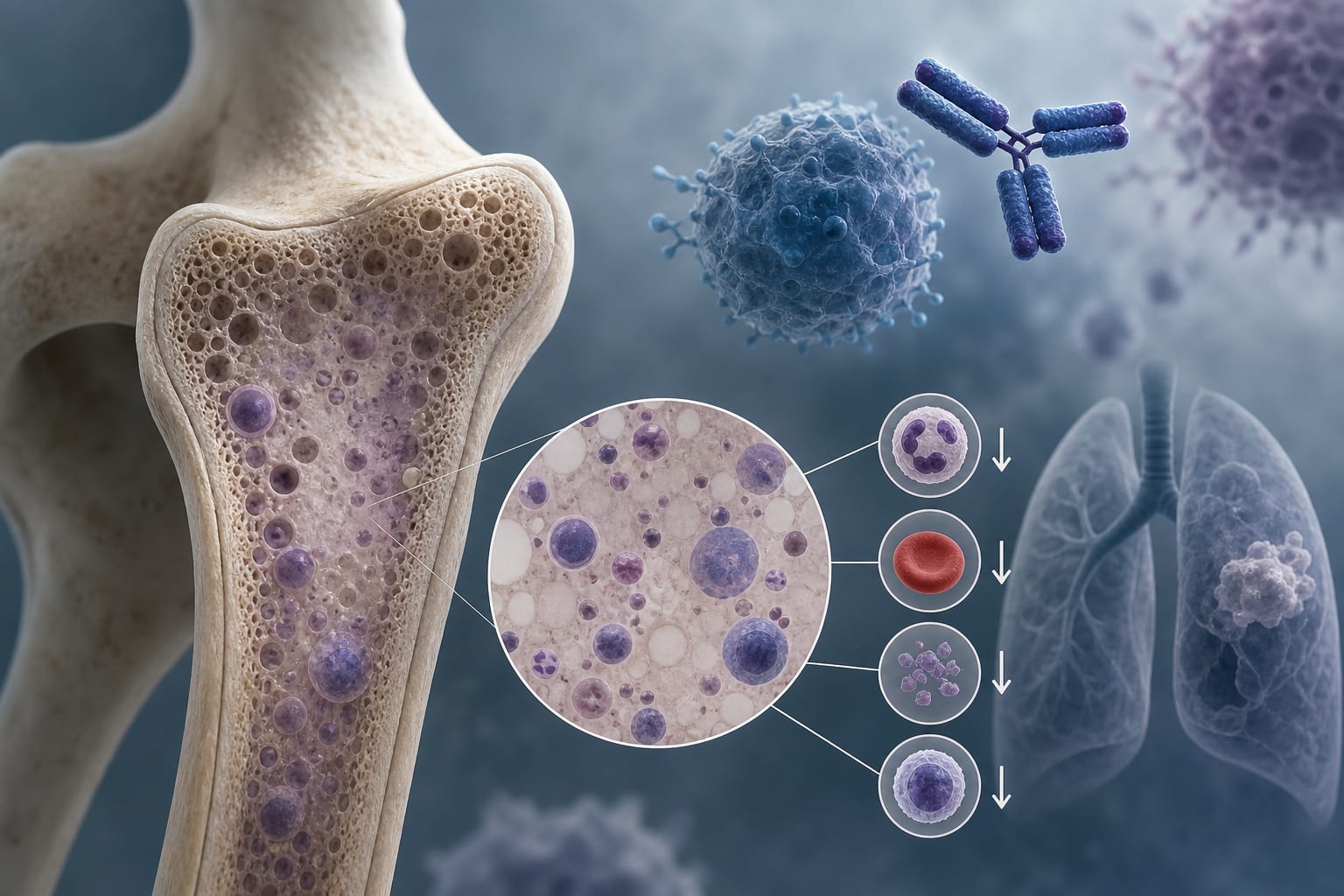
Bone marrow examination in Case 1 showed hypocellular marrow with increased mature lymphocytes.
Despite treatment with G-CSF, thrombopoietin, transfusions, and corticosteroids, grade 4 neutropenia persisted.
Both patients ultimately died from multiple organ dysfunction syndrome.
Interpretation:
Immune-related hematologic adverse events, although rare, can occur following ICI treatment and may lead to severe complications and high mortality.
Limitations:
The management of hematologic irAEs is not well-established.
Differentiation between hem-irAEs and chemotherapy-induced myelosuppression can be challenging.
Conclusion:
Clinicians should monitor blood cell counts regularly and intervene promptly to prevent severe complications from immune-related adverse events.