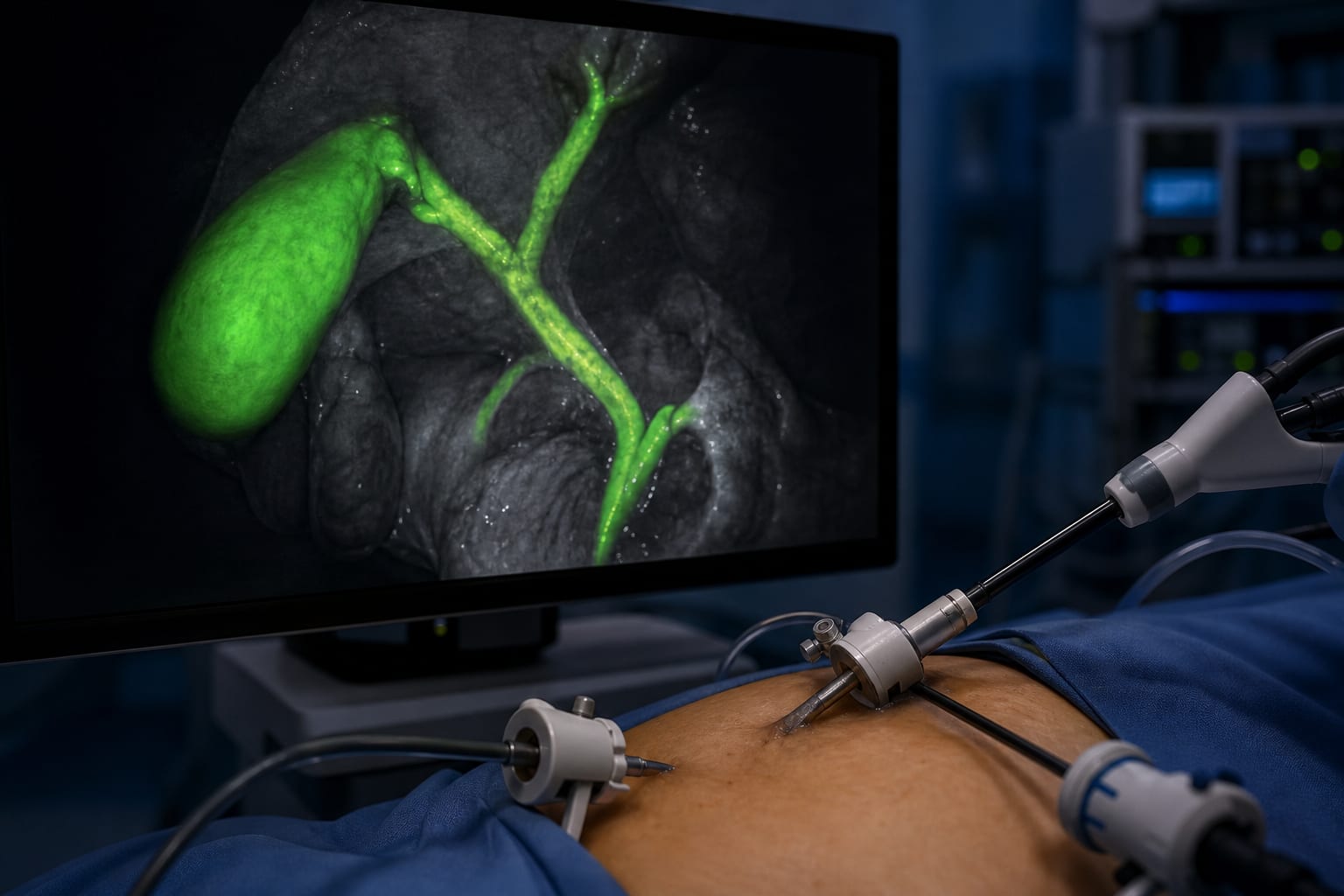
To evaluate surgical difficulty in laparoscopic cholecystectomy (LC) following endoscopic treatment of choledocholithiasis, focusing on the effect of the interval between ERCP and LC.
Approach:
Study Population: Retrospective review of 1008 patients who underwent LC, with 193 patients having choledocholithiasis and preoperative ERCP included in the analysis.
Diagnosis and Therapeutic Strategy: Preoperative imaging was performed, and patients with acute cholecystitis were managed conservatively before elective surgery.
Definition of Difficult Cholecystectomy: Defined by conversion to open surgery, subtotal cholecystectomy, operative time ≥ 180 min, or intraoperative blood loss ≥ 300 mL.
Statistical Analysis: Used logistic regression and ROC curve analysis to identify factors associated with difficult cholecystectomy.
Key Findings:
Median age of patients was 67 years; 57.5% were men.
14.0% of patients had an operative time ≥ 180 min; 3.6% experienced intraoperative blood loss ≥ 300 mL.
49 patients (25.4%) met the criteria for difficult cholecystectomy.
Operative time was significantly longer in the middle waiting period group (15–60 days).
Higher incidence of difficult cholecystectomy was found in the middle waiting period group compared to early and late groups.
Interpretation:
Older age, male sex, presence of cholecystitis, and a middle waiting period (15–60 days) were identified as independent risk factors for difficult cholecystectomy.
Limitations:
Retrospective design may introduce selection bias.
Single-institution study limits generalizability.
Conclusion:
The study evaluates the challenges in performing laparoscopic cholecystectomy after ERCP for choledocholithiasis, particularly with respect to the timing of surgery.