Immune checkpoint inhibitor-driven smooth muscle cell phenotypic modulation: a potential contributor to atherosclerotic risk associated with these therapies - Summary - MDSpire
Advertisement
Immune checkpoint inhibitor-driven smooth muscle cell phenotypic modulation: a potential contributor to atherosclerotic risk associated with these therapies
To investigate the effect of the immune checkpoint inhibitor nivolumab on vascular smooth muscle cells (SMCs) in the context of increased atherosclerotic cardiovascular disease (ASCVD) risk.
Approach:
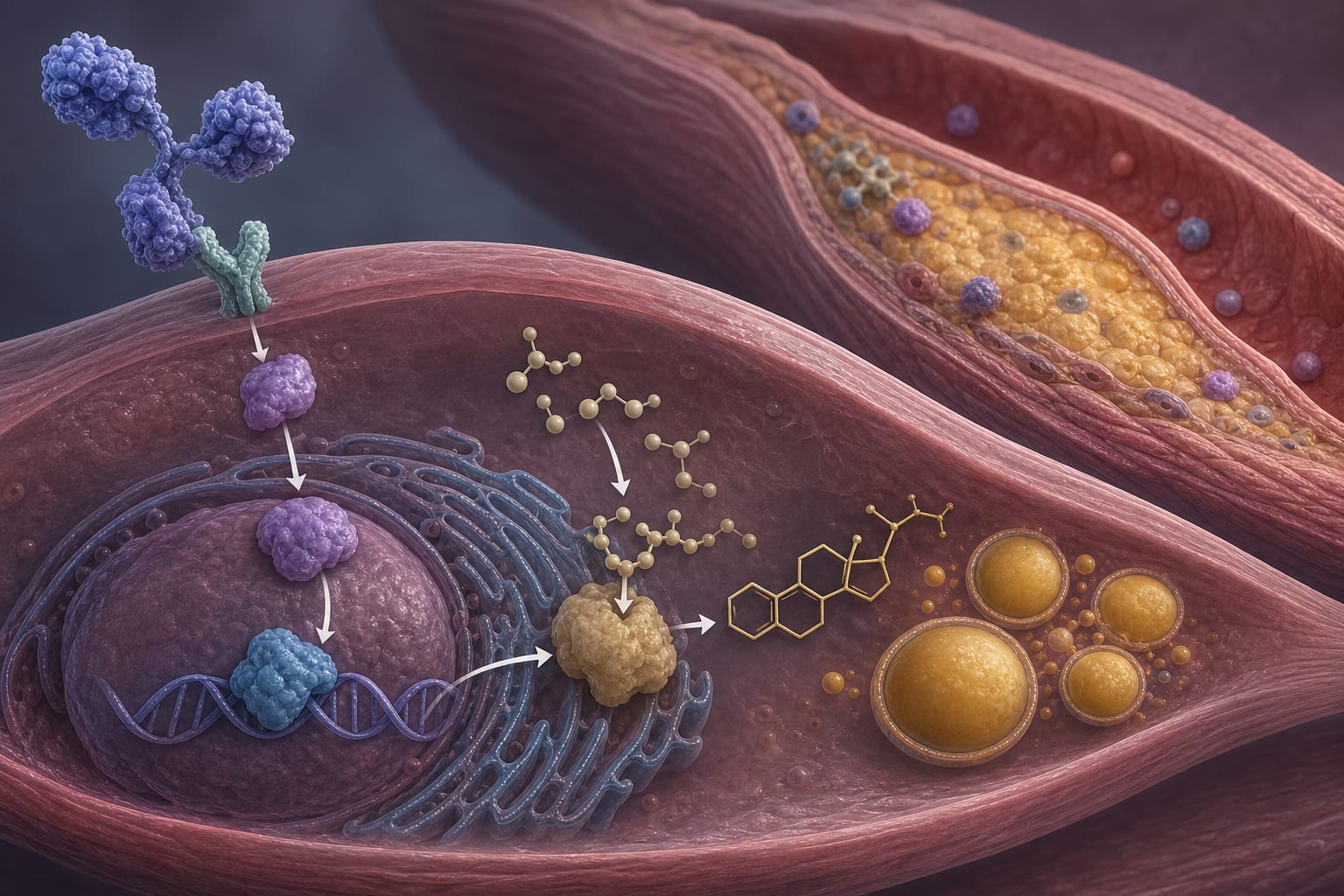
Cell Culture and Treatment: Cultured human SMCs were treated with nivolumab and assessed for activation of heat shock factor 1 (HSF1), HMG-CoA reductase (HMGCR), and endoplasmic reticulum (ER) stress signaling, with specific outcomes measured including cholesterol accumulation.
Mechanistic Analysis: The study evaluated the role of HSF1 activation in cholesterol biosynthesis and SMC phenotypic modulation, as well as the effects of PD-1 neutralization and pravastatin treatment on these processes.
Key Findings:
Nivolumab treatment induced activation of HSF1 and increased HMGCR activity, leading to cholesterol accumulation in SMCs, which may contribute to ASCVD risk.
Activation of PERK signaling was observed, contributing to atherosclerosis-associated phenotypic changes in SMCs.
Neutralization and knockdown of PD-1, as well as treatment with pravastatin, reversed nivolumab-induced effects on cholesterol synthesis and SMC phenotype.
Interpretation:
Nivolumab induces stress signaling pathways in SMCs that contribute to increased ASCVD risk, independent of plasma cholesterol levels.
Limitations:
The study was conducted in vitro, and further in vivo studies are needed to confirm findings and assess the impact of ICI treatment on ASCVD risk across diverse patient populations.
Potential confounding factors related to patient demographics and comorbidities were not addressed.
Conclusion:
The findings suggest a rationale for statin therapy to mitigate ICI-induced ASCVD risk, even in patients with normal cholesterol levels.