Single-point insulin sensitivity estimator and left main and/or three-vessel disease in patients aged 45 years or older with acute coronary syndrome: findings from the CCC-ACS project - Summary - MDSpire
Advertisement
Single-point insulin sensitivity estimator and left main and/or three-vessel disease in patients aged 45 years or older with acute coronary syndrome: findings from the CCC-ACS project
To examine the association of the single-point insulin sensitivity estimator (SPISE) with severe coronary anatomical patterns in middle-aged and older patients with acute coronary syndrome (ACS).
Approach:
Study Design: Cross-sectional analysis based on data from the CCC-ACS project, including 16,383 patients for left main and/or three-vessel disease and 13,390 for isolated three-vessel disease.
Data Analysis: SPISE was analyzed as a continuous variable and by tertiles. Multivariable logistic regression assessed associations, with restricted cubic spline analyses for dose-response patterns.
Key Findings:
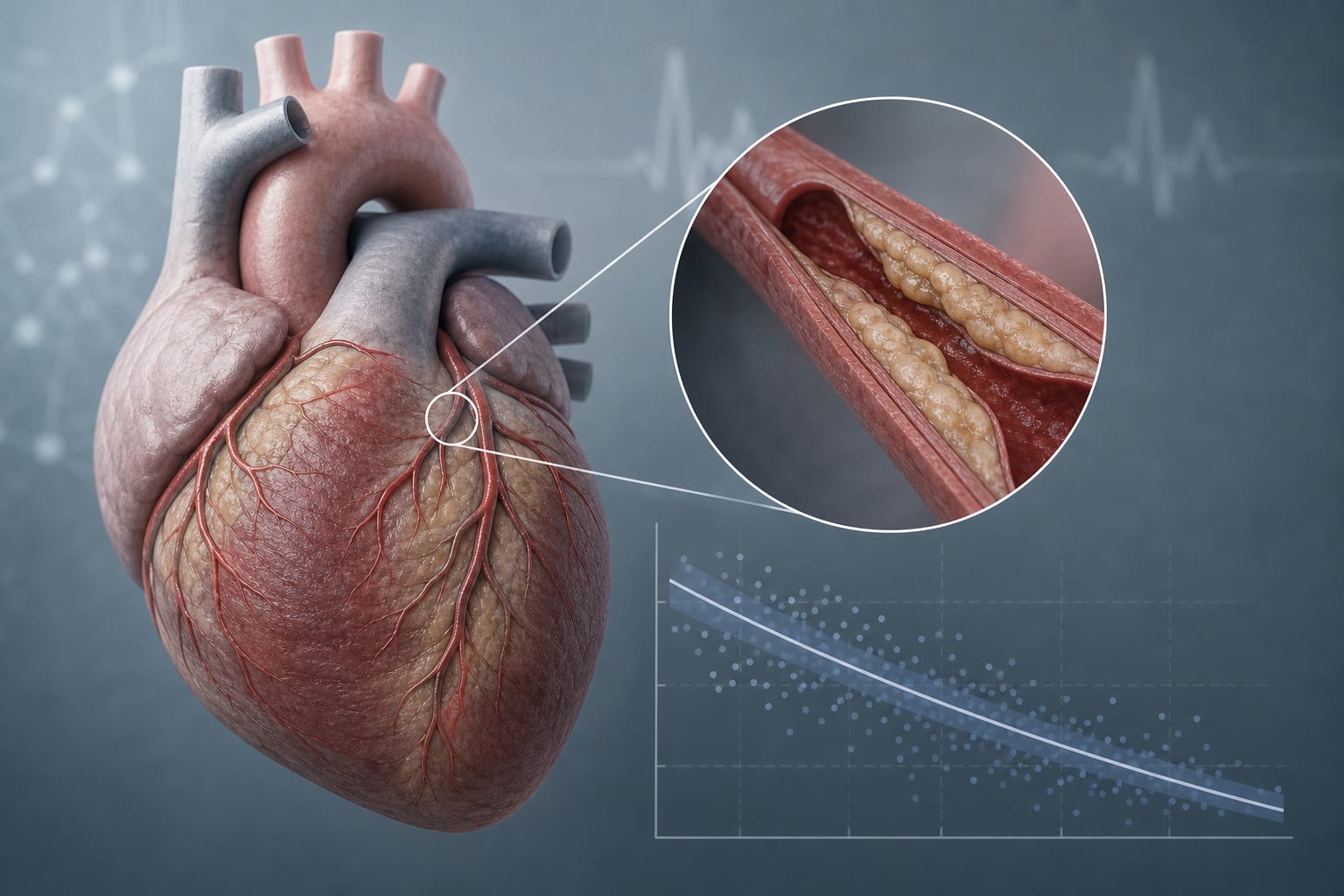
Higher SPISE was associated with lower odds of severe coronary anatomical outcomes.
Each 1-unit increase in SPISE correlated with lower odds of left main and/or three-vessel disease (OR, 0.977; 95% CI, 0.957–0.998).
Patients in the highest SPISE tertile had lower odds of severe coronary disease compared to those in the lowest tertile.
Age-related heterogeneity was observed, with stronger associations in patients aged <65 years.
Interpretation:
Limitations:
The study is cross-sectional, limiting causal inferences.
Findings may not be generalizable to populations outside of the CCC-ACS project.
Conclusion:
Higher SPISE is associated with lower odds of severe coronary anatomical involvement in ACS patients aged 45 years or older, particularly in those under 65.