To evaluate changes in the prevalence of women who have never undergone cervical cancer screening and to describe sociodemographic disparities in nonscreening from 2005 to 2023.
Approach:
Study Design: Cross-sectional study using NHIS data from 2005 to 2023.
Data Analysis: Temporal trends assessed with Joinpoint regression; logistic regression models evaluated disparities in never-screening.
Key Findings:
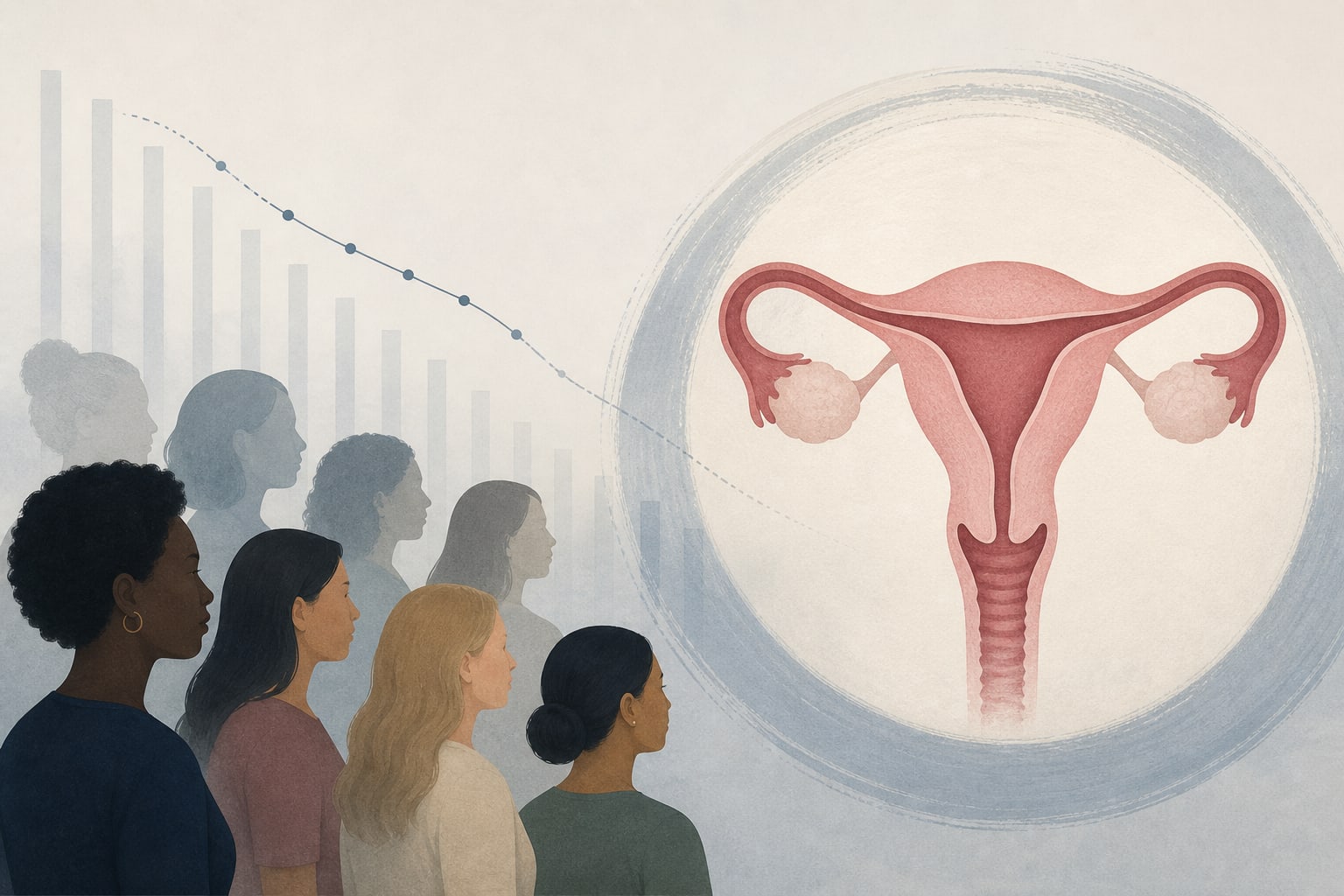
Percentage of women aged 21 to 29 years who never underwent screening rose from 12.5% in 2005 to 31.9% in 2023.
For women aged 30 to 65 years, the proportion never screened increased from 5.3% in 2005 to 14.8% in 2023.
HPV vaccination among women aged 21 to 29 years increased from 5.7% in 2008 to 54.0% in 2019.
Disparities in never-screening were noted by race, education, insurance, and region.
Interpretation:
The increase in the percentage of women who have never undergone cervical cancer screening indicates significant gaps in preventive care, particularly among younger women.
Limitations:
Study relies on publicly available data, which may not capture all relevant factors.
Cross-sectional design limits causal inferences.
Conclusion:
The findings highlight a concerning trend of increasing numbers of unscreened women, particularly in younger age groups, alongside rising cervical cancer incidence rates.
by Kalyani Sonawane, Haluk Damgacioglu, Trisha L. Amboree, Marvella E. Ford, Ketki N. Borse, Brian Orr, Gweneth Lazenby, Ana Patrica Ortiz, Ashish A. Deshmukh