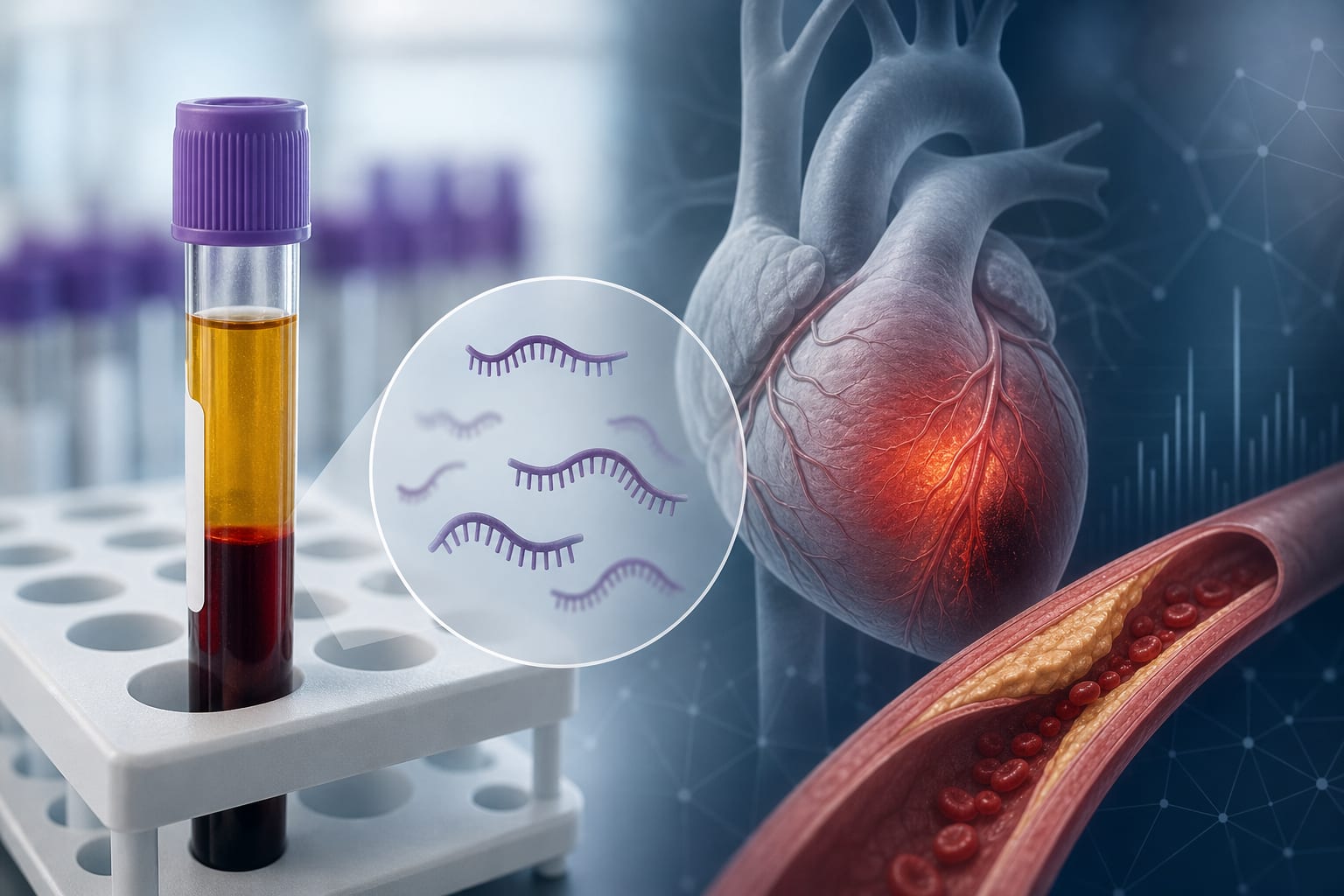
To profile prioritized circulating miRNAs in patients with acute myocardial infarction (AMI), stable coronary artery disease (CAD), and healthy controls, and to explore their diagnostic potential, particularly in the context of limited population-specific data from South India.
Approach:
Key Findings:
AMI patients showed significant upregulation of let-7b, let-7c-5p, miR-24-1, miR-342-3p, and miR-362-3p (p < 0.05).
Downregulation was observed for miR-4485-3p, miR-494-3p, miR-939, and miR-4505 (p < 0.05).
Cluster and PCA analyses revealed distinct segregation of AMI cases from CAD and healthy controls.
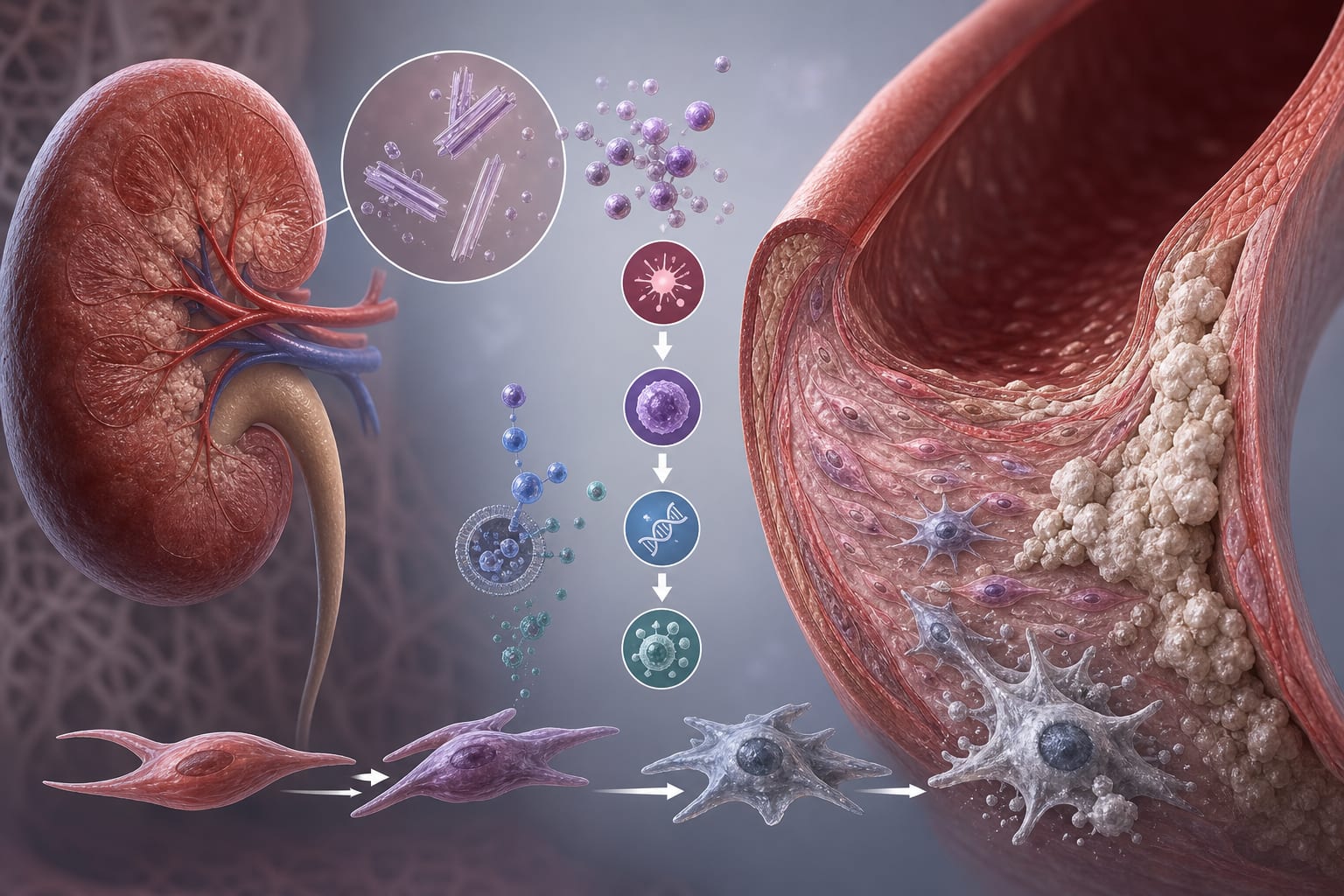
Pathway enrichment implicated ECM–receptor interaction, platelet activation, and PI3K/AKT signaling.
ROC analysis indicated excellent discriminatory performance, with miR-4485-3p achieving an AUC of 1.000.
Interpretation:
The findings suggest that circulating miRNAs may serve as promising biomarkers for AMI, reflecting key molecular processes involved in inflammation, apoptosis, and endothelial dysfunction.
Limitations:
The study is limited to a specific population in South India, which may affect the generalizability of the findings, particularly in diverse populations.
The sample size for AMI patients was relatively small, which may limit the robustness of the conclusions drawn.
Conclusion:
The study highlights the potential of circulating miRNAs as biomarkers for AMI, warranting further investigation in larger, diverse populations to validate these findings and their implications for clinical practice.