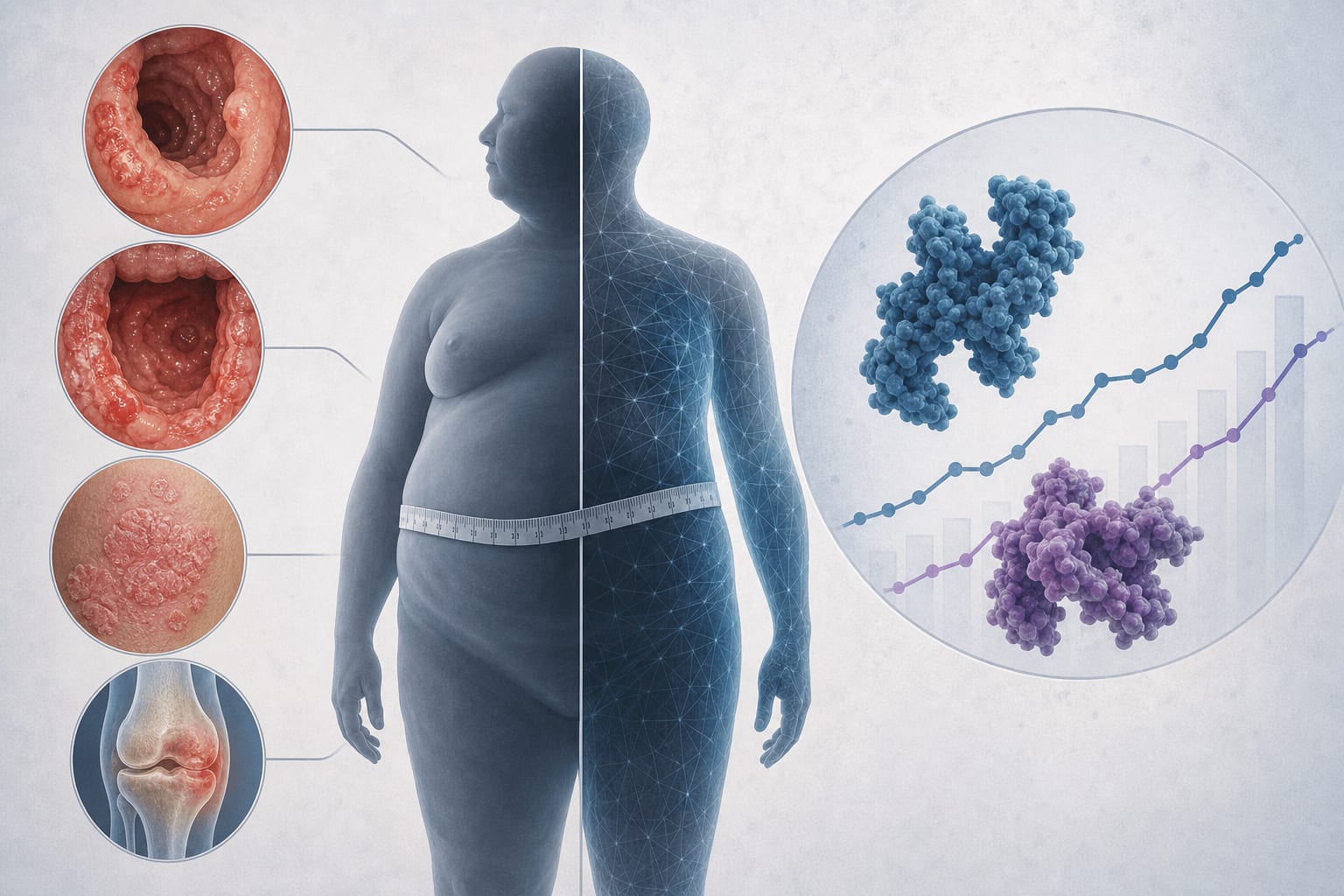
To evaluate the longitudinal manifestation of obesity-associated inflammatory burden across distinct immunologically mediated conditions.
Approach:
Study Design: A longitudinal cohort study using de-identified electronic health record data from the Optum Labs Data Warehouse, focusing on adult patients with Crohn’s disease, ulcerative colitis, psoriasis, or psoriatic arthritis with at least two BMI measurements over five years.
Key Findings:
Patients with obesity showed significantly elevated CRP (49–83% higher) and ESR (24–48% higher) at baseline compared to healthy-weight counterparts.
Patients with overweight plus high-risk comorbidities exhibited intermediate elevations in CRP (34–55% higher) and ESR (13–30% higher).
Elevations in CRP and ESR remained statistically significant through year 5 in nearly all cohorts, while ferritin showed near null associations across all conditions.
Interpretation:
The consistent elevations in CRP and ESR across four IMIDs, along with null ferritin associations, suggest that excess adiposity may contribute to systemic inflammatory burden regardless of underlying disease mechanism.
Limitations:
The study is based on retrospective data, which may limit causal inferences.
Potential confounding factors related to obesity and inflammatory diseases were not fully controlled.
Conclusion:
Further investigation of weight optimization as part of comprehensive IMID management is warranted.