Multicentre evaluation of artificial intelligence risk classification for detection of clinically significant prostate cancer on biparametric MRI - Summary - MDSpire
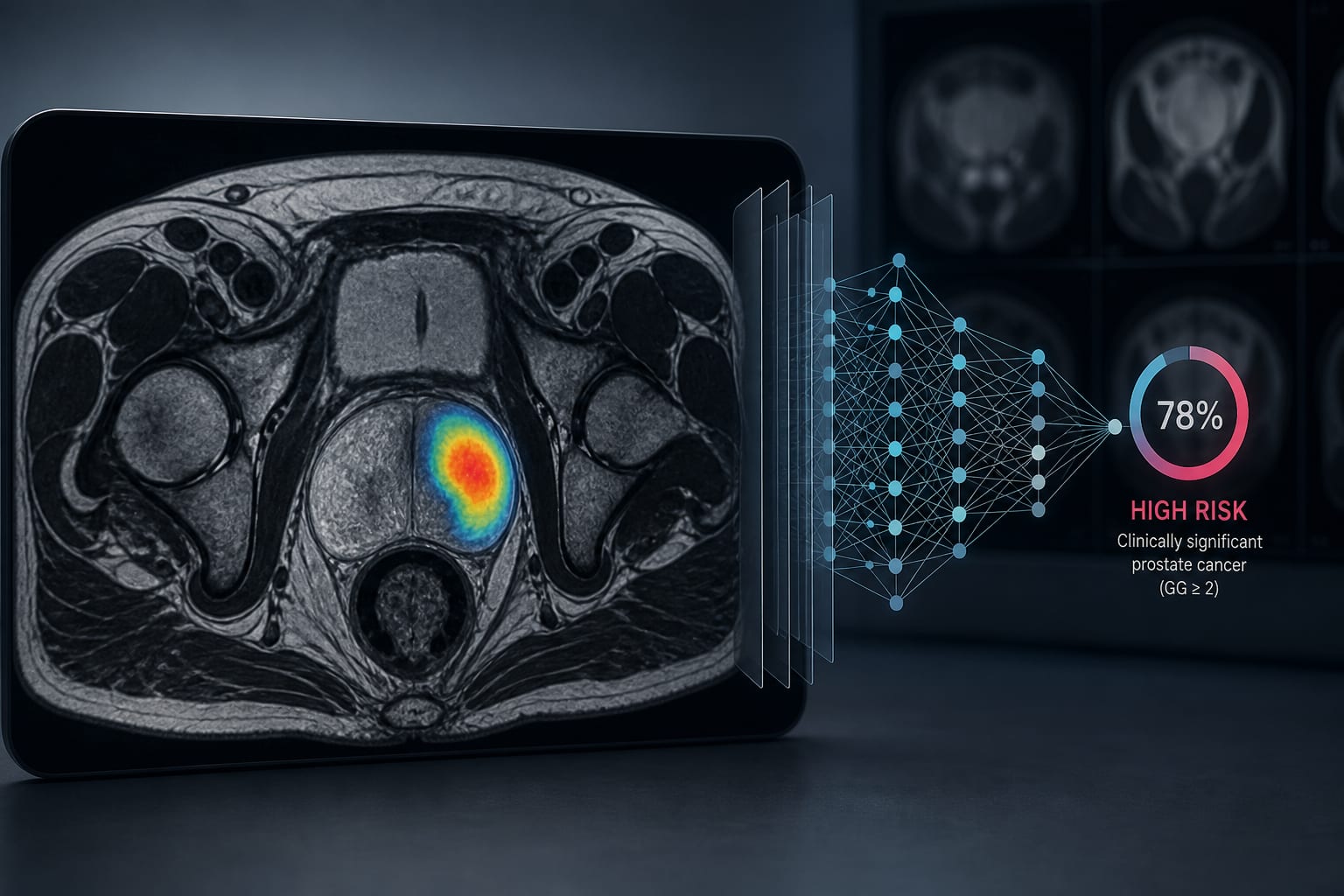
To compare artificial intelligence–based risk classification with radiologist-assigned PI-RADS for detecting clinically significant prostate cancer (csPCa) and to assess AI-assisted biopsy triage, particularly for lesions categorized as PI-RADS 3.
Approach:
Study Design: A retrospective, multicentre diagnostic accuracy study was conducted using data from three cohorts of men who underwent MRI followed by biopsy or prostatectomy.
Data Sources: Data was collected from three sites: 254 men from 27 German institutions, 29 men from two hospitals in the Netherlands, and 504 men from 13 RadNet centres in California.
AI System: The DeepHealth Prostate Suite was used for AI-derived risk categorization, generating a continuous risk score and assigning Low, Medium, or High risk based on prespecified cut-offs.
Histopathology Reference: Histopathology from targeted and systematic biopsies or prostatectomy served as the reference standard for csPCa detection.
Key Findings:
AI-based risk stratification demonstrated comparable performance to radiologist-assigned PI-RADS in detecting clinically significant prostate cancer.
The study highlighted the potential for AI to assist in managing equivocal lesions categorized as PI-RADS 3.
Limitations:
The study's retrospective design may introduce biases.
Variability in imaging protocols and biopsy techniques across sites could affect results.