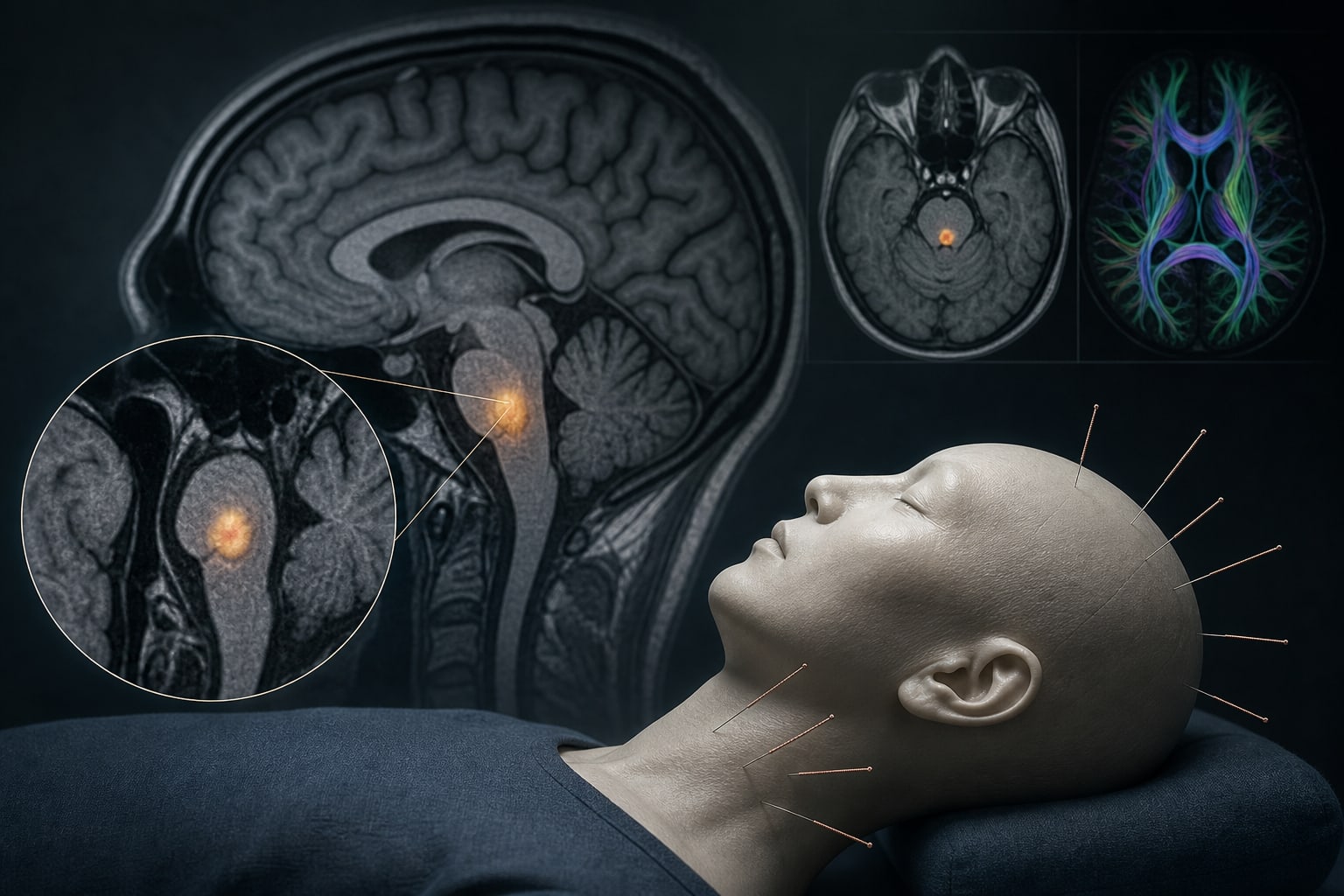
To evaluate whether adjunctive Shallow Acupuncture improves activities of daily living in patients with brainstem infarction and to examine associated neural changes.
Participants: 62 patients with brainstem infarction randomly assigned to either a conventional acupuncture group or an adjunctive Shallow Acupuncture group.
Intervention: Both groups receive standard medical management, routine rehabilitation, and conventional acupuncture; the adjunctive group receives Shallow Acupuncture daily for 14 days.
Outcome Measures: Primary outcome: activities of daily living assessed by the Barthel Index. Secondary outcomes: NIH Stroke Scale and modified Rankin Scale. Exploratory indicators: rs-fMRI and DTI measures.
Assessment Timing: Clinical outcomes assessed at baseline, post-treatment, and 1-month follow-up; neuroimaging at baseline and post-treatment.
Key Findings:
Brainstem infarction is a significant contributor to stroke-related morbidity and mortality.
Current management strategies for brainstem infarction are limited and often do not focus on functional recovery.
Acupuncture is recommended in Chinese guidelines as an adjunctive therapy for acute ischemic stroke.
Interpretation:
Limitations:
Single-center study may limit generalizability.
Sample size of 62 may not capture the full variability of outcomes.
Conclusion:
This trial aims to provide evidence on the effectiveness of Shallow Acupuncture in improving functional recovery in patients with brainstem infarction.