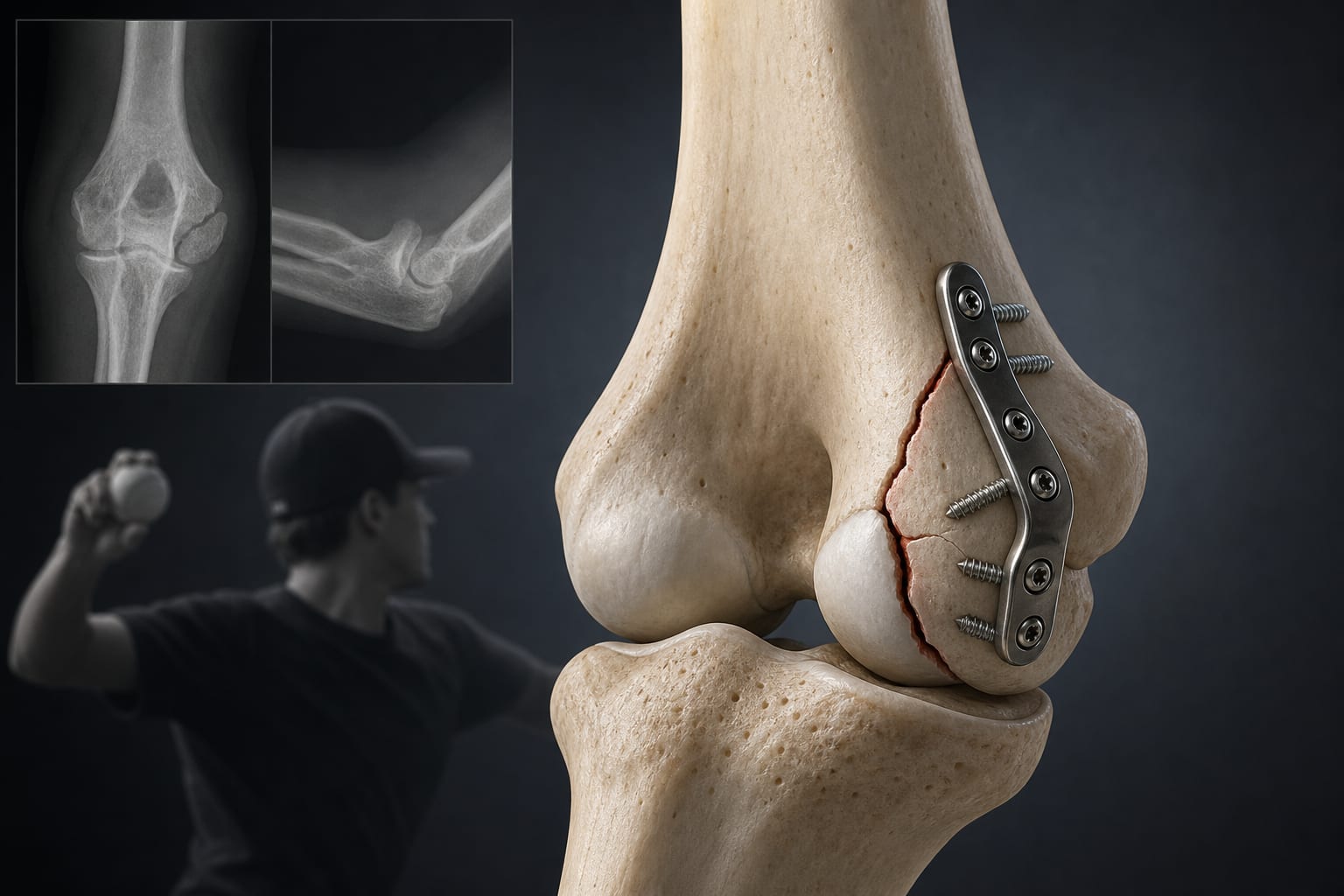
To compare the K-Hammer technique with conventional freehand medial pinning in pediatric patients with Gartland type III–IV supracondylar humeral fractures.
Approach:
Study Design: Retrospective case-control study involving 80 pediatric patients treated between September 2020 and September 2025.
Patient Groups: Patients were divided into K-Hammer group (non-rotational technique) and Freehand group (conventional technique).
Outcomes Measured: Primary outcome was symptomatic iatrogenic ulnar nerve injury; secondary outcomes included medial pin attempts, operative time, radiographic alignment, elbow range of motion, Flynn functional grade, and postoperative complications.
Key Findings:
Iatrogenic ulnar nerve injury occurred in 0% of the K-Hammer group vs. 11.9% of the Freehand group (P = 0.056), corresponding to an absolute risk reduction of 11.9% and a number needed to treat of approximately 8.4.
Interpretation:
The K-Hammer technique improves operative efficiency and shows a trend toward reducing iatrogenic ulnar nerve injury risk, although statistical significance was not reached.
Limitations:
Statistical significance for ulnar nerve injury risk was not achieved, likely due to limited sample size and the retrospective design may introduce bias.
Conclusion:
The K-Hammer technique warrants confirmation in larger studies.
From Medicare payment updates to drug approvals and device access, these federal actions may affect reimbursement, prescribing, patient access, and clinical workflows.