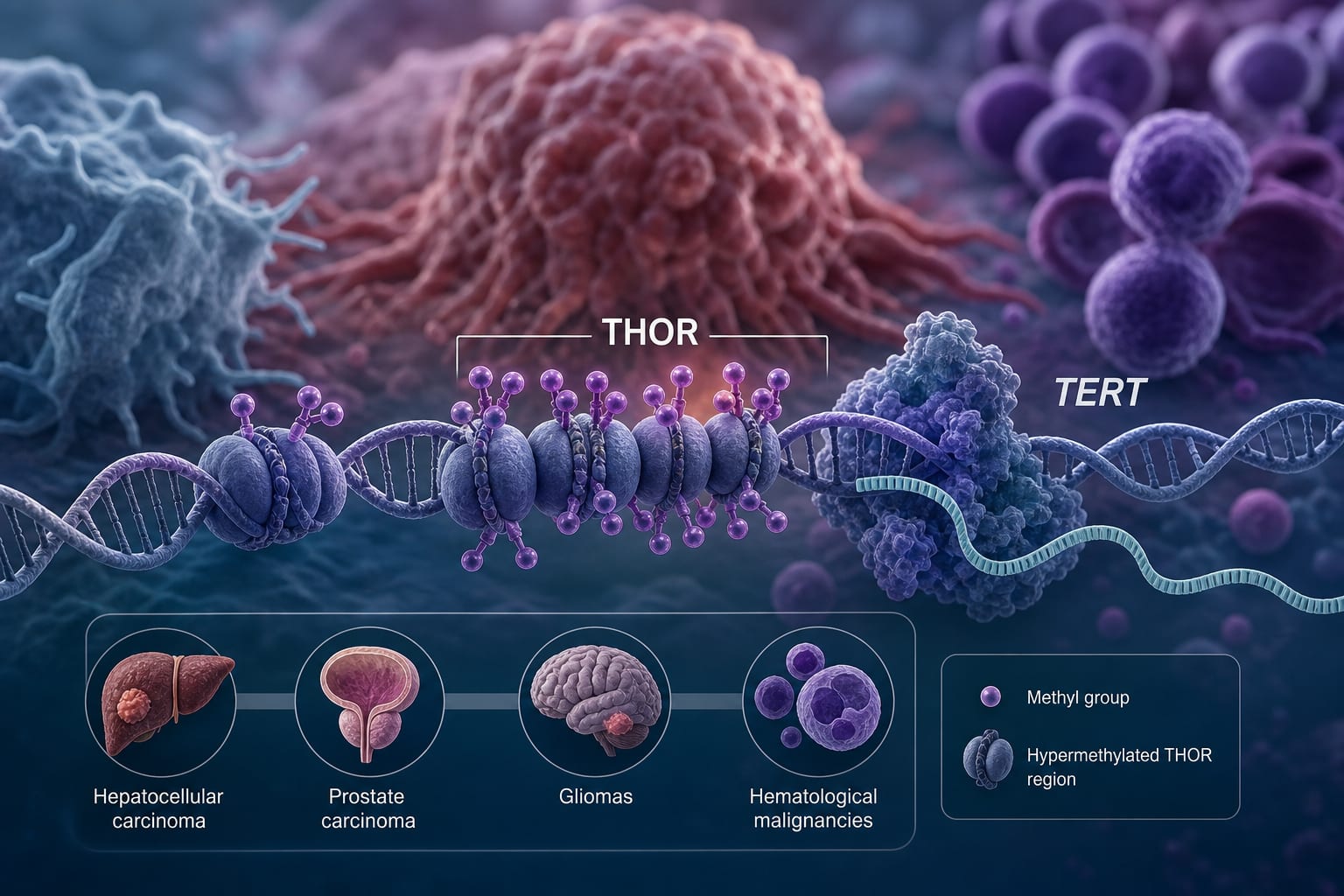
To summarize the biological role, molecular mechanisms, and clinical significance of THOR methylation in cancer.
Approach:
Overview of THOR: Discusses the TERT Hypermethylated Oncological Region (THOR) and its role in TERT activation across various cancers.
Mechanisms of Action: Explores how THOR hypermethylation prevents transcriptional repression, leading to increased TERT expression.
Evidence Across Cancers: Summarizes studies demonstrating THOR methylation in multiple malignancies and its correlation with TERT expression.
Specific Relevance in Hematological Malignancies: Highlights the significance of THOR methylation in hematological cancers where TERT promoter mutations are rare.
Key Findings:
THOR methylation is associated with increased TERT expression across various cancers.
It is frequently observed in tumors lacking TERT promoter mutations.
THOR methylation correlates with aggressive clinical behavior in some contexts.
Interpretation:
THOR methylation may serve as a unifying epigenetic mechanism for TERT activation, particularly in TERTp mutation-negative tumors.
Limitations:
Methodological heterogeneity in studies evaluating THOR methylation.
Need for assay standardization and prospective clinical validation.
Conclusion:
THOR methylation is a promising biomarker and contributes to the regulation of telomerase activation in cancer.