The effect of non-immersive virtual reality on upper limb motor function and activities of daily living in stroke patients: a systematic review and meta-analysis - Summary - MDSpire
Advertisement
The effect of non-immersive virtual reality on upper limb motor function and activities of daily living in stroke patients: a systematic review and meta-analysis
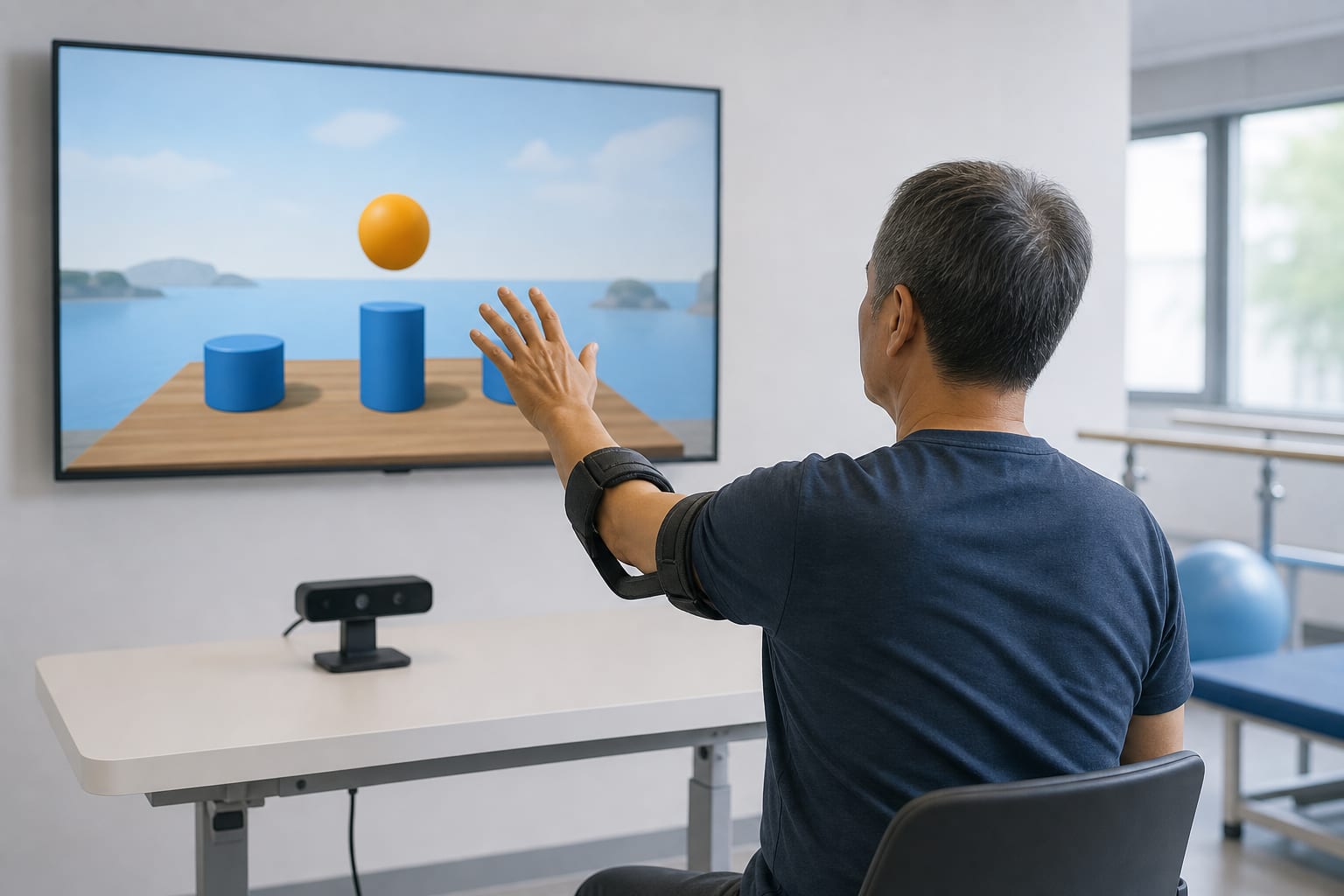
To systematically evaluate the effects of non-immersive virtual reality (NIVR) as an adjunct to conventional rehabilitation on upper limb motor function and activities of daily living in stroke patients.
Approach:
Outcome Measures: Upper limb motor function assessed using Fugl-Meyer Assessment for Upper Extremity (FMA-UE) and Box and Block Test (BBT); activities of daily living (ADL) assessed using Barthel Index (BI), Modified Barthel Index (MBI), and Functional Independence Measure (FIM).
Key Findings:
NIVR significantly improved upper limb motor function (FMA-UE: MD = 5.40; BBT: MD = 4.57).
NIVR was associated with improved FIM scores (MD = 5.99).
Pooled BI/MBI analysis showed a marginally significant effect (MD = 5.47), but subgroup analyses did not reach statistical significance.
Interpretation:
Limitations:
Dose imbalance in 3 out of 12 studies.
Limited database search may have missed relevant studies.
Conclusion:
NIVR as an adjunct therapy shows promise for improving motor function and ADL in stroke survivors, but further research with dose-matched trials and broader searches is needed.