Network analysis of distress, symptom burden, social support, and digital health literacy in older postoperative patients with gastric cancer - Summary - MDSpire
Advertisement
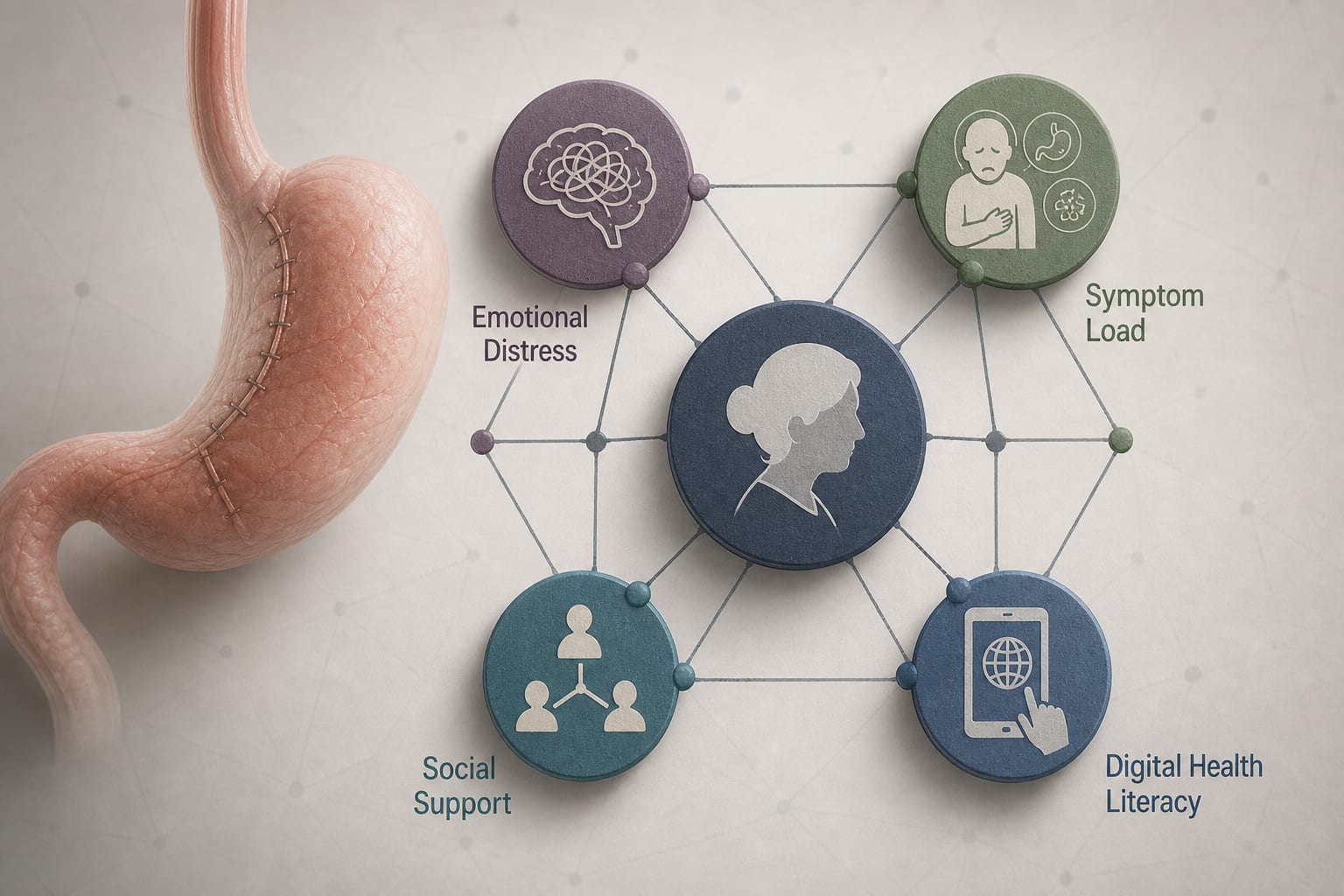
Network analysis of distress, symptom burden, social support, and digital health literacy in older postoperative patients with gastric cancer
To explore the relationships among distress, symptom burden, social support, and digital health literacy in older patients with gastric cancer following surgery.
Approach:
Study Design: A cross-sectional study involving 767 older postoperative patients with gastric cancer was conducted at a teaching hospital.
Data Collection: Participants completed validated questionnaires including the BSI-18, MDASI-GI, MSPSS, and e-HEALS.
Analysis Method: Network analysis was performed using R software to assess the structure, centrality, stability, and accuracy of the factors.
Key Findings:
The nodes 'Blue' and 'Tense' from the BSI-18, and 'Evaluate' from e-HEALS were identified as the most central nodes in the network analysis.
'Friends' and 'Sleep' served as key bridge nodes linking the domains of distress, symptom burden, and social support.
The network analysis demonstrated stability and accuracy in the assessment of these factors.
Interpretation:
The study explores the relationships among emotional distress, symptom burden, and social support in older postoperative gastric cancer patients.
Limitations:
The study is cross-sectional, limiting causal inferences.
Findings may not be generalizable beyond the specific population studied.
Conclusion:
The findings indicate the potential utility of network analysis in understanding the interconnected symptom patterns in this population.