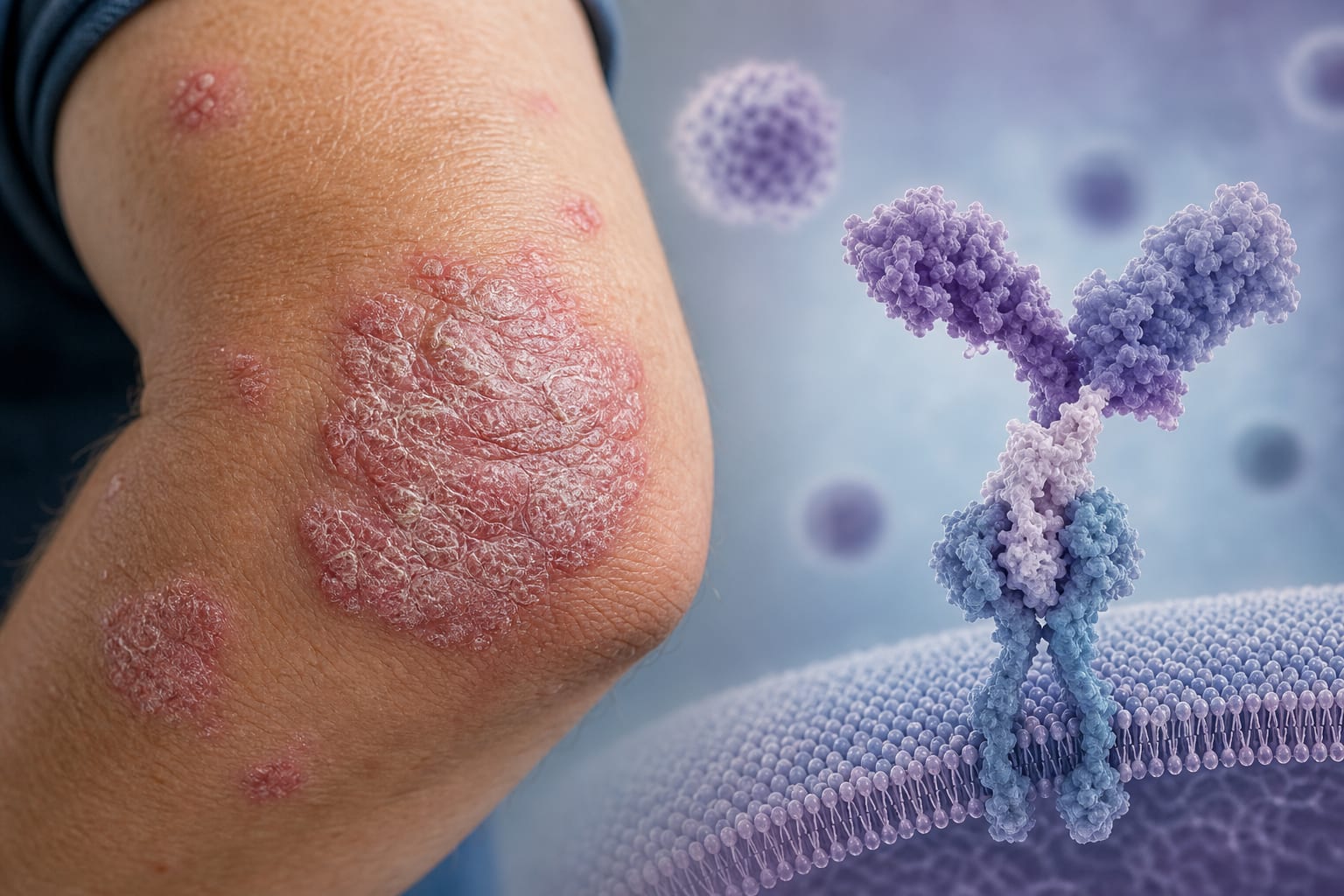
To elucidate the impact of the adaptive immune response on inflammation in atopic dermatitis (AD) by focusing on staphylococcal serine-like proteases (Spl) of Staphylococcus aureus, particularly their role in inducing both type 1 and type 2 immune responses.
Key Findings:
Elevated levels of IgE antibodies specific for Spl family proteins were found in patients with AD compared to healthy controls, indicating a potential role in disease exacerbation.
Recombinant SplB induced T cell activation and cytokine secretion in PBMCs from both patients with AD and healthy controls, suggesting a broad immune response.
SplB-specific T helper cells produced IFN-γ and IL-13 ex vivo, highlighting the dual immune response.
Clonal propagation of specific T cells was confirmed by TCR sequencing, with SplB-specific TCR sequences found in lesional skin biopsy material.
Interpretation:
The presence of clonally propagated SplB-specific T cells in the skin of patients with AD suggests an impact on inflammation, reflecting a type of cellular immune response that is not exclusively polarized towards type 2 but also includes type 1 responses.
Limitations:
The study focused on a limited number of patients and controls, which may affect the robustness of the findings.
Exclusion criteria may limit the generalizability of the findings, particularly in diverse patient populations.
Conclusion:
The adaptive immune response to S. aureus contributes to the phenotype of atopic dermatitis.
by Rebecca Pospich, Goran Abdurrahman, Tatjana Honstein, Maria Nordengrün, Stephan Traidl, Gabriele Begemann, Petra Kienlin, Thomas Werfel, Barbara M. Bröker, Lennart M. Roesner