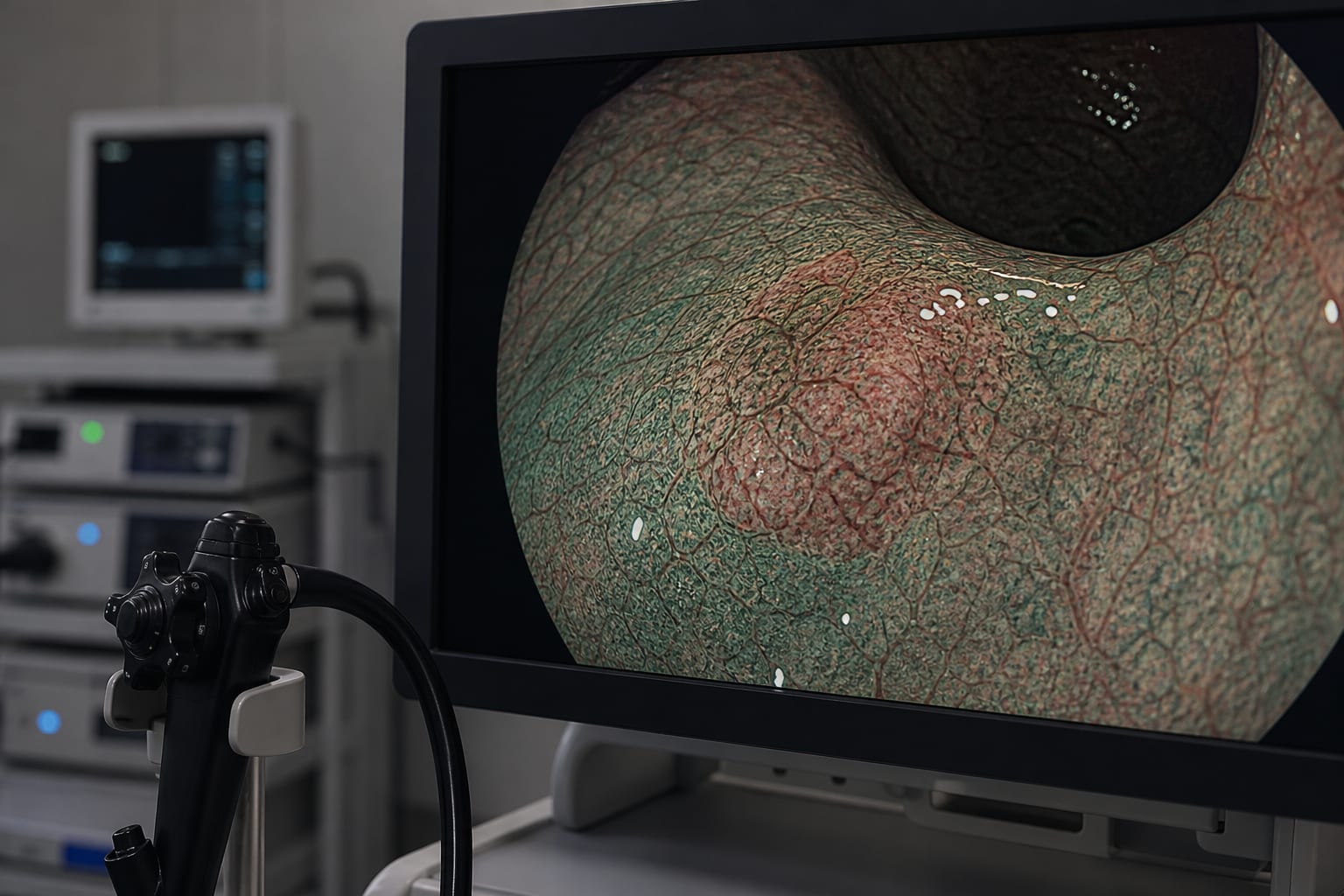
The article examines the objective, findings, and clinical context described in Response to “Conditional Accuracy Following Lesion Preselection”.
Approach:
Study assessment: All 901 patients completed the surveillance protocol. Every target lesion detected during primary or secondary non-magnifying observation underwent ME with 3G-NBI; the analysis included 228 lesions in 187 patients.
Diagnostic scope: The reported sensitivity and specificity assess characterization of detected target lesions, not detection of all early gastric cancers (EGCs) by the full surveillance pathway.
Modality-specific analysis: The authors considered whether initial detection modality could affect lesion characteristics and diagnostic performance, but lesion counts were insufficient for dependable modality-specific analyses.
Key Findings:
No target lesions were selected for ME with 3G-NBI after detection; the prespecified protocol applied the examination to every detected target lesion.
Because scheduled longitudinal surveillance after the index examination was not part of the original trial, lesions missed during non-magnifying observations could not be counted as false negatives.
The authors describe confidence-based assessment as potentially useful for biopsy triage, while distinguishing that role from determining whether a lesion is EGC or non-EGC.
Interpretation:
The study evaluated ME with 3G-NBI for characterizing detected lesions. The authors state that this sequence of detection followed by characterization corresponds to routine clinical practice and that diagnostic characterization and biopsy triage are complementary roles.
Limitations:
The study could not assess lesions overlooked during initial non-magnifying observations because it lacked scheduled longitudinal surveillance after the index examination.
The limited number of lesions detected by each modality prevented reliable modality-specific analyses.
Conclusion:
The authors call for additional studies to determine whether the initial detection pathway affects ME with 3G-NBI diagnostic performance.