To examine the relationship between specific neuropsychiatric symptoms (NPS) and their effects on functional decline in patients with neurocognitive disorders (NCD) across different etiologies.
Approach:
Study Design: Longitudinal observational study using the National Alzheimer’s Coordinating Center Uniform Data Set (NACCUDS).
Participants: Included patients with Alzheimer's disease (AD, N = 11,044), Lewy Body Disease (LBD, N = 921), and behavioral variant frontal temporal lobe dementia (bvFTD, N = 933).
Assessment: NPS were characterized by expert clinicians and functional decline was measured using the Functional Assessment Questionnaire (FAQ).
Key Findings:
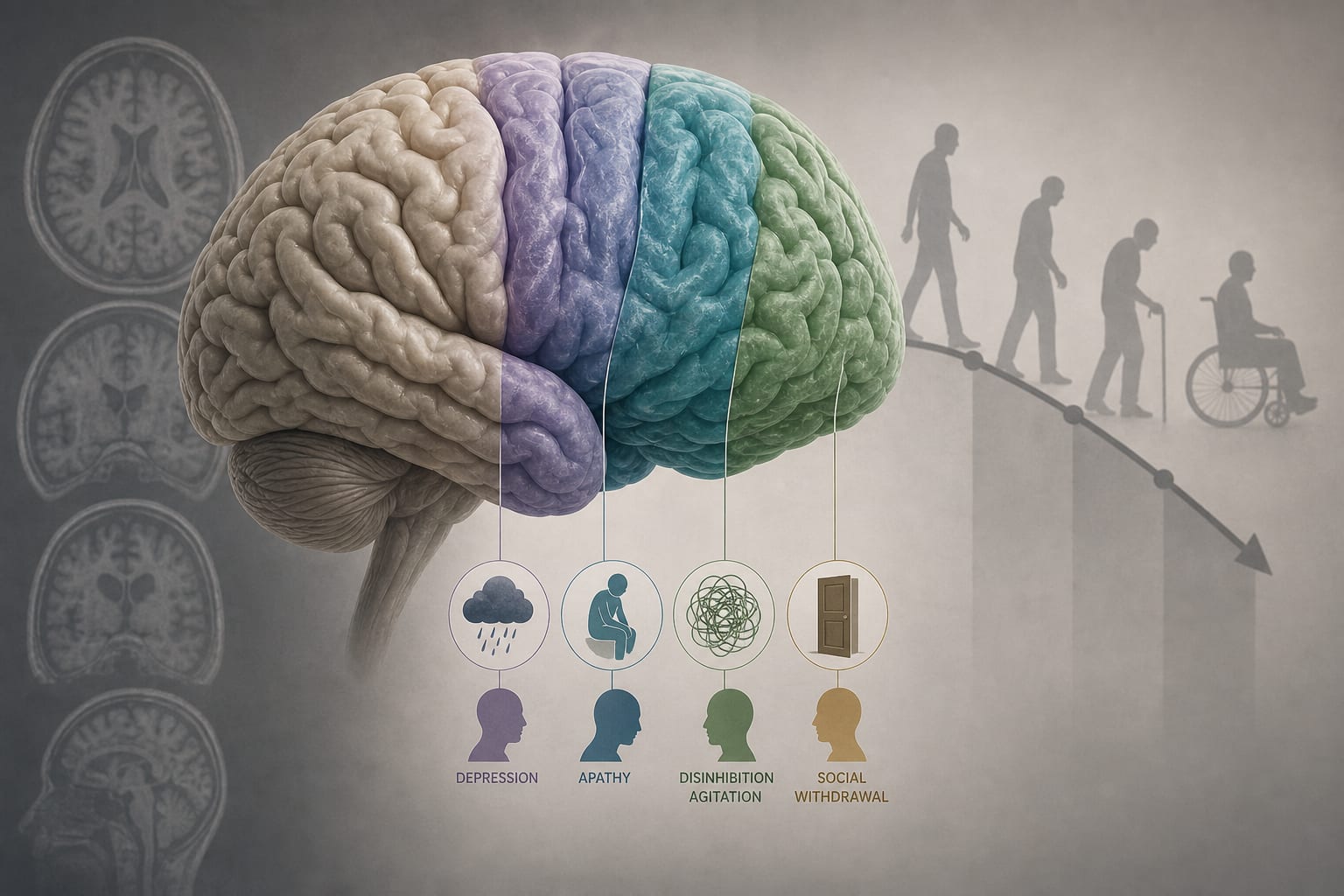
Apathy was the most commonly endorsed and persistent symptom across dementia types, associated with more rapid functional decline in Alzheimer's disease (AD) and behavioral variant frontal temporal lobe dementia (bvFTD).
Depression, present in 40% or more of all groups, was not associated with worsening functional impairment.
Higher rates of disinhibition were observed in bvFTD compared to AD and Lewy Body Disease (LBD).
Psychosis impacted functional decline uniquely in AD and LBD, while agitation affected functional decline in AD.
Interpretation:
The differential impact of individual NPS across dementia etiologies on functional decline may influence clinical trial designs for treatment.
Conclusion:
Understanding the relationship between individual NPS and functional decline is crucial for planning targeted interventions.