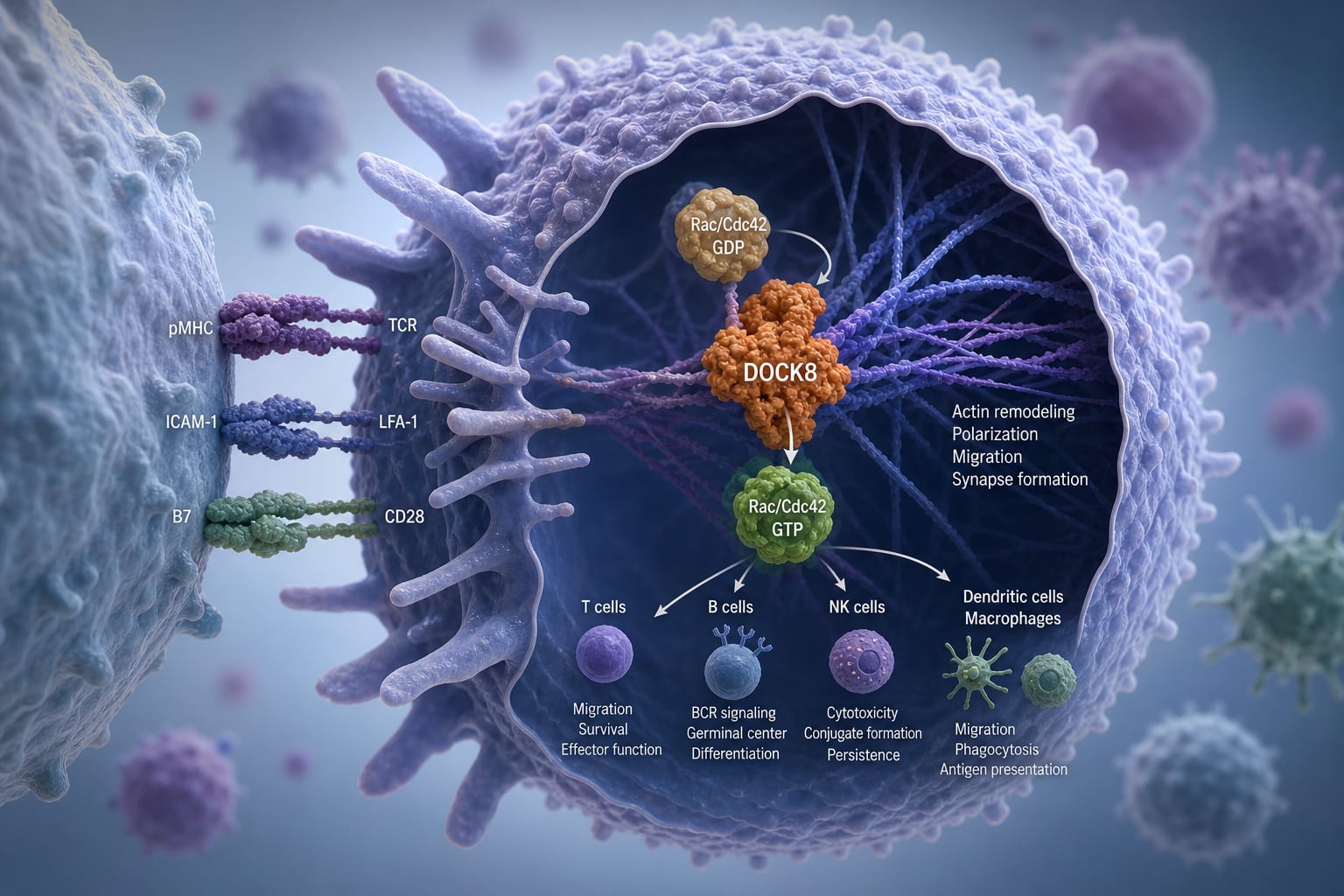
To systematically review the functional characteristics, molecular mechanisms, and pathological implications of DOCK8 in various immune cells, emphasizing its role as a signaling hub.
Key Findings:
DOCK8 deficiency leads to a complex immunodeficiency syndrome with increased susceptibility to infections and allergic manifestations, particularly affecting T cells, B cells, and NK cells.
DOCK8 is crucial for maintaining TCR and BCR repertoire diversity and balancing immune responses across various immune cell types.
Genetic defects in DOCK8 result in severe combined immunodeficiency characterized by recurrent infections and allergic diseases, highlighting its role in multiple immune cell functions.
Interpretation:
The integrated mechanisms of DOCK8 across different immune cell types are not fully elucidated, particularly regarding its interactions with other signaling pathways, indicating a need for further research.
Limitations:
Lack of systematic understanding of DOCK8's cell-type-specific functions, particularly in dendritic cells and macrophages.
Unclear molecular mechanisms of crosstalk between cytoskeletal remodeling and signal transduction, necessitating targeted studies.
Conclusion:
Further investigations are necessary to clarify the roles of DOCK8 in immune regulation, particularly in its signaling interactions, and to explore targeted therapeutic strategies.