Comparative effectiveness of various exercise modalities on arterial stiffness and endothelial function in older adults: a systematic review and network meta-analysis of randomised controlled trials - Summary - MDSpire
Advertisement
Comparative effectiveness of various exercise modalities on arterial stiffness and endothelial function in older adults: a systematic review and network meta-analysis of randomised controlled trials
To evaluate the comparative modulatory efficacy of various exercise modalities on endothelial function and arterial stiffness in older adults.
Approach:
Search Methodology: Systematically searched eight electronic databases for RCTs evaluating seven exercise modalities in older adults aged 60 years or older.
Eligibility Criteria: Included supervised, standardized training programs with a minimum duration of 4 weeks and continuous monitoring of exercise intensity.
Analysis Method: Performed a frequentist network meta-analysis to integrate direct and indirect trial evidence.
Evidence Assessment: Quality of evidence assessed using Cochrane RoB 2.0 and CINeMA frameworks.
Key Findings:
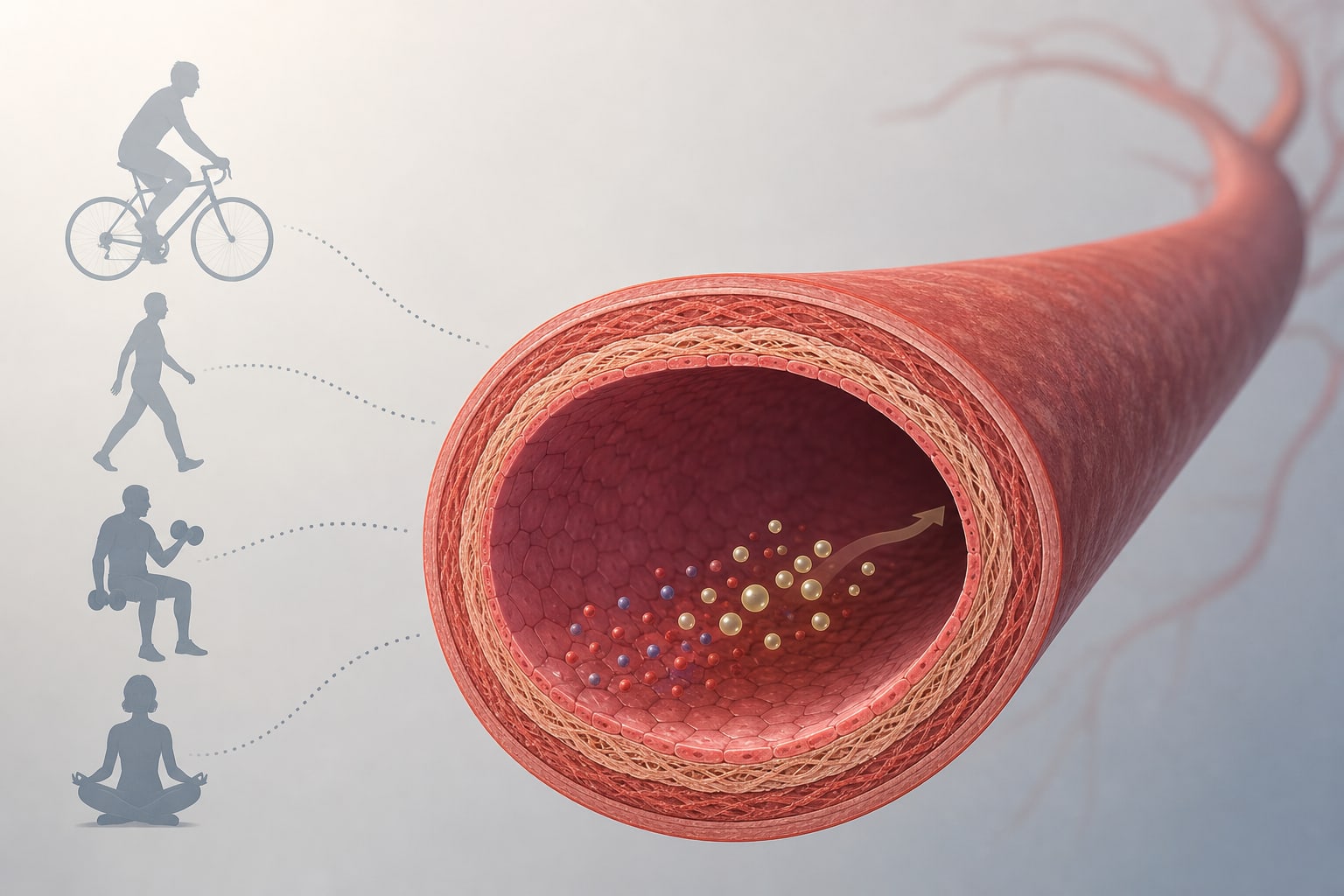
Whole-body vibration and resistance training ranked highest for enhancing endothelial function.
Aerobic training and walking were associated with greater improvements in attenuating arterial stiffness.
Stretching exercise showed a higher probability of reducing systolic blood pressure.
Combined training ranked among the leading modalities for lowering diastolic blood pressure.
Reductions in systolic blood pressure exceeding 10 mmHg are clinically relevant.
Interpretation:
Exercise-induced vascular adaptations in older adults are likely modality-specific, with different modalities offering distinct benefits for endothelial function and arterial stiffness.
Limitations:
Extensive confidence interval overlap precluded definitive claims of clinical superiority.
Head-to-head differences generally lacked statistical significance.
Study heterogeneity and reliance on indirect network comparisons may affect results.
Conclusion:
Exercise monitoring tailored to specific phenotypic characteristics may refine clinical prescriptions, though caution is warranted due to potential risks of bias.
In a pooled analysis of two randomized crossover trials, reducing nightly sleep by about 1.5 hours for 6 weeks was associated with modest increases in body weight and waist circumference without measurable changes in body composition.