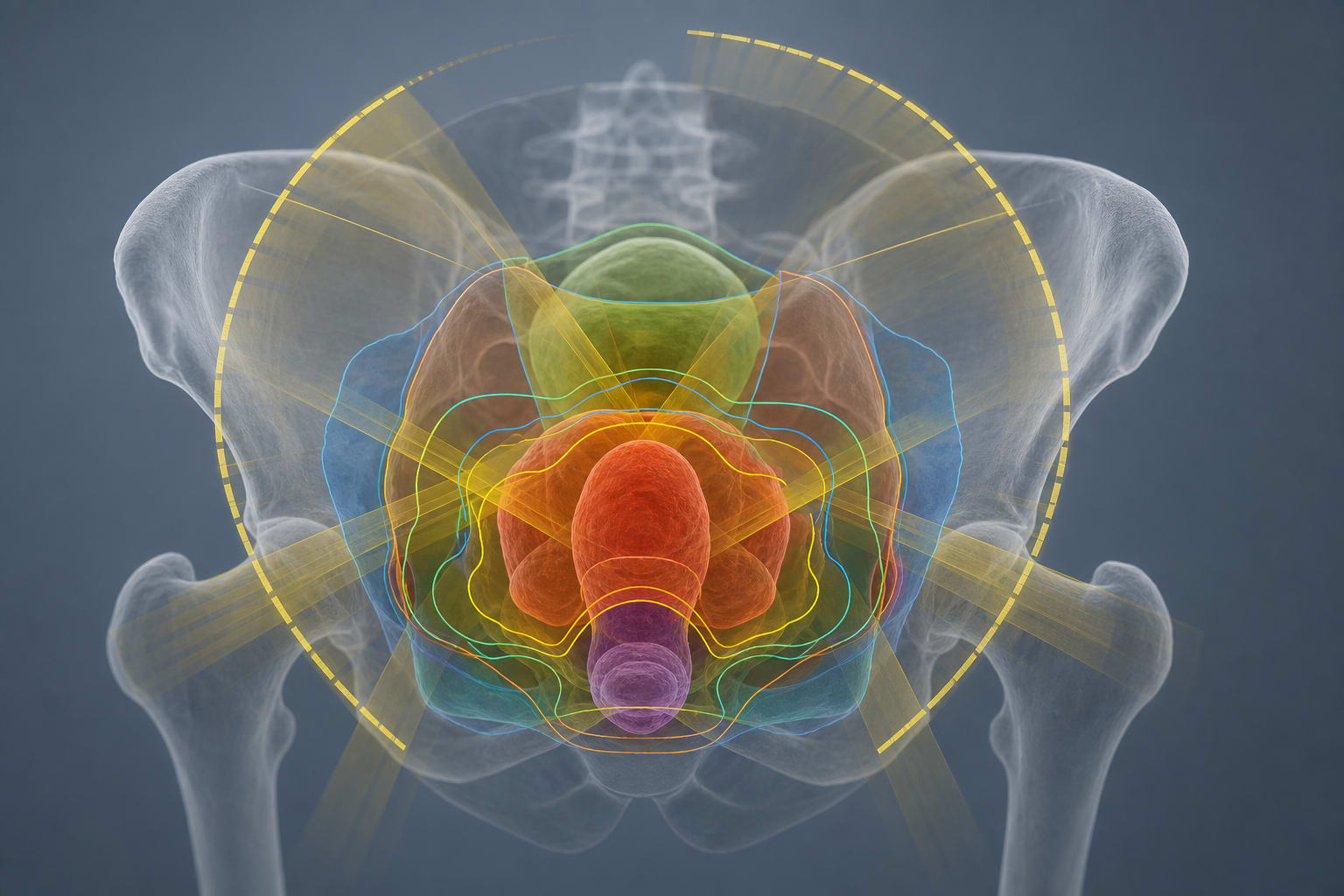
To determine the cumulative incidence of treatment-related genitourinary toxicity following external beam prostatic radiotherapy in patients with localised prostate cancer at a population level, emphasizing the need for comprehensive data.
Key Findings:
The study provides a comprehensive assessment of late genitourinary toxicity incidence following radiotherapy in a population-based cohort, with a cumulative incidence rate of Y%.
Clinical factors predictive of genitourinary toxicity were identified, including age, comorbidity index, and treatment characteristics, with specific hazard ratios.
The burden of treatment was quantified through the volume of admissions and procedures related to genitourinary toxicity, totaling Z admissions.
Interpretation:
An improved understanding of genitourinary toxicity incidence can enhance patient-centered decision-making and inform treatment strategies for localized prostate cancer, potentially leading to better patient outcomes.
Limitations:
The study may not fully capture the long-term effects of radiotherapy due to reliance on hospital admission data, and potential biases in data collection methods.
Exclusion of patients with metastatic disease may limit the generalizability of findings.
Conclusion:
This study highlights the need for better awareness and management of genitourinary complications following radiotherapy for localized prostate cancer, emphasizing the importance of patient-centered care and the necessity for future research.
In precision oncology, theranostics stands out as a transformative approach that tailors cancer treatment to the unique molecular profile of each patient. By integrating advanced diagnostic imaging with targeted therapy, theranostics ensures that treatments are customized to the unique characteristics of each patient's cancer, thereby optimizing efficacy and minimizing adverse effects.