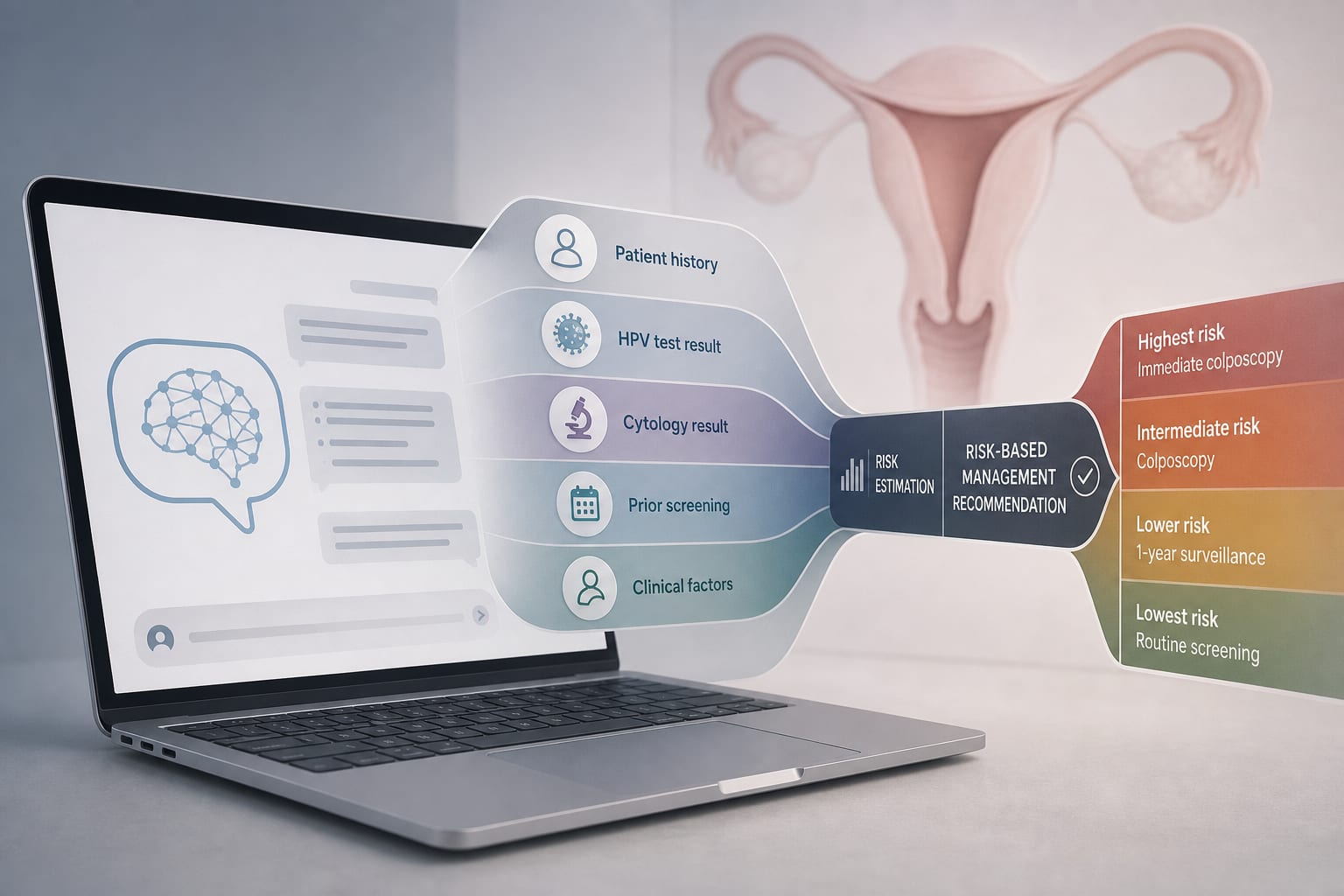
Safety-Oriented Benchmarking of Large Language Models in Risk-Based Management of Abnormal Cervical Screening Results: Scenario-Based Benchmark Study - Summary - MDSpire
To assess the effectiveness of large language models (LLMs) in managing abnormal cervical screening results within a scenario-based framework.
Approach:
Risk-Based Management Guidelines: The study references the 2019 ASCCP risk-based management consensus guidelines, which emphasize a decision framework based on the estimated risk of cervical intraepithelial neoplasia grade 3 or worse (CIN 3+).
Complex Decision-Making: The complexity of decision-making in cervical screening management is highlighted, requiring contextual clinical reasoning due to various history-dependent decision points.
LLM Evaluation: The evaluation of LLMs is conducted through open-ended, scenario-based assessments to better reflect real-world clinical performance.
Key Findings:
The ASCCP guidelines have complicated clinical decision-making due to their individualized approach.
Identical screening results can lead to different management strategies based on historical data.
LLMs may not demonstrate clinically safe behavior despite strong performance in benchmark tests.
Limitations:
The study may not fully capture the nuances of real-world clinical scenarios.
LLM performance in clinical settings may differ from benchmark evaluations.
Patients with preoperative vitamin D deficiency had higher postoperative pain scores and opioid use after mastectomy, including more than triple the odds of moderate to severe pain within 24 hours of surgery.