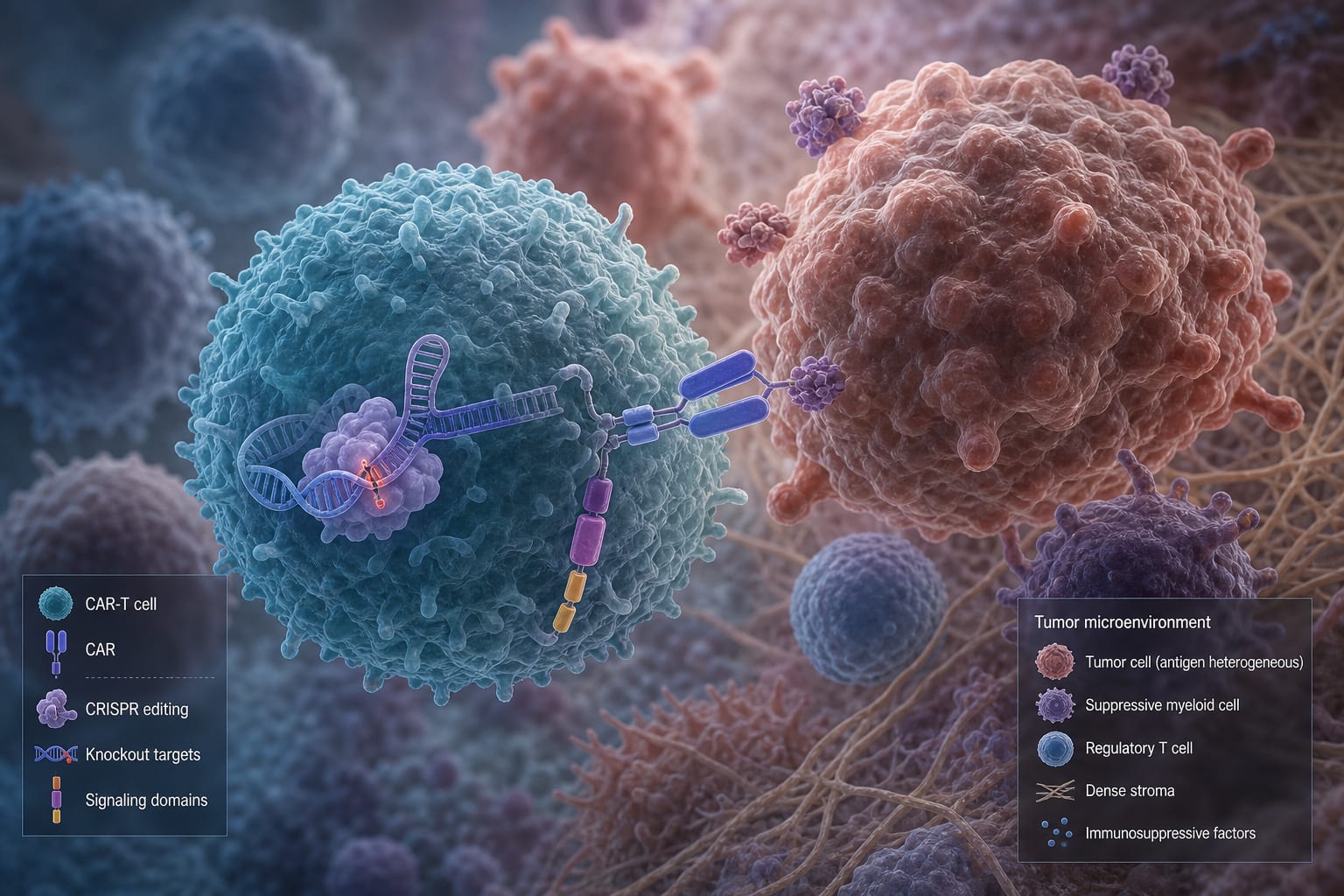
To review advancements in CAR-T cell therapy for colorectal cancer (CRC) and address the barriers of antigen heterogeneity, off-tumor toxicity, and efficacy-safety trade-offs.
Approach:
Key Findings:
Clinical evidence shows objective responses and disease stabilization in subsets of CRC patients.
The immunosuppressive tumor microenvironment limits CAR-T persistence.
Next-generation CAR-T strategies are needed to overcome antigen heterogeneity and off-tumor toxicity.
Interpretation:
Limitations:
Current preclinical models poorly predict human toxicities.
Most existing reviews do not integrate emerging strategies holistically.
Conclusion:
Future directions should focus on molecular typing-guided interventions, universal CAR-T approaches, and interdisciplinary collaboration to achieve durable remissions in advanced CRC.