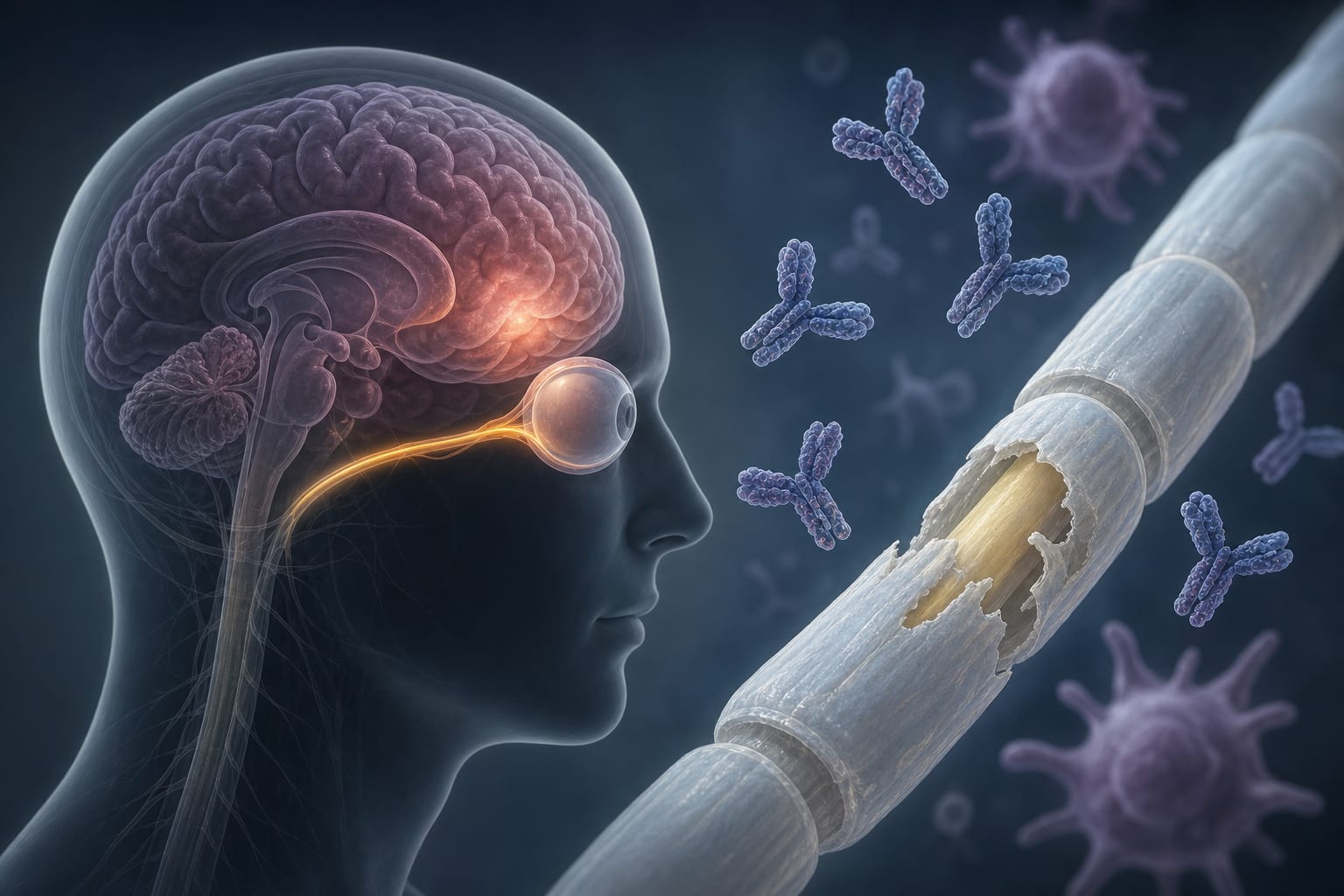
To present cases of patients with co-occurring anti-NMDAR encephalitis and MOGAD optic neuritis.
Approach:
Case Descriptions: Three patients with anti-NMDAR encephalitis and MOGAD optic neuritis were described, detailing their demographics, clinical presentations, investigations, and management.
Key Findings:
All patients tested positive for CSF anti-NMDAR antibodies during the encephalitis episode.
Positive serum MOG titers were found during the optic neuritis episode in all patients.
MRI revealed abnormal T2/FLAIR lesions and optic nerve enhancement in all cases.
Visual acuity improved to baseline levels following treatment in all patients, indicating effective management.
Interpretation:
The series highlights the overlap between anti-NMDAR encephalitis and MOGAD optic neuritis, indicating that optic neuritis may occur months to years after encephalitis.
Limitations:
The case series is limited by the small number of patients.
Long-term outcomes and the implications of dual autoimmunity require further investigation to understand their significance.
Conclusion:
Careful monitoring is necessary for patients with anti-NMDAR encephalitis who develop new visual symptoms.
Creatine's ATP-buffering trick isn't just for biceps. In mice, it juices up dendritic cells' energy supply, sharpening T-cell priming and shrinking tumors on daily injections. Human DCs got the memo too, at least in a dish. Early days, but a fun plot twist for gym-bag chemistry.