Hydrocephalus as a consistent predictor of in-hospital mortality in tuberculous meningitis: no age-specific effect modification in a lifespan cohort - Summary - MDSpire
Advertisement
Hydrocephalus as a consistent predictor of in-hospital mortality in tuberculous meningitis: no age-specific effect modification in a lifespan cohort
To determine whether hydrocephalus is independently associated with in-hospital mortality in tuberculous meningitis (TBM) and whether this association is modified by age.
Approach:
Study Design: A single-center retrospective cohort study of non-HIV TBM patients hospitalized between October 2013 and January 2024.
Statistical Analysis: Utilized least absolute shrinkage and selection operator regression for variable selection followed by Firth's penalized logistic regression for mortality association estimation.
Age-Related Analysis: Examined age-related effect modification through categorical and continuous interaction terms, stratified analyses, and restricted cubic splines modeling.
Key Findings:
In-hospital mortality rate was 11.9% among 1,574 patients.
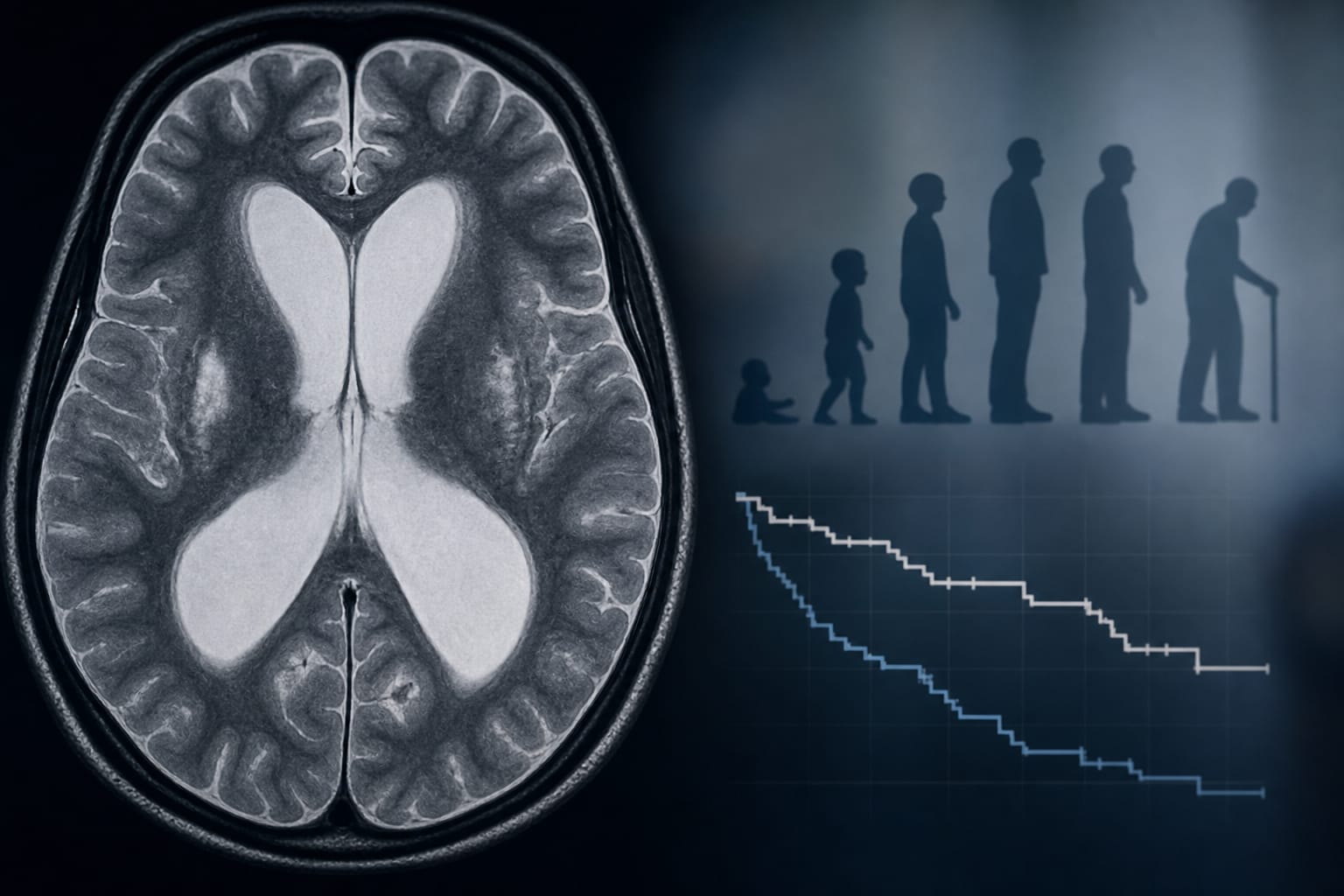
Hydrocephalus was independently associated with increased mortality risk across all age groups.
No statistically significant interaction between hydrocephalus and age was detected.
Predicted mortality increased with older age in both hydrocephalus groups, particularly in older patients, but the relative effect of hydrocephalus remained consistent across age.
Interpretation:
Hydrocephalus is a strong predictor of in-hospital mortality in TBM, with no statistically significant evidence of age modification in its effect.
Limitations:
The pediatric subgroup was relatively small, leading to wider confidence intervals, which may affect the reliability of the findings.
Conclusion:
Findings indicate the importance of monitoring hydrocephalus in TBM patients of all ages.