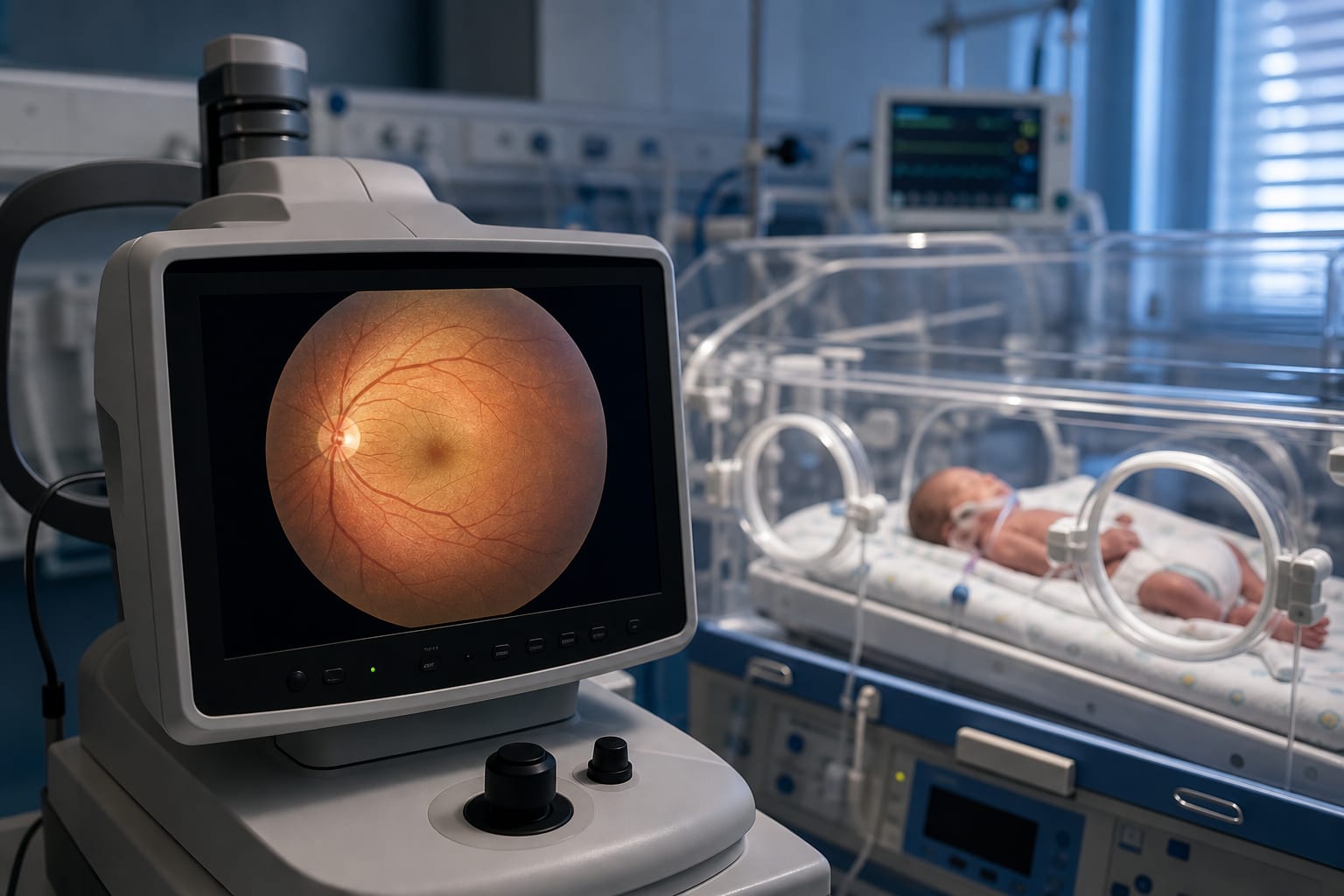
To evaluate the efficacy of a single objective screening criterion—birth weight (BW) < 2000g or gestational age (GA) < 32 weeks—for retinopathy of prematurity (ROP) detection, emphasizing the need to reduce over-screening caused by subjective clinical judgment.
Key Findings:
705 ROP cases (48.5%) and 370 severe ROP cases (25.5%) were identified, with statistical significance noted.
The objective group covered 98.2% of ROP cases and 99.2% of severe ROP cases, both statistically significant.
ROP and severe ROP prevalence were significantly higher in the objective group than in the subjective group (both P < 0.001).
Lower GA (OR = 1.42 per week decrease) and lower BW (OR = 1.21 per 100 g decrease) were identified as independent risk factors for severe ROP.
Interpretation:
The single objective criterion of BW < 2000g or GA < 32 weeks can effectively identify the high-risk population for ROP, while subjective extended screening has minimal clinical value in tertiary neonatal care institutions, suggesting a need for practice change.
Limitations:
The study was conducted in a single center, which may limit generalizability and the applicability of findings to other settings.
Potential biases in retrospective data collection.
Conclusion:
It is recommended that the subjective high-risk clause may be cautiously omitted in clinical practice within tertiary hospitals with advanced neonatal care capabilities, highlighting the importance of this change.
Justin Schweitzer, OD, FAAO, and Jessica Steen, OD, FAAO, describe emerging technologies, treatment strategies, and clinical considerations that can help eyecare professionals (ECPs) identify glaucoma earlier and better manage progression.