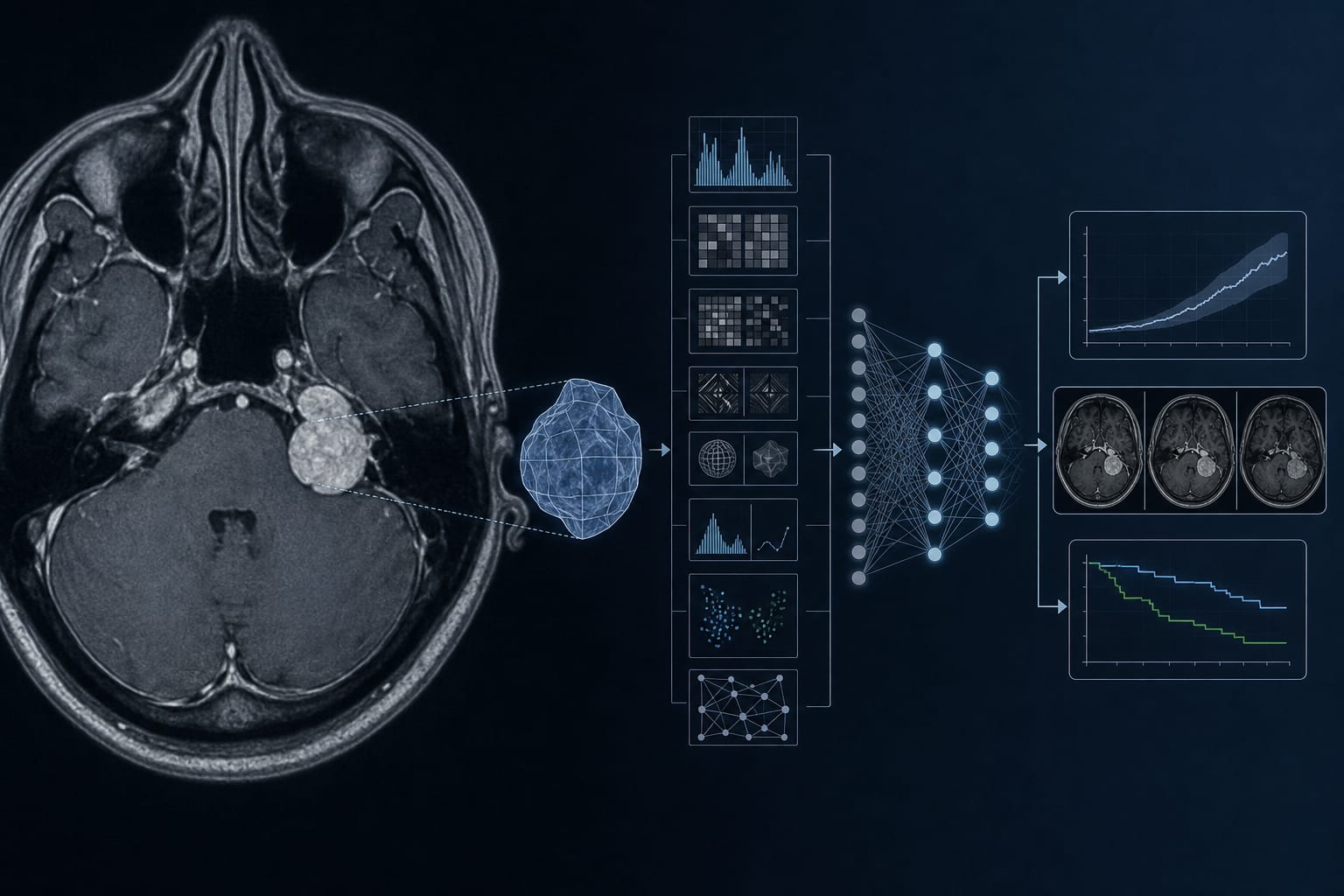
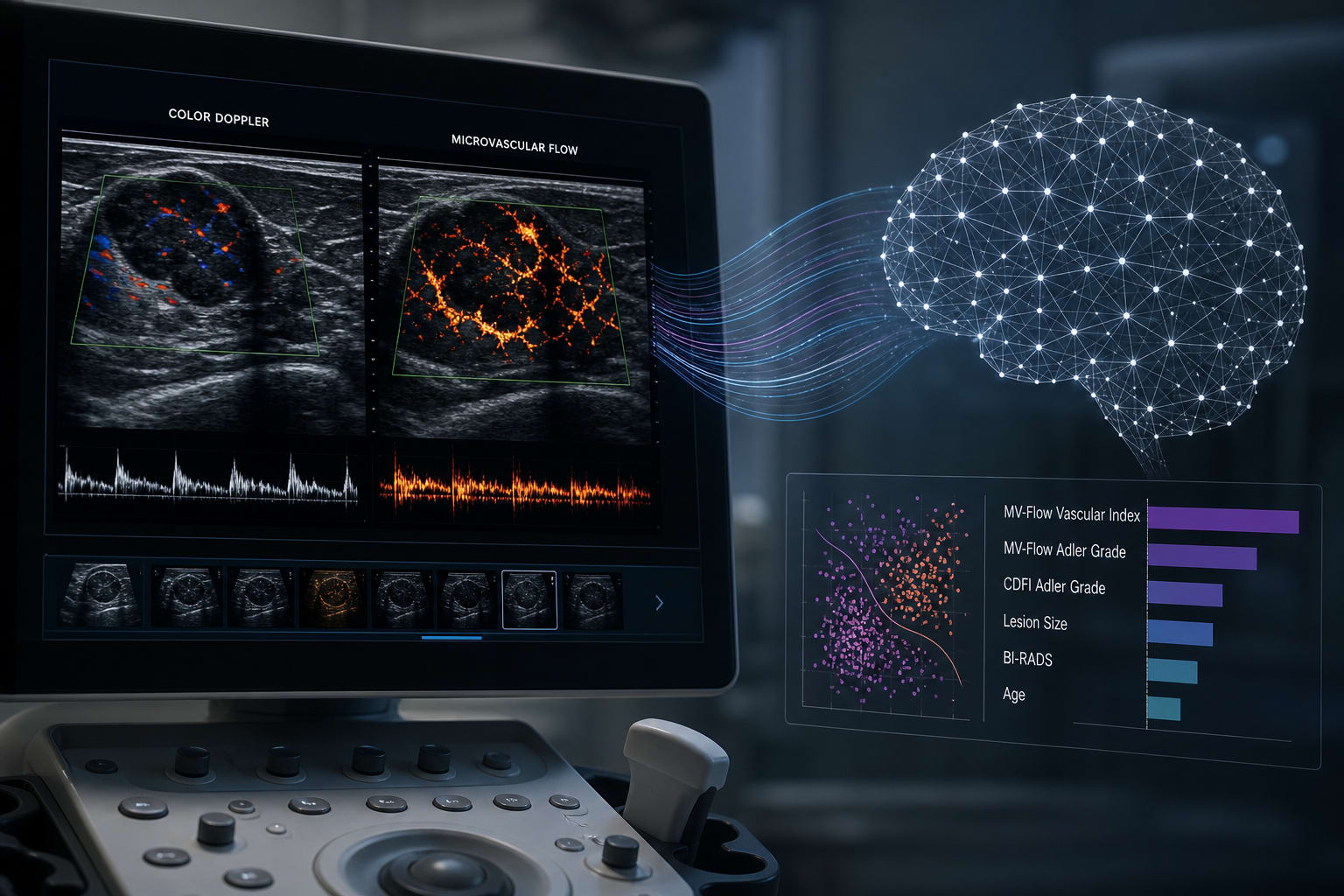
To summarize the current state of radiomics methodologies and propose future directions for predicting clinically significant outcomes in vestibular schwannomas (VS).
Approach:
Key Findings:
Thirteen studies met eligibility criteria, all employing a retrospective design, indicating a need for more prospective studies.
Four studies assessed pre-procedural clinical features, while nine evaluated post-procedural outcomes, highlighting the focus on treatment response.
Twelve studies utilized machine learning models to predict clinical outcomes from radiomic data, suggesting a trend towards advanced predictive analytics.
Interpretation:
Radiomics, combined with machine learning, shows potential for predicting outcomes in vestibular schwannomas, but the studies reviewed exhibit significant methodological limitations, particularly in external validation.
Limitations:
High risk of bias in several studies due to lack of external validation, which undermines the reliability of the findings.
Methodological limitations due to the absence of a prospectively registered review protocol, which could enhance study rigor.
Conclusion:
The review highlights the need for improved methodologies in radiomics studies, such as prospective validation and standardized protocols, to enhance predictive capabilities for clinical outcomes in vestibular schwannomas.
by Rithvik Gundlapalli, Purushotham Ramanathan, Veda Akula, Douglas Fox, Matthew Nguyen, Derek Meyers, Xin He, Mariam Ishaque, Ryan T. Kellogg, Benjamin D. Lovin, Jason Sheehan, Adam Thompson-Harvey, Georgios Maragkos, Ashok Asthagiri