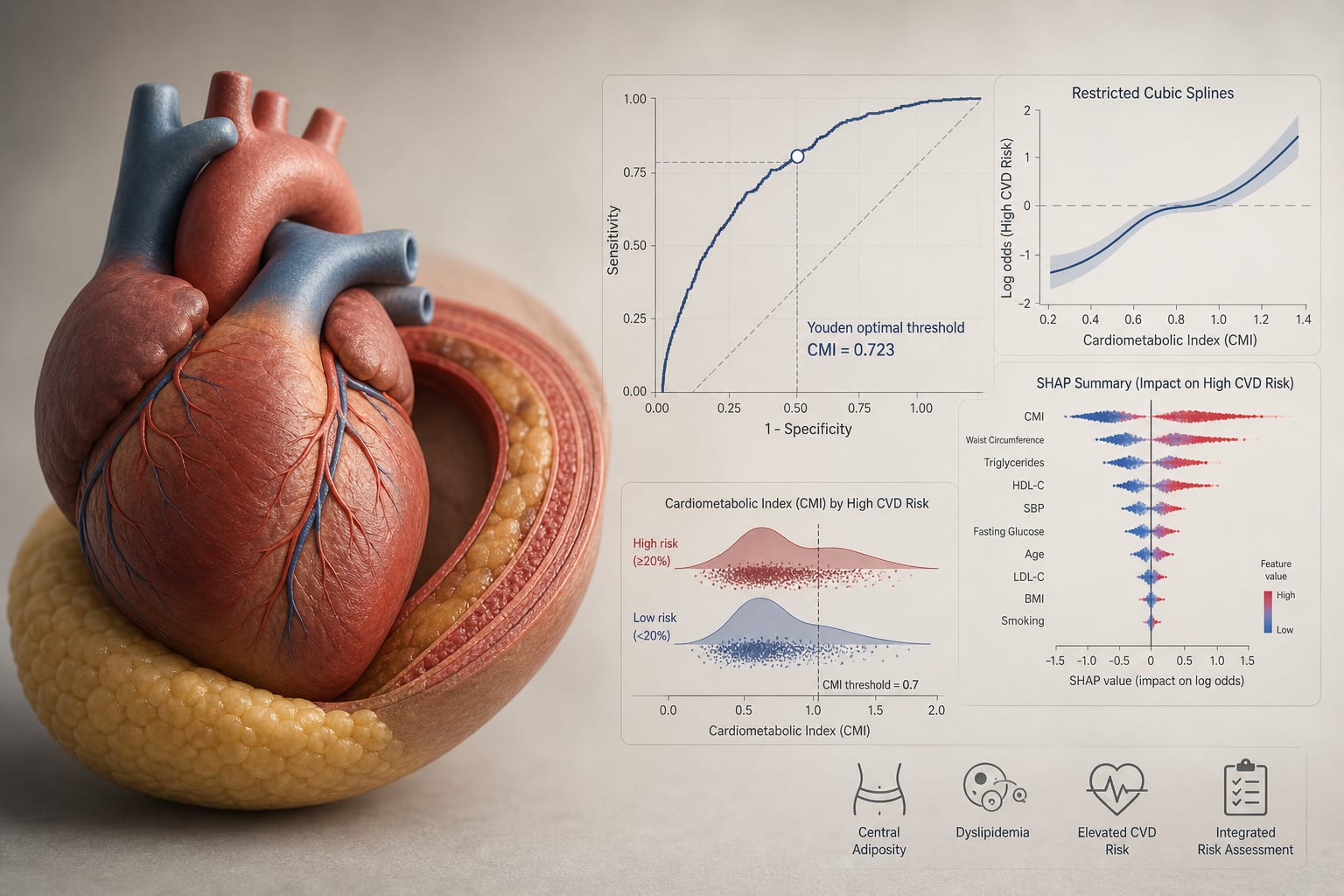
To evaluate the cardiometabolic index (CMI) as a tool for identifying high cardiovascular disease (CVD) risk specifically in community-dwelling Chinese adults.
Key Findings:
21% of participants were classified as CVD high risk, with higher prevalence in the high-CMI group (≥0.7).
CMI showed modest discrimination for CVD high-risk status (AUC: 0.571), but multivariable models improved this (AUC: 0.642).
CMI was associated with higher odds of CVD high risk (OR: 1.31 per 1-unit increase).
Machine learning analysis indicated CMI's significant role, ranking it third among important features.
Interpretation:
The CMI is a promising composite marker for assessing cardiovascular risk, demonstrating a nonlinear relationship with CVD risk status, which may have significant implications for risk stratification.
Limitations:
The study's cross-sectional design limits causal inference.
Data collection relied on self-reported measures, which may introduce bias.
Findings may not be generalizable to populations outside the study area.
Conclusion:
Higher CMI is associated with increased CVD risk, supporting its potential as an adjunct screening tool in community settings.