The missing microbial link in triclosan toxicity: comment on mechanism of liver fibrosis induced by life-long triclosan exposure in offspring rats - Summary - MDSpire
To analyze the adverse outcome pathway (AOP) related to triclosan (TCS)-induced liver fibrosis and highlight the role of microbial dysbiosis in this process.
Approach:
Analysis of AOP: The article reviews the roles of TGF-β1 and the AGEs-RAGE cascade in hepatic stellate cell activation, providing a mechanistic framework for understanding TCS-related liver hazards.
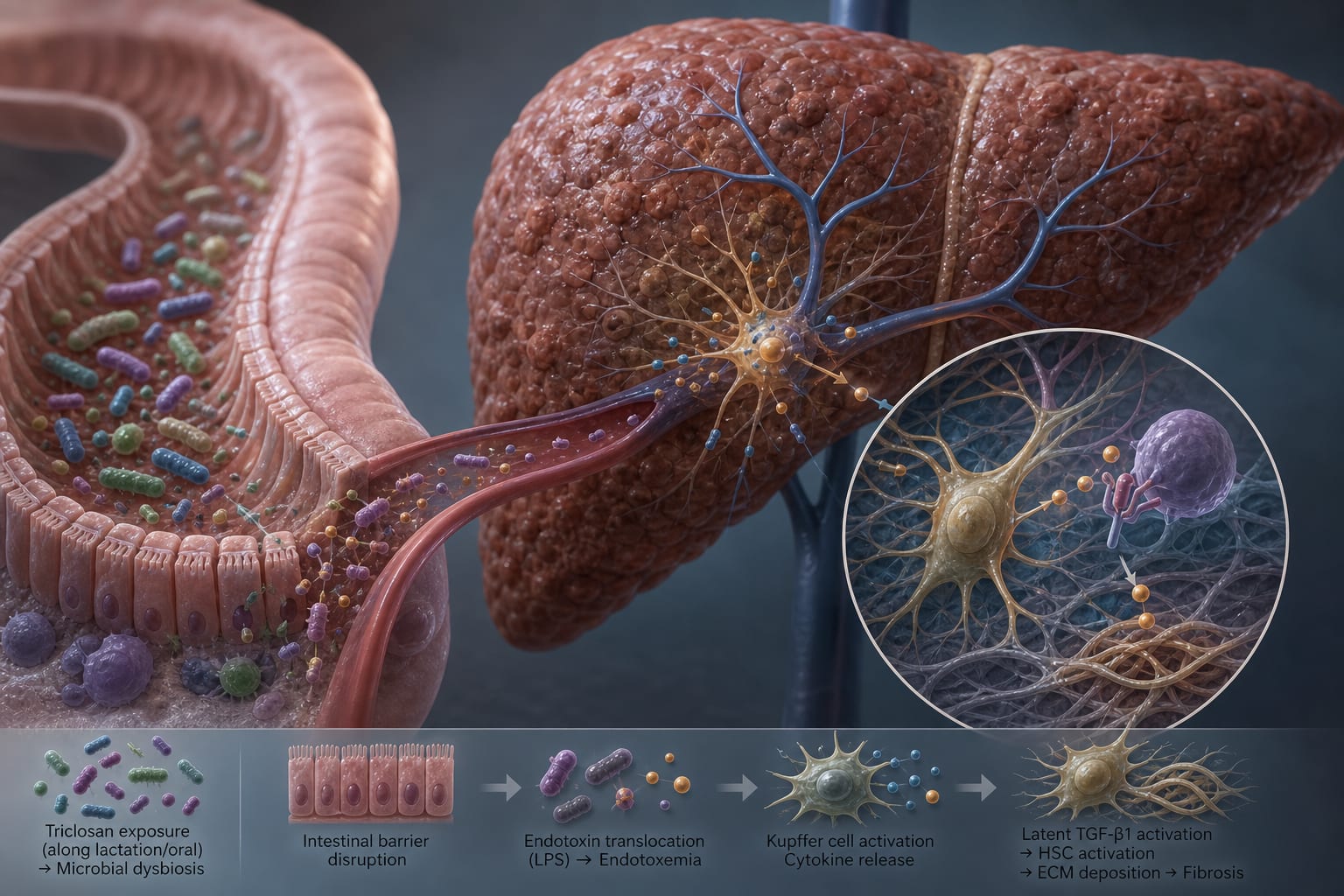
Critique of Current Model: The authors argue that the current model overlooks TCS's role as an antimicrobial, leading to gut microbiome disruption and subsequent liver toxicity.
Key Findings:
TCS exposure leads to microbial dysbiosis, compromising intestinal barrier integrity.
Dysbiosis allows for increased portal delivery of lipopolysaccharide (LPS) to the liver.
Kupffer cells respond to LPS by releasing pro-fibrogenic cytokines, particularly TGF-β1.
Microbial dysbiosis and endotoxemia may be the actual initiating events driving hepatic TGF-β1 surge.
Interpretation:
The authors suggest that future AOP models could benefit from including the gut-liver axis for a more comprehensive understanding of TCS-induced liver fibrosis.
Limitations:
The current AOP model does not account for the impact of the microbiome on liver toxicity.
Exclusion of microbial factors creates a gap in environmental risk assessments for antibacterial agents.
Conclusion:
Incorporating the gut-liver axis into AOP models may enhance understanding of the mechanisms behind TCS-induced liver fibrosis.