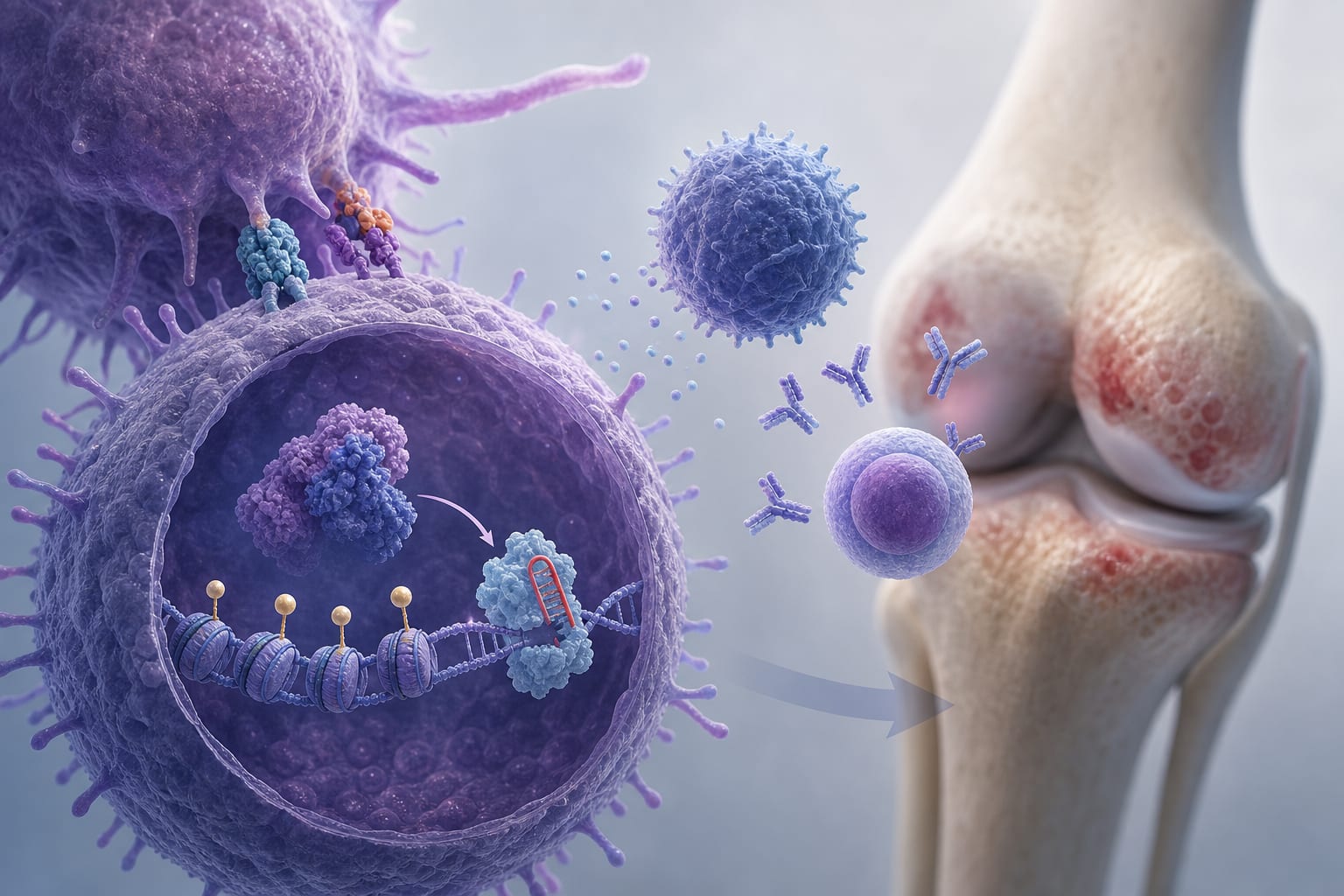
To explore the role of B cells in the pathogenesis of Sjögren's Syndrome (SjD) and the potential for endotyping to improve patient care.
Approach:
Case Presentation: A 39-year-old woman with a 15-year history of SjD complicated by leukocytoclastic vasculitis and inflammatory arthritis was presented, detailing her symptoms, treatment history, and laboratory findings.
Key Findings:
SjD presents with a wide range of symptoms affecting multiple organ systems.
Endotyping identifies three main subgroups of SjD: LSAHS, BALS, and HSA, each with distinct disease trajectories.
Lymphoma occurrence is associated with the BALS and HSA endotypes.
Interpretation:
Endotyping may enhance understanding of SjD and improve treatment strategies, although further research is needed.
Limitations:
The study of endotypes is still evolving and requires more longitudinal studies.
Current endotype classifications need prospective validation in diverse cohorts.
Conclusion:
Endotyping in SjD may lead to better patient management, but more research is necessary to validate these findings and their clinical application.
Combined rheumatoid factor and anticitrullinated protein antibody status appeared to modify the association between baseline rheumatoid arthritis disease activity and subsequent cardiovascular events in an international observational cohort.