To investigate how specific environmental signals during maturation influence the ability of dendritic cells (DC) to facilitate HIV-1 trans-infection of CD4+ T cells.
Key Findings:
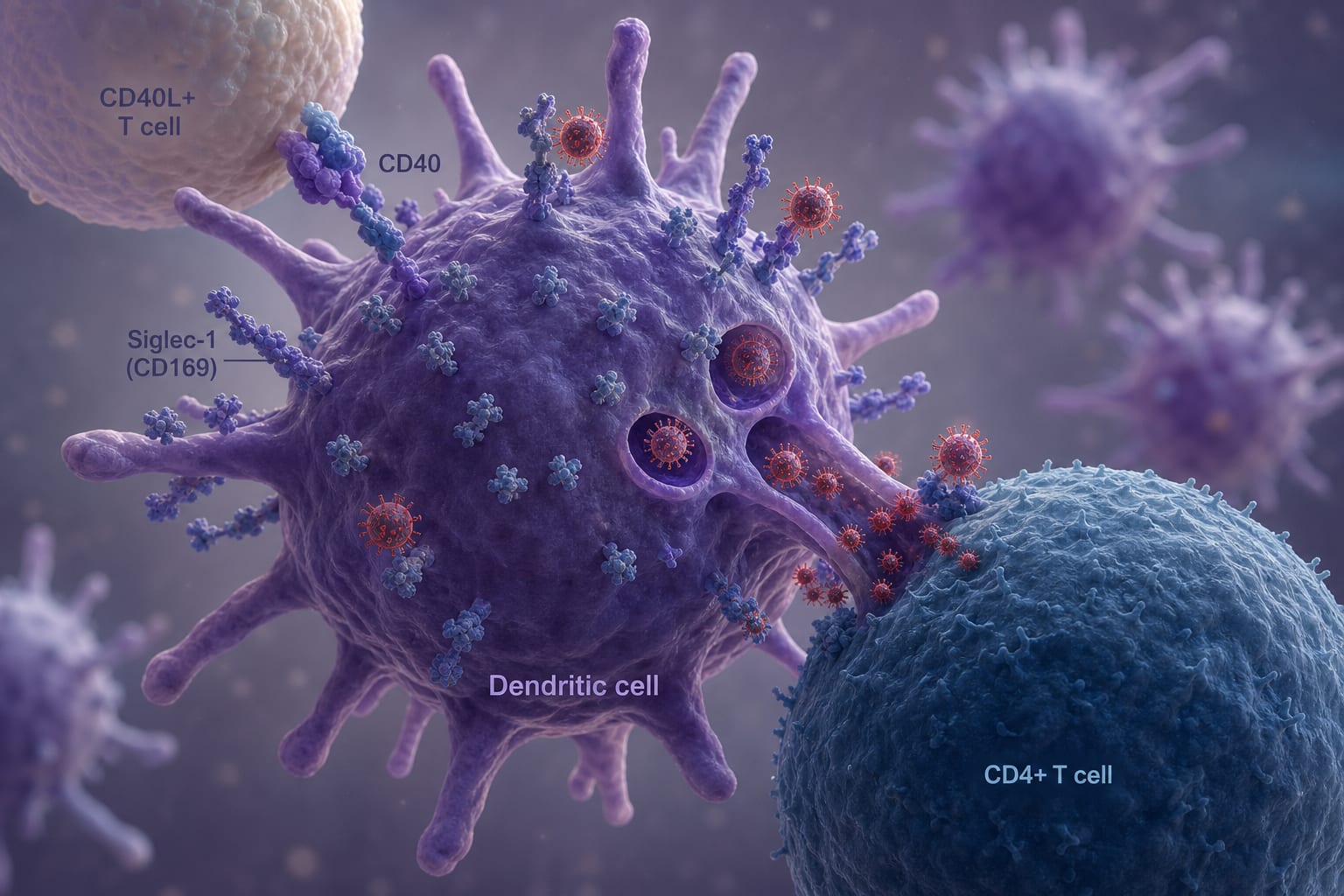
Monocyte-derived DC matured under type-1 proinflammatory conditions exhibit enhanced capacity for HIV-1 trans-infection.
Prostaglandin E2 exposure diminishes the trans-infection capacity of DC.
Increased Siglec-1 expression on DC enhances their binding to HIV-1.
CD40L signaling induces morphological changes in DC and promotes CCL20 release, increasing CD4+ T cell susceptibility to HIV-1.
Interpretation:
The study demonstrates that the maturation environment of DC and their responsiveness to CD40L significantly influence their capacity to facilitate HIV-1 trans-infection, with potential implications for therapeutic strategies.
Limitations:
The study primarily focuses on in vitro conditions, which may not fully replicate the complexities of in vivo scenarios.
Further research is needed to explore the long-term implications of these findings on HIV-1 pathogenesis and treatment.
Conclusion:
The nature of environmental signals received by DC during maturation is crucial for their role in HIV-1 trans-infection.
by E. Grace Bothwell, Allison E. DePuyt, Colleen R. Zaccard, Renee. R. Anderko, Peter E. J. Shoucair, Holly A. Bilben, Tatiana M. Garcia-Bates, Abigail D. Gerberick, Simon C. Watkins, Nicolas Sluis-Cremer, Charles R. Rinaldo, Robbie B. Mailliard