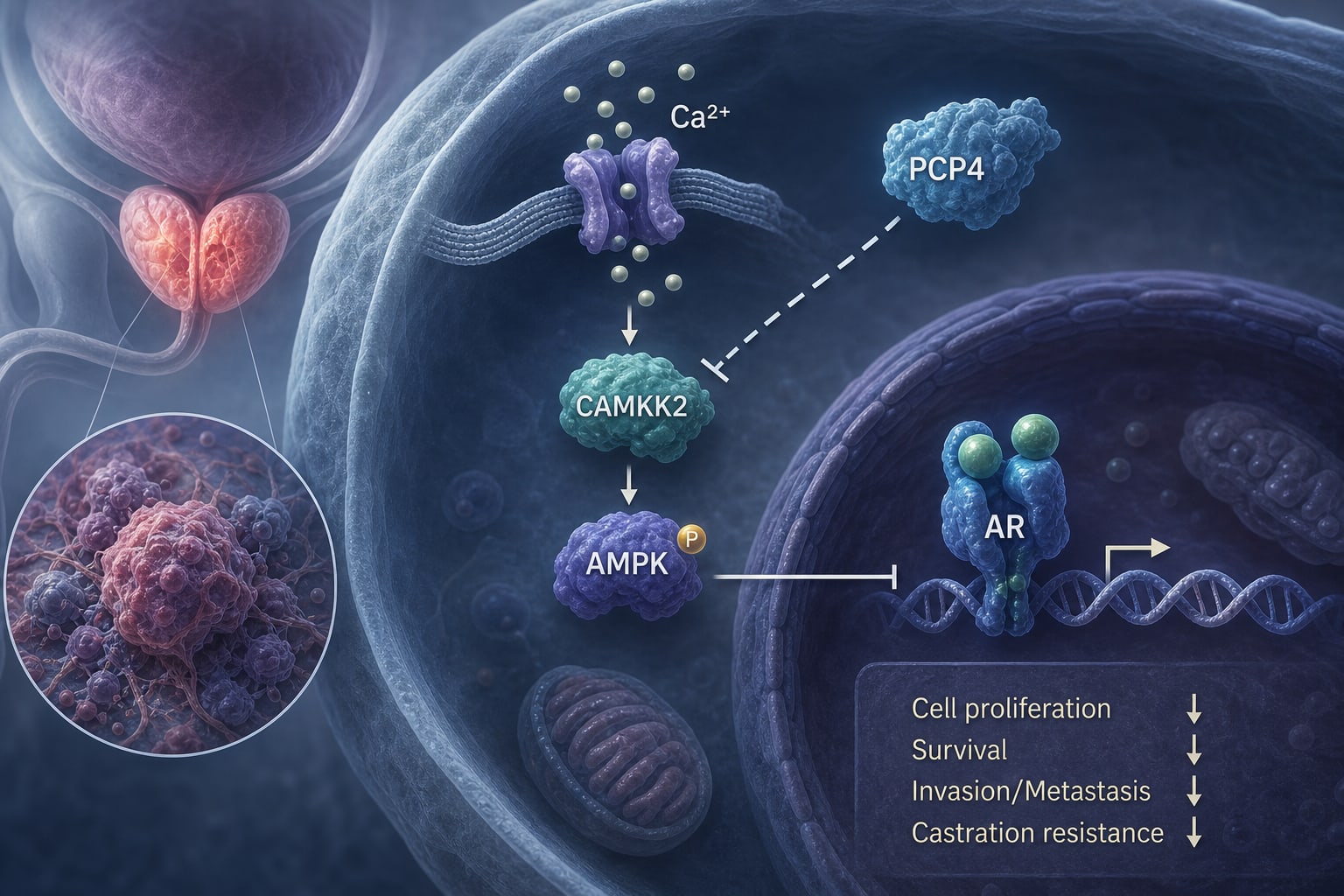
To analyze the findings of the study by Jia et al. regarding the role of PCP4 in prostate cancer progression through the Ca2+/CAMKK2/AMPK/AR signaling pathway.
Approach:
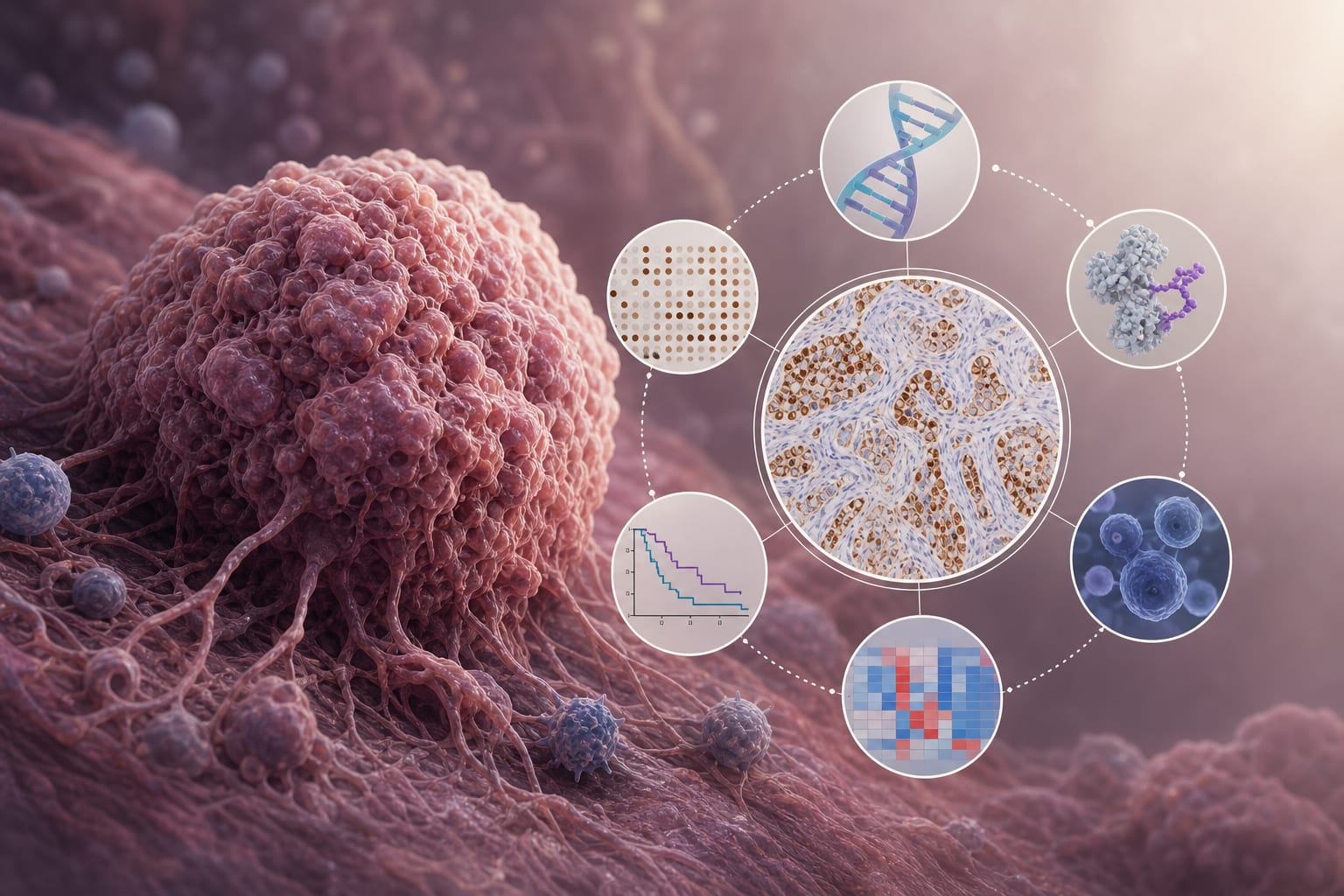
Research Framework: The study utilized a comprehensive approach involving public database mining, in vitro functional assays, in vivo xenograft models, and molecular mechanistic studies.
Clinical Correlation: The authors analyzed the association between PCP4 expression and clinicopathological parameters using multiple datasets.
Feedback Regulation Discovery: The study identified a feedback loop between PCP4 and CAMKK2, revealing their regulatory relationship in prostate cancer.
Key Findings:
Downregulation of PCP4 promotes prostate cancer progression by activating the Ca2+/CAMKK2/AMPK/AR signaling axis.
Low PCP4 expression correlates with higher T stage, higher Gleason score, and shorter disease-free survival.
PCP4 acts as a repressive target gene of AR and is involved in a feedback loop with CAMKK2.
Interpretation:
The findings indicate a potential role for the PCP4-CAMKK2 axis in the context of PCP4-deficient castration-resistant prostate cancer.
Limitations:
The molecular mechanism by which PCP4 regulates CAMKK2 protein stability remains unclear.
Further investigation is needed to determine the specific degradation pathway involved in PCP4's effect on CAMKK2.
Conclusion:
The study provides insights into the molecular mechanisms of CRPC and identifies PCP4 as a potential therapeutic target.