To examine the current status and challenges of glioblastoma (GBM) immunotherapy, specifically addressing the physical and immunological barriers, and explore the potential of meningeal immune responses and interstitial treatment strategies.
Approach:
Key Findings:
GBM is characterized by a poor prognosis and significant immunosuppressive barriers that hinder treatment efficacy.
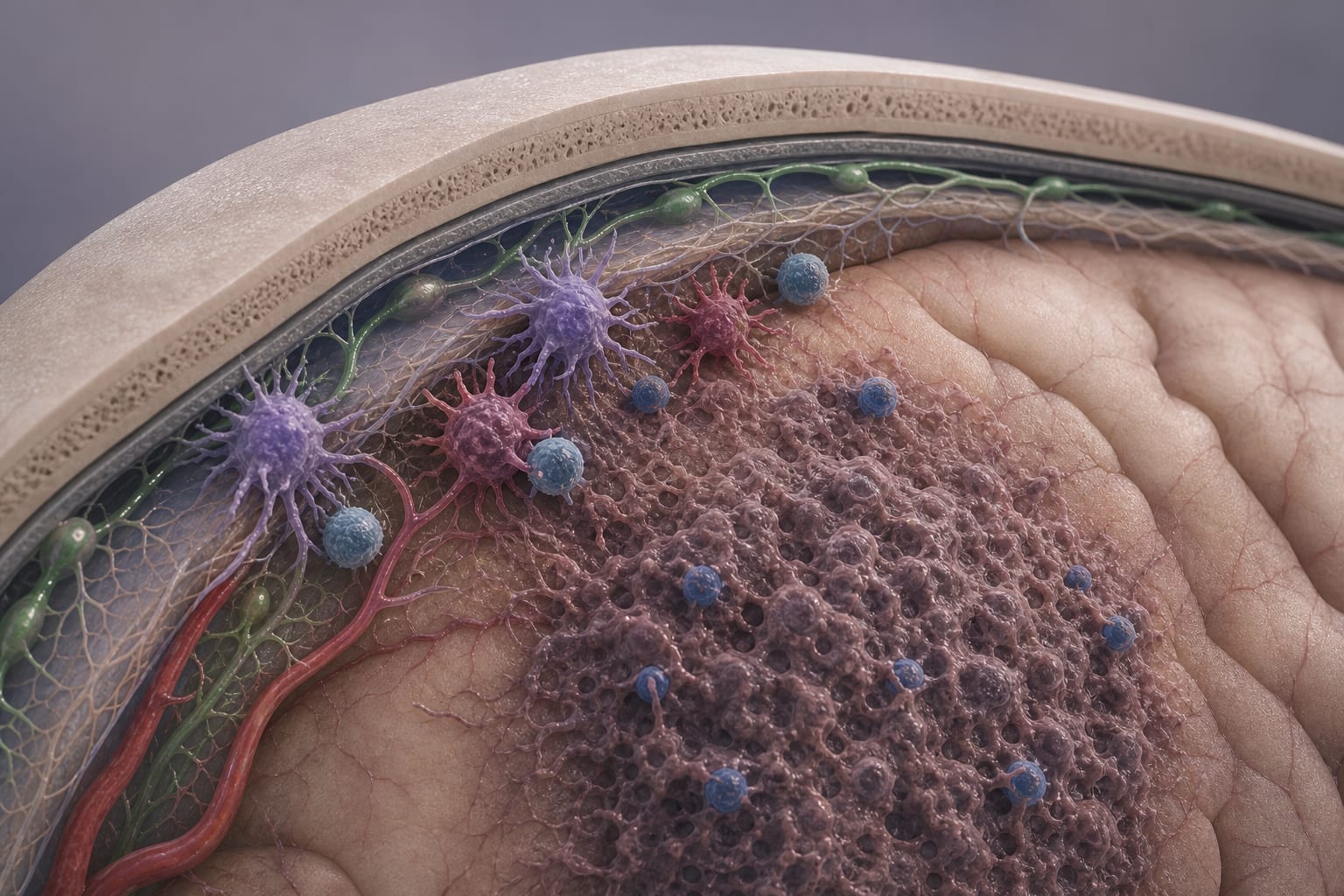
The discovery of meningeal lymphatic vessels and rBAMs highlights the meninges as an active immunological interface that can be targeted.
rBAMs play a crucial role in modulating CNS immunity and may enhance anti-tumor responses through their interactions with T cells.
Meningeal vascular blockage can expand rBAM populations, promoting T cell activation and improving responses against GBM.
Interpretation:
The meningeal immune system represents a promising target for enhancing immunotherapy in GBM by overcoming traditional barriers posed by the tumor microenvironment and blood-brain barrier.
Limitations:
The review does not provide clinical trial data to support the proposed interstitial immunotherapy approach, indicating a gap in practical application.
Further research is needed to fully understand the mechanisms and efficacy of targeting the meningeal immune system, including clinical validation.
Conclusion:
Meningeal immune responses and interstitial treatment strategies may offer new avenues for improving immunotherapy outcomes in glioblastoma.