Identification of clinical phenotypes and prediction model for the mixed-infection phenotype of pediatric community-acquired pneumonia based on unsupervised machine learning - Summary - MDSpire
Advertisement
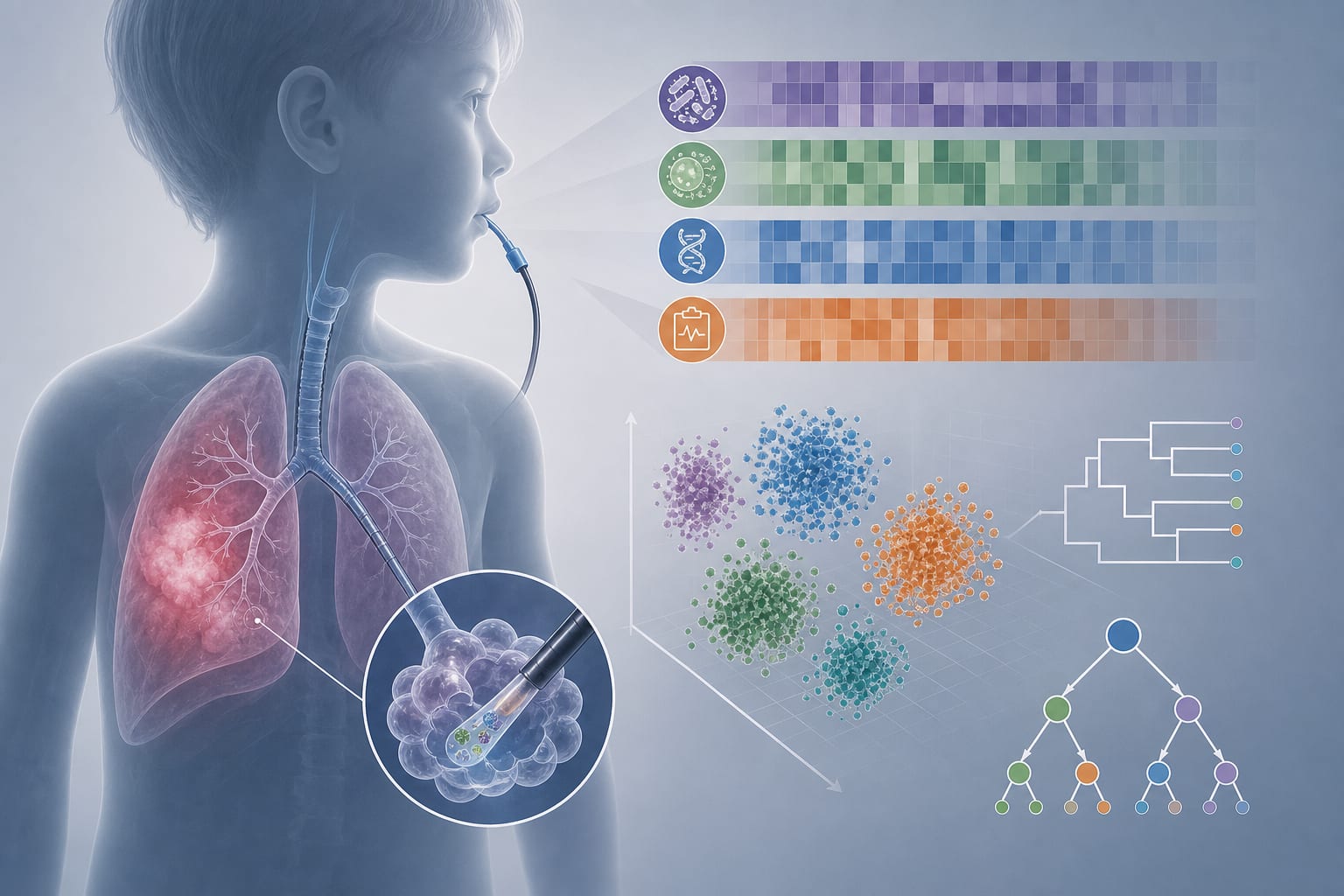
Identification of clinical phenotypes and prediction model for the mixed-infection phenotype of pediatric community-acquired pneumonia based on unsupervised machine learning
To systematically identify distinct clinical phenotypes of pediatric community-acquired pneumonia (CAP) and develop a prediction model for the Mixed-Infection phenotype using unsupervised machine learning, ultimately aiming to improve treatment outcomes.
Key Findings:
Three clinical phenotypes identified: Mycoplasma-Dominant (37.7%), Mixed-Infection (28.2%), and High-Inflammation (34.1%). The Mixed-Infection phenotype had the highest proportion of prolonged hospitalization (31.4%), though this difference was not statistically significant (p = 0.117), indicating a trend that warrants further investigation.
Prediction model based on white blood cell count, lactate dehydrogenase, and procalcitonin showed AUC = 0.917 and accuracy = 91.3%, suggesting strong predictive capability.
Interpretation:
The study reveals distinct pathogen-host interaction patterns in pediatric CAP and provides a tool for early identification of the Mixed-Infection phenotype, which may improve clinical management and patient outcomes.
Limitations:
Findings are based on a bronchoscopy/BAL-selected cohort, limiting generalizability to all pediatric CAP patients; this selection may skew the understanding of the broader population.
Further validation in larger prospective cohorts is needed to confirm the model's applicability and address the limitations of the current study.
Conclusion:
The study successfully identifies clinical phenotypes in pediatric CAP and develops a promising early identification tool for Mixed-Infection, warranting further research to establish broader applicability and enhance clinical practice.