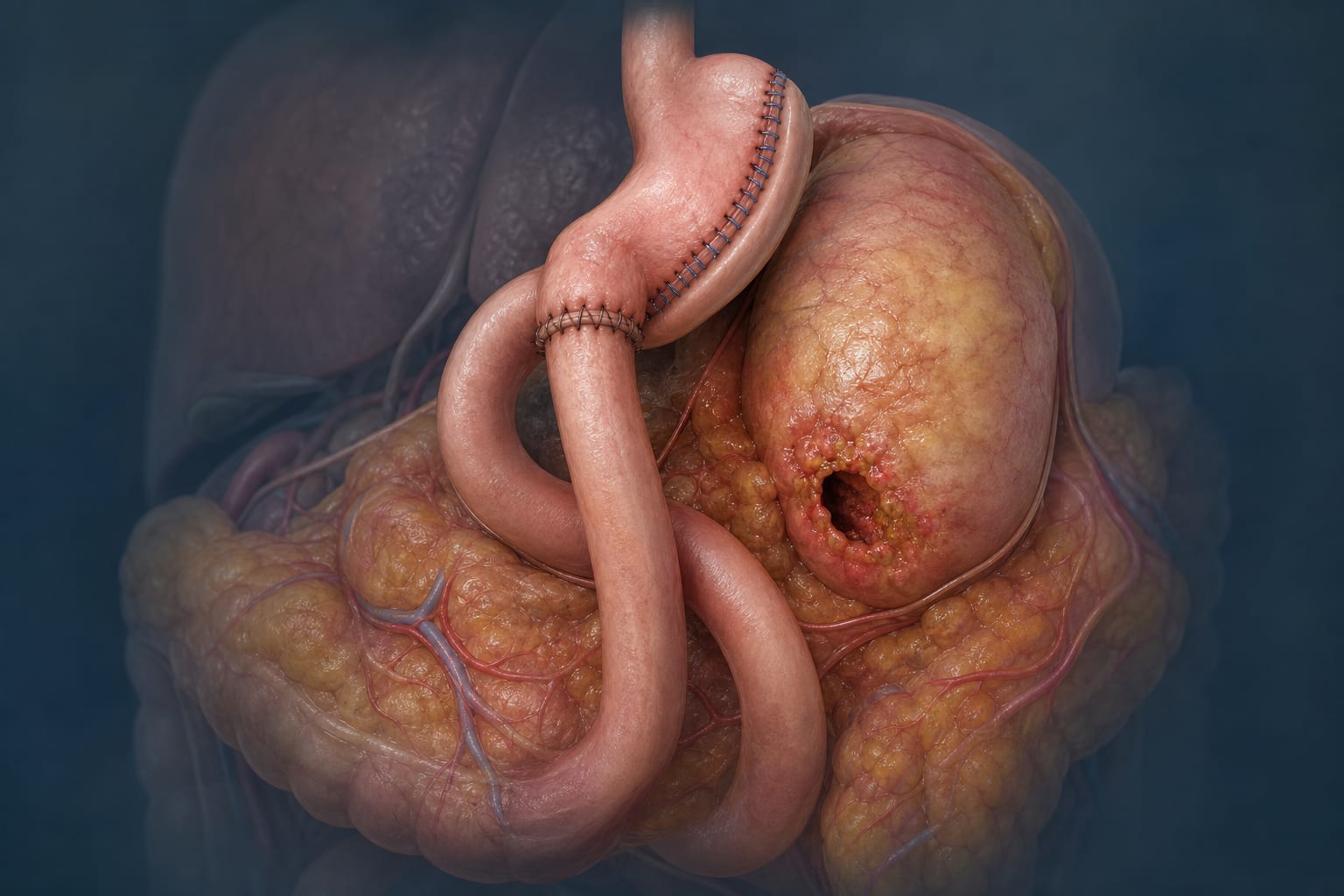
To evaluate the efficacy of combining intragastric balloon (IGB) insertion with semaglutide in promoting weight loss in patients with overweight or obesity, addressing a significant gap in obesity management.
Key Findings:
The combination of IGB and semaglutide resulted in greater weight loss compared to IGB alone, with participants losing an average of X kg.
Participants in the semaglutide group experienced enhanced satiety and reduced appetite, contributing to improved adherence to dietary protocols.
The study demonstrated the feasibility of combining pharmacotherapy with endoscopic interventions, suggesting a novel approach to obesity treatment.
Interpretation:
The findings suggest that adjunctive semaglutide therapy may enhance the weight loss effects of intragastric balloons, providing a promising approach for obesity management.
Limitations:
The study was open-label, which may introduce bias, potentially affecting the perceived efficacy of the interventions.
Sample size was limited to 50 participants, affecting generalizability and the ability to detect smaller effects.
Short follow-up duration post-treatment may not capture long-term outcomes, necessitating further research.
Conclusion:
Combining semaglutide with intragastric balloon therapy may offer an effective strategy for weight loss in obese patients, warranting further investigation in larger, blinded studies to confirm these findings and explore long-term effects.