SinglePass electrocautery device for closure of lung and mediastinal biopsy: a case series of 5 patients - Summary - MDSpire

SinglePass electrocautery device for closure of lung and mediastinal biopsy: a case series of 5 patients

  • By

  • Tust Techasith

  • Abhishek Jairam

  • Benjamin Park

  • Avinash Mesipam

  • Christopher Baker

  • Brian Cristiano

  • Thomas Velling

  • Trushar Patel

  • Behroz Oftadeh

  • Quan Dang

  • Lindsey Young

  • Vincent Nguyen

  • Kristen Raust

  • Matthew Roughley

  • Nathan Nguyen

  • Yurtizi Chavez

  • Alexander S. Misono

  • June 30, 2026

  • 0 min

Share

Objective:

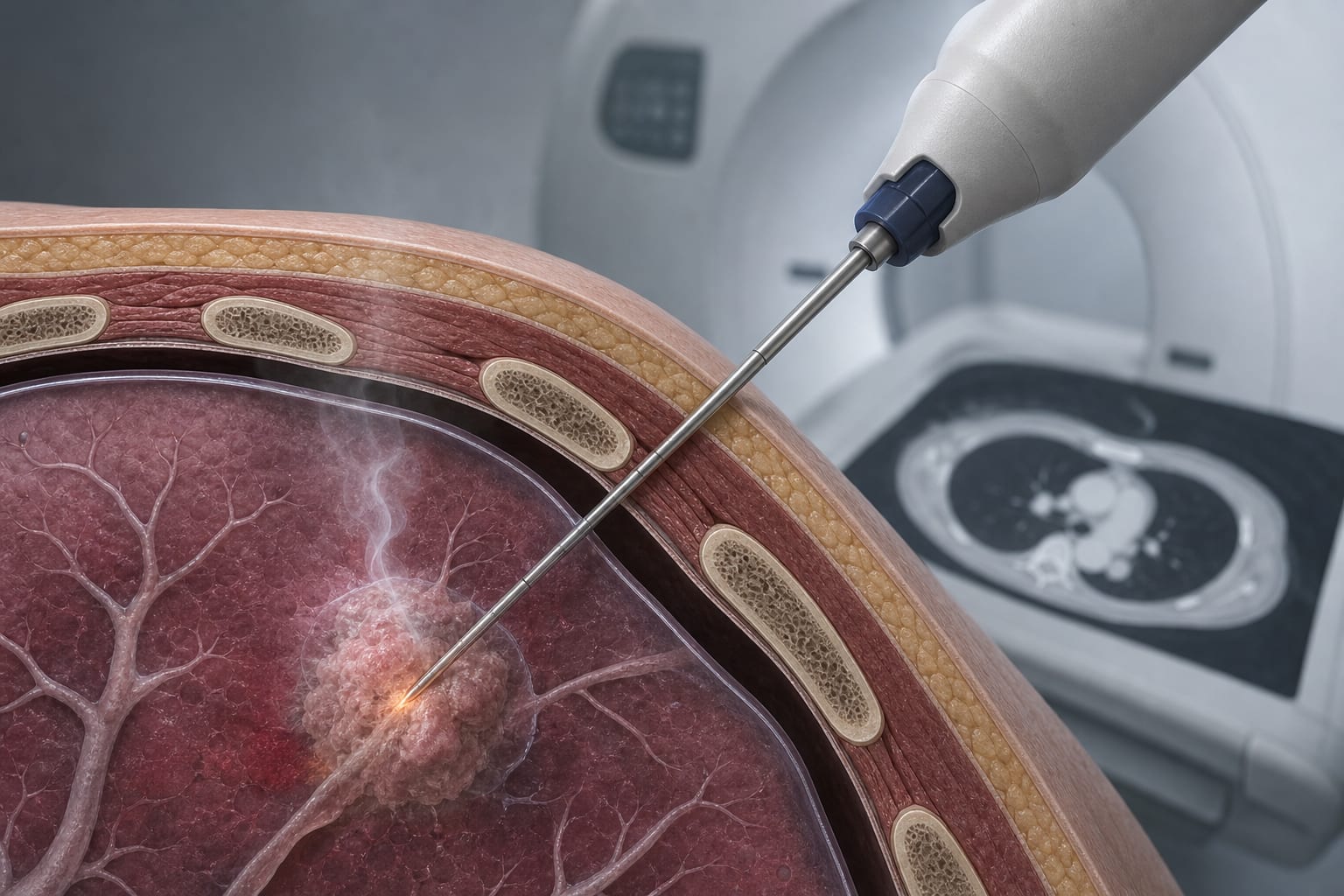
To evaluate the safety, feasibility, and early outcomes of using the SinglePass electrocautery device for hemostasis and biopsy tract closure in lung and mediastinal biopsies.

Approach:
  • Method: F
  • Method: i
  • Method: v
  • Method: e
  • Method: p
  • Method: a
  • Method: t
  • Method: i
  • Method: e
  • Method: n
  • Method: t
  • Method: s
  • Method: u
  • Method: n
  • Method: d
  • Method: e
  • Method: r
  • Method: w
  • Method: e
  • Method: n
  • Method: t
  • Method: C
  • Method: T
  • Method: -
  • Method: g
  • Method: u
  • Method: i
  • Method: d
  • Method: e
  • Method: d
  • Method: c
  • Method: o
  • Method: a
  • Method: x
  • Method: i
  • Method: a
  • Method: l
  • Method: c
  • Method: o
  • Method: r
  • Method: e
  • Method: n
  • Method: e
  • Method: e
  • Method: d
  • Method: l
  • Method: e
  • Method: b
  • Method: i
  • Method: o
  • Method: p
  • Method: s
  • Method: i
  • Method: e
  • Method: s
  • Method: (
  • Method: C
  • Method: C
  • Method: N
  • Method: B
  • Method: )
  • Method: o
  • Method: f
  • Method: l
  • Method: u
  • Method: n
  • Method: g
  • Method: a
  • Method: n
  • Method: d
  • Method: m
  • Method: e
  • Method: d
  • Method: i
  • Method: a
  • Method: s
  • Method: t
  • Method: i
  • Method: n
  • Method: a
  • Method: l
  • Method: m
  • Method: a
  • Method: s
  • Method: s
  • Method: l
  • Method: e
  • Method: s
  • Method: i
  • Method: o
  • Method: n
  • Method: s
  • Method: ,
  • Method: u
  • Method: t
  • Method: i
  • Method: l
  • Method: i
  • Method: z
  • Method: i
  • Method: n
  • Method: g
  • Method: t
  • Method: h
  • Method: e
  • Method: S
  • Method: i
  • Method: n
  • Method: g
  • Method: l
  • Method: e
  • Method: P
  • Method: a
  • Method: s
  • Method: s
  • Method: e
  • Method: l
  • Method: e
  • Method: c
  • Method: t
  • Method: r
  • Method: o
  • Method: c
  • Method: a
  • Method: u
  • Method: t
  • Method: e
  • Method: r
  • Method: y
  • Method: d
  • Method: e
  • Method: v
  • Method: i
  • Method: c
  • Method: e
  • Method: f
  • Method: o
  • Method: r
  • Method: h
  • Method: e
  • Method: m
  • Method: o
  • Method: s
  • Method: t
  • Method: a
  • Method: s
  • Method: i
  • Method: s
  • Method: a
  • Method: n
  • Method: d
  • Method: c
  • Method: l
  • Method: o
  • Method: s
  • Method: u
  • Method: r
  • Method: e
  • Method: a
  • Method: f
  • Method: t
  • Method: e
  • Method: r
  • Method: t
  • Method: h
  • Method: e
  • Method: b
  • Method: i
  • Method: o
  • Method: p
  • Method: s
  • Method: y
  • Method: p
  • Method: r
  • Method: o
  • Method: c
  • Method: e
  • Method: d
  • Method: u
  • Method: r
  • Method: e
  • Method: s
  • Method: .
Key Findings:
  • All biopsy procedures were successful with no reported complications within 30 days post-procedure.
  • Imaging confirmed the absence of pneumothorax and bleeding complications in all cases, utilizing CT imaging techniques.
Interpretation:

The SinglePass electrocautery device may effectively minimize pneumothorax and hemorrhagic complications associated with percutaneous lung and mediastinal biopsies.

Limitations:
  • The study involves a small sample size of only five patients.
  • Long-term outcomes and effectiveness beyond 30 days are not assessed.
Conclusion:

The SinglePass electrocautery device shows promise as a tool for enhancing safety in lung and mediastinal biopsies.

Original Source(s)

Related Content