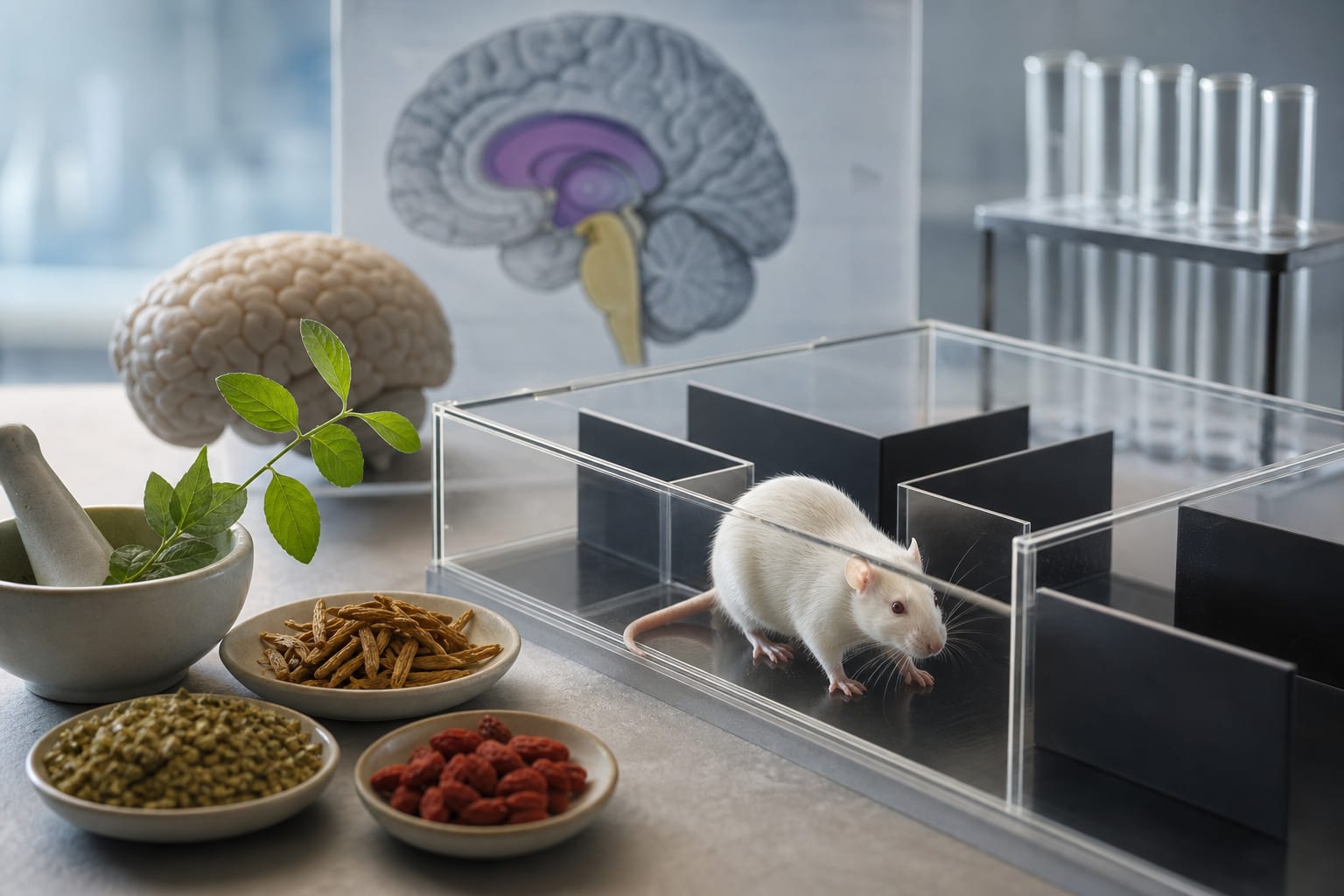
To evaluate animal studies investigating herbal medicines for ADHD, identify limitations in experimental models and methodologies, and propose a framework for future research, particularly focusing on methodological rigor and translational relevance.
Key Findings:
25 studies analyzed, with a strong reliance on spontaneously hypertensive rats (48%) and predominantly male animals (88%).
Behavioral assessments focused mainly on hyperactivity (72%), with limited evaluations of inattention and impulsivity.
Herbal interventions showed improvements in ADHD-like behaviors and modulation of catecholaminergic neurotransmission, including increased dopamine and norepinephrine levels.
80% of studies did not report safety outcomes, and no study clearly described randomization or blinding procedures.
Certain formulations, such as Long Mu Qing Xin mixture and An Shen Ding Zhi Ling, demonstrated promising multitarget effects.
Interpretation:
Herbal medicines show potential for ADHD treatment, but limitations in study designs and methodologies hinder their translational relevance, necessitating improved research standards.
Limitations:
Limited diversity of animal models used, impacting generalizability.
Narrow scope of behavioral assessments, limiting understanding of ADHD.
Lack of safety outcome reporting, raising concerns about intervention safety.
Absence of clear randomization and blinding procedures, affecting study validity.
Conclusion:
Future research should prioritize diverse models, comprehensive assessments, and rigorous methodological standards, particularly in safety evaluations and behavioral assessments.
April Jasper, OD, FAAO, and Dori Carlson, OD, MAL, FAAO, sat down for a conversation on how ODs can recognize burnout in themselves and ways they can find their way back to well-being.