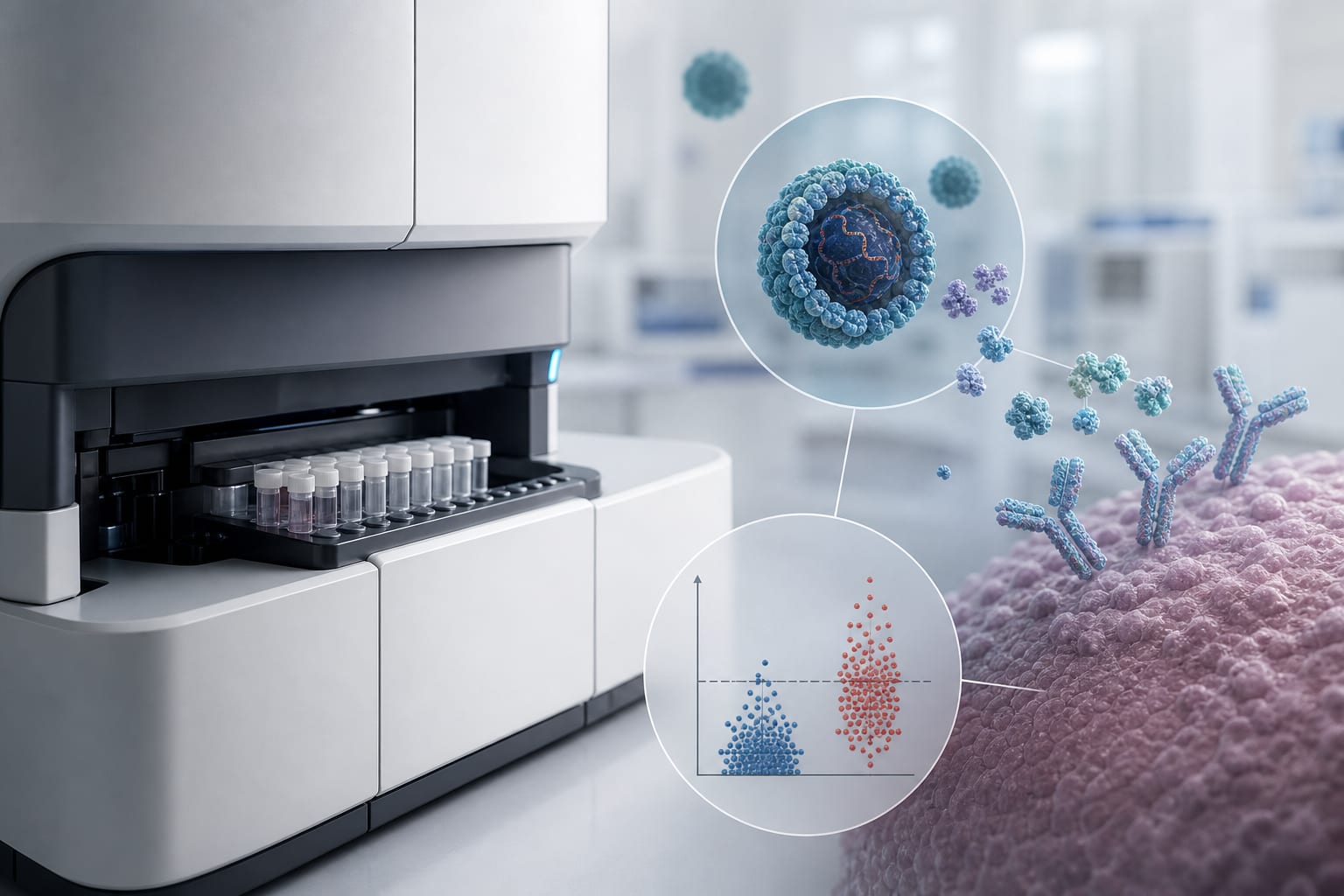
To investigate whether high-sensitivity electrochemiluminescence immunoassay of HBsAg (ECLIA-HBsAg) can provide a better definition of deep functional cure in chronic hepatitis B (CHB) patients discontinuing interferon therapy, addressing the potential misclassification of patients by conventional assays.
Approach:
Study Design: A retrospective study involving 292 CHB patients who reached interferon-induced functional cure, with HBsAg measured by both ELISA and ECLIA during a 48-week follow-up.
Data Collection: Clinical-virological data were collected at treatment cessation and during follow-up, with predictor selection using LASSO-Cox regression.
Model Evaluation: Model performance was assessed using time-dependent ROC curves, calibration analysis, and decision curve analysis (DCA).
Key Findings:
24 patients (8.2%) relapsed during the follow-up period.
Cumulative relapse rates at 12, 24, 36, and 48 weeks were 1.4%, 3.8%, 6.2%, and 8.2%, respectively.
ECLIA-HBsAg was the sole independent predictor of relapse (HR: 9.32, 95% CI: 4.97–17.47, p<0.001).
Patients with ECLIA-HBsAg >0.38 COI had a significantly higher relapse risk (p=0.0029).
The mean lead-time gain of ECLIA-HBsAg over ELISA-HBsAg was 28 weeks in functional relapsers (95% CI: 20.5-35.5 weeks, p < 0.001).
Interpretation:
The study suggests that patients classified as functionally cured by conventional ELISA may still have residual HBsAg detectable by ECLIA, indicating a need for more sensitive testing to define 'deep functional cure'.
Limitations:
The study is retrospective and may be subject to biases inherent in such designs.
The findings are based on a single-center cohort, which may limit generalizability to broader populations.
Conclusion:
ECLIA may serve as a new standard for defining 'deep functional cure' in clinical practice.