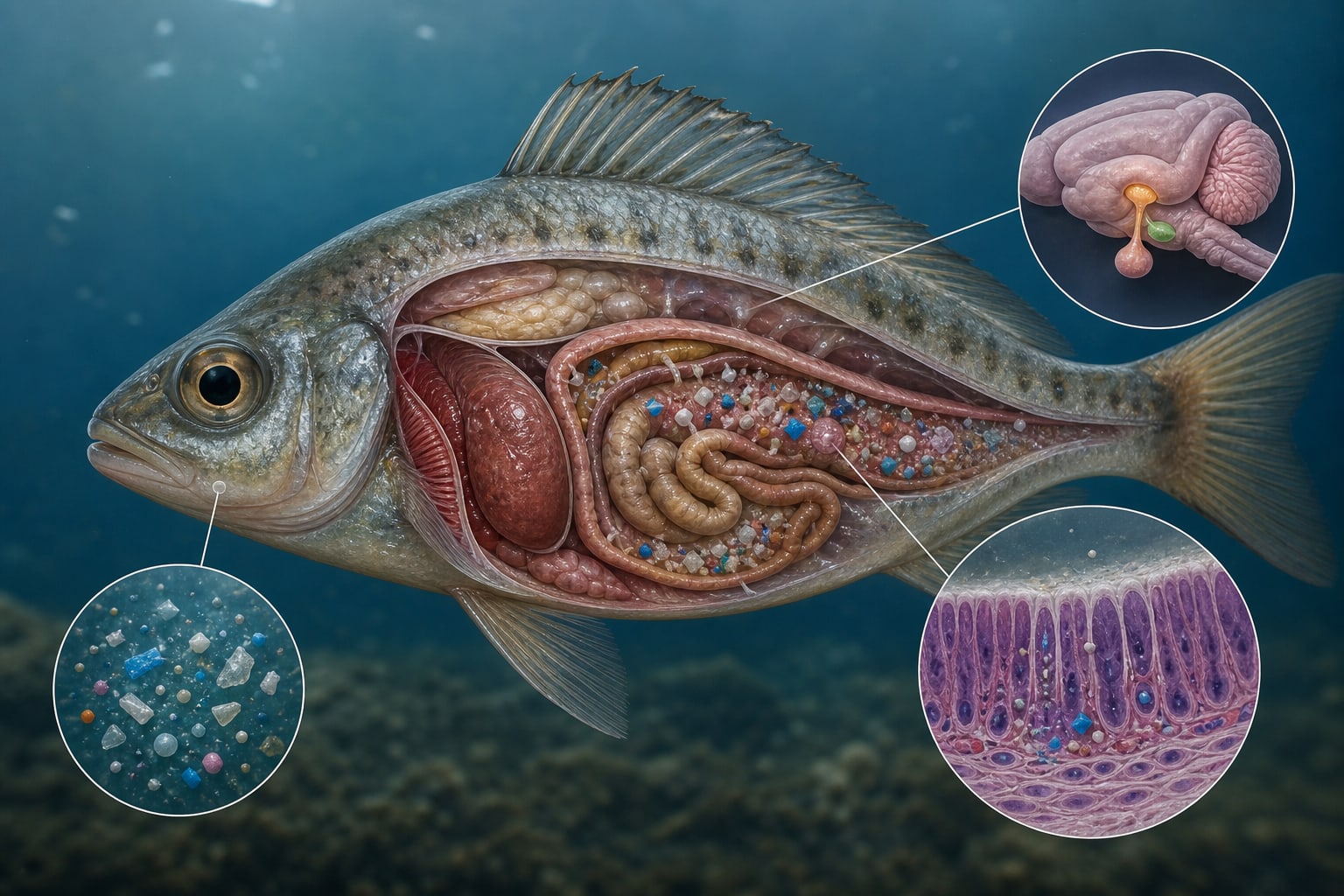
To synthesize current knowledge on the effects of plastic exposure on feeding, digestion, metabolism, and growth in aquatic ectotherms, particularly fish, while integrating evidence from amphibians and reptiles.
Approach:
Review of Literature: The article reviews existing studies on the impact of microplastics (MPs) and nanoplastics (NPs) on aquatic ectotherms, focusing on physiological processes and the influence of environmental conditions.
Key Findings:
Plastic exposure disrupts energy balance by reducing food intake through false satiety, gastrointestinal obstruction, and behavioral alterations.
Endocrine signaling pathways involved in appetite regulation and metabolism are disrupted by plastic exposure.
Oxidative stress and impaired hepatic function are common consequences of plastic contamination.
Environmental conditions such as temperature and salinity modulate the effects of plastics on aquatic organisms.
Interpretation:
The review synthesizes significant physiological disruptions caused by plastics in aquatic ectotherms, particularly in fish.
Limitations:
High heterogeneity in experimental protocols, including differences in plastic characteristics, exposure concentrations and durations, species, and life stages, limits direct comparison across studies.
Evidence in reptiles remains limited and largely observational.
Conclusion:
Further research is needed on the mechanisms and effects of plastic exposure in aquatic ecosystems.
Published evidence linked liraglutide and semaglutide to improvements in psoriasis severity, inflammatory markers, and metabolic outcomes, while evidence in psoriatic arthritis remained sparse.