Conexiant’s news site is now MDSpire News. Learn more
Advertisement
DME AWARE Study Defines Key Needs
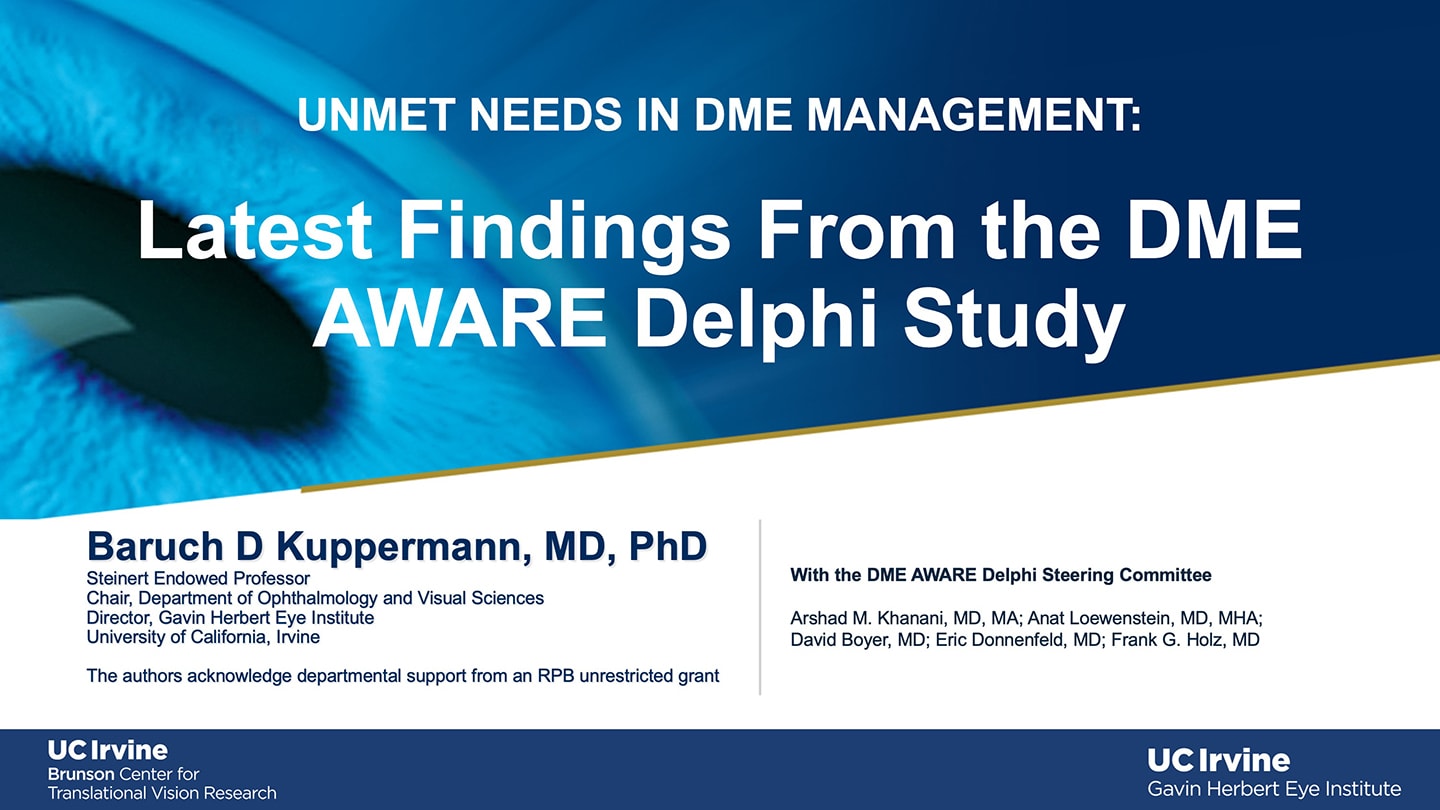
Presenting results from the DME AWARE Delphi Study at the Association for Research in Vision and Ophthalmology (ARVO) meeting in Denver, Baruch D. Kuppermann, MD, PhD, director of the Gavin Herbert Eye Institute at the University of California, Irvine, described a set of consensus findings that point to unmet needs across the continuum of DME management, with particular emphasis on early intervention and noninvasive treatment options (Figure 1).
To identify unmet needs in the management of diabetic macular edema (DME) through expert consensus, emphasizing the role of expert insights in shaping understanding.
Key Findings:
Approximately 60% of patients remain untreated one year after DME diagnosis, highlighting a critical gap in care.
There is a lack of early treatment options for mild or early-stage DME, which may lead to worsening outcomes.
Panelists favored noninvasive treatments over intravitreal therapy, especially at early visual acuity loss thresholds, indicating a preference for less invasive approaches.
Consensus was reached on definitions for treatment response and the importance of intraretinal fluid in monitoring DME, which could guide future treatment strategies.
Interpretation:
The findings indicate significant gaps in DME management, particularly in early intervention and the availability of noninvasive treatment options, highlighting a mismatch between available therapies and clinical decision-making.
Limitations:
Existing therapies, including anti-VEGF agents, have inadequate response rates in a substantial proportion of patients, which may affect treatment outcomes.
The study may not encompass all perspectives on DME management due to its expert panel design, potentially limiting the applicability of the findings.
Conclusion:
The DME AWARE Study underscores the need for improved early intervention strategies and noninvasive treatment options in DME management.