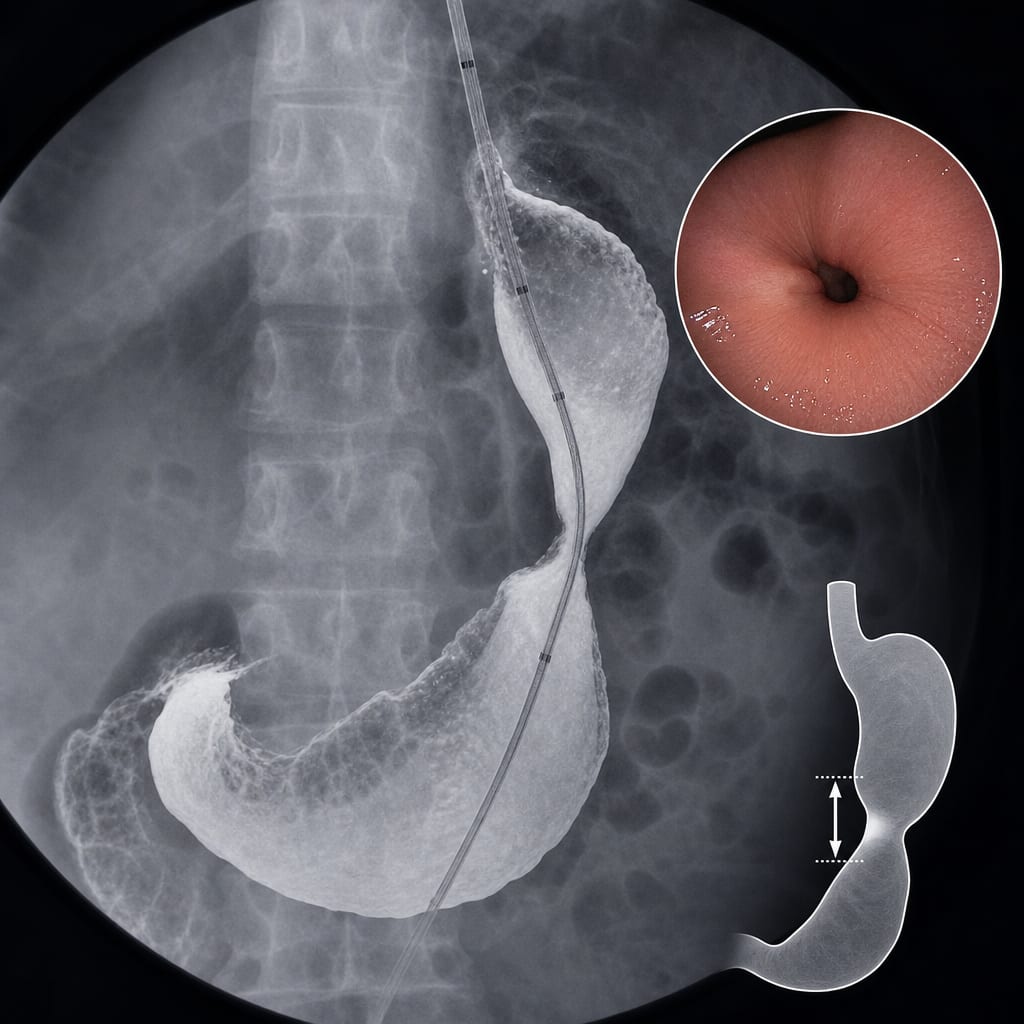
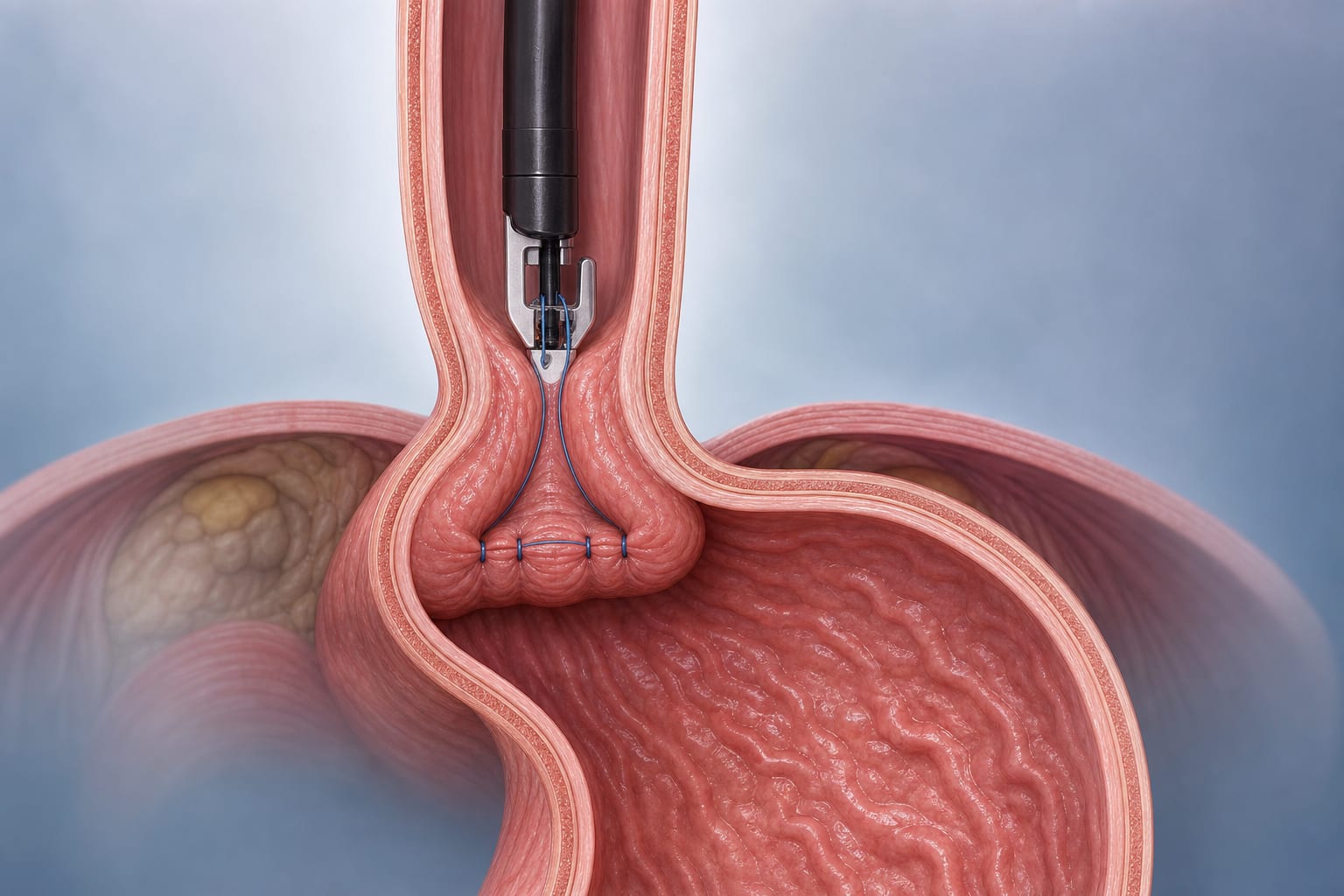
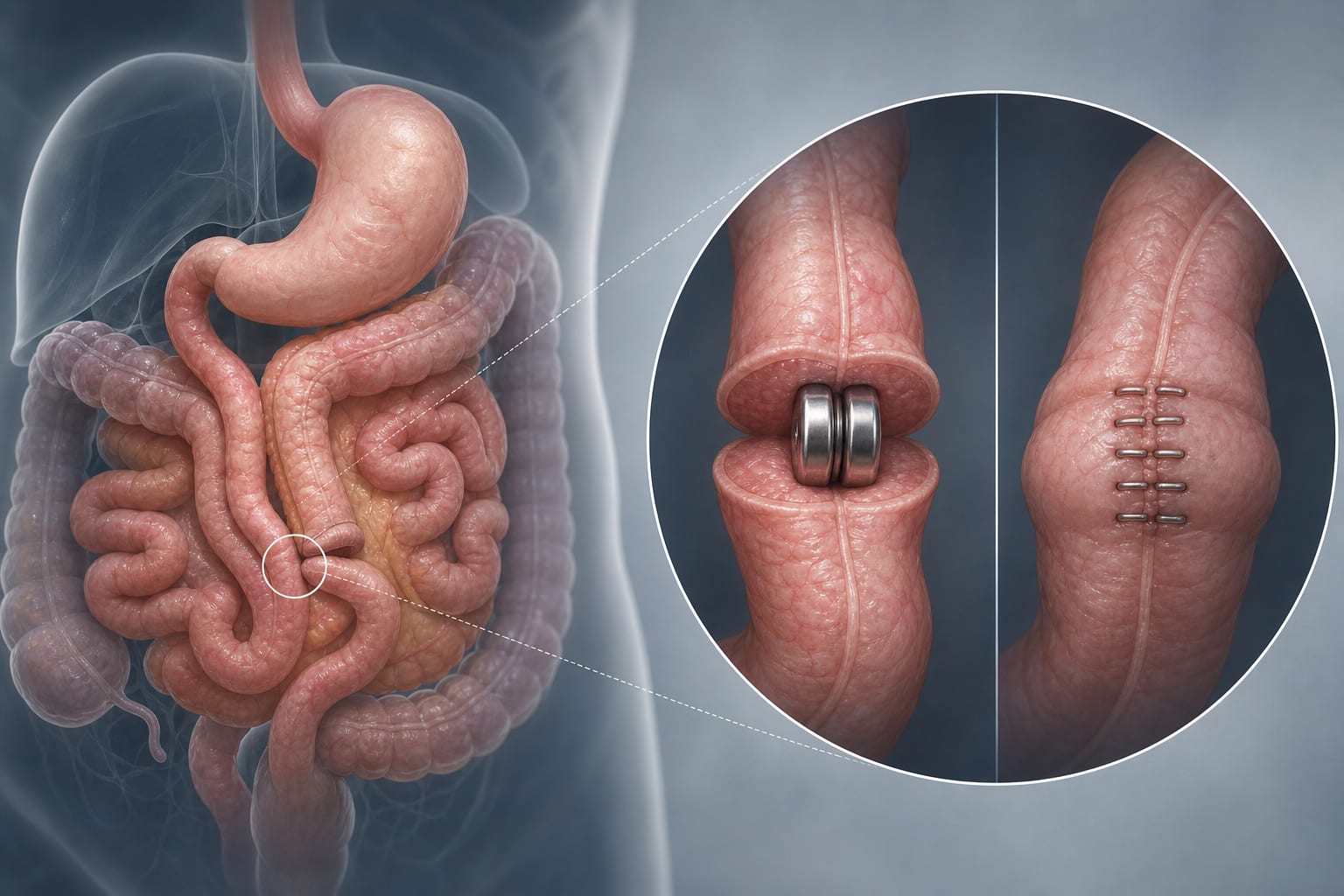
To develop a widely available technique using routine fluoroscopy during upper endoscopy to objectively provide parameters for diagnosing and quantifying gastric sleeve stenosis (GSS), thereby enhancing clinical decision-making.
Key Findings:
Gastric sleeve stenosis occurs in 1-4% of patients post-sleeve gastrectomy, highlighting the need for effective diagnostic tools.
Diagnosis of GSS can be challenging due to non-specific symptoms and lack of objective data, which can delay treatment.
Routine fluoroscopy during endoscopy can provide objective metrics for diagnosing GSS, potentially improving patient outcomes.
Interpretation:
The study suggests that fluoroscopic metrics can enhance the diagnosis and quantification of gastric sleeve stenosis, potentially leading to timely treatment and better patient outcomes.
Limitations:
additional
Conclusion:
Routine fluoroscopy during upper endoscopy may serve as a valuable tool for diagnosing and quantifying gastric sleeve stenosis, improving patient management and outcomes.