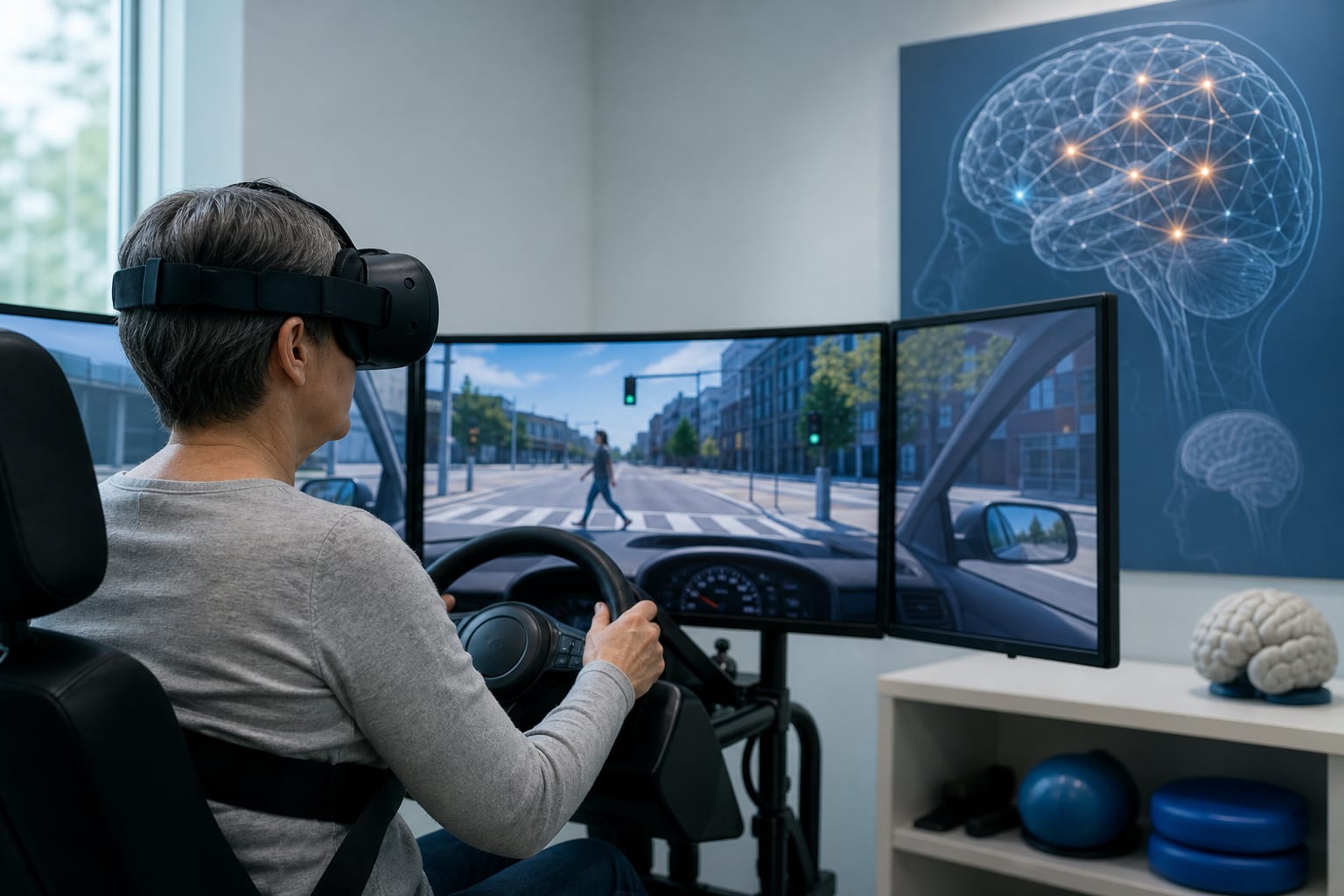
To explore the effectiveness of virtual reality (VR) in aiding stroke and brain injury survivors in regaining the complex cognitive, visual, and motor skills necessary for driving and independence.
Approach:
VR Driving Simulators: VR driving simulators assist patients in rebuilding cognitive, visual, and motor skills necessary for driving.
Neuroplasticity: VR rehabilitation promotes neuroplasticity through repeated, tailored practice.
Patient Experiences: Case studies, such as Amanda Shannon, illustrate the personal impact of VR rehabilitation on regaining independence.
Key Findings:
VR rehabilitation can effectively facilitate relearning complex tasks like driving after a stroke.
Neuroplasticity is enhanced through immersive VR experiences, allowing the brain to form new pathways.
Access to VR rehabilitation is limited by high costs, availability, insurance coverage, and patient eligibility.
Interpretation:
Access to VR rehabilitation remains a significant challenge.
Limitations:
High cost and limited availability restrict access to VR rehabilitation.
Not all stroke survivors are suitable candidates for VR training due to varying levels of strength, range of motion, and coordination.
Conclusion:
VR rehabilitation shows potential for improving post-stroke recovery in driving skills, but significant barriers to widespread implementation exist.