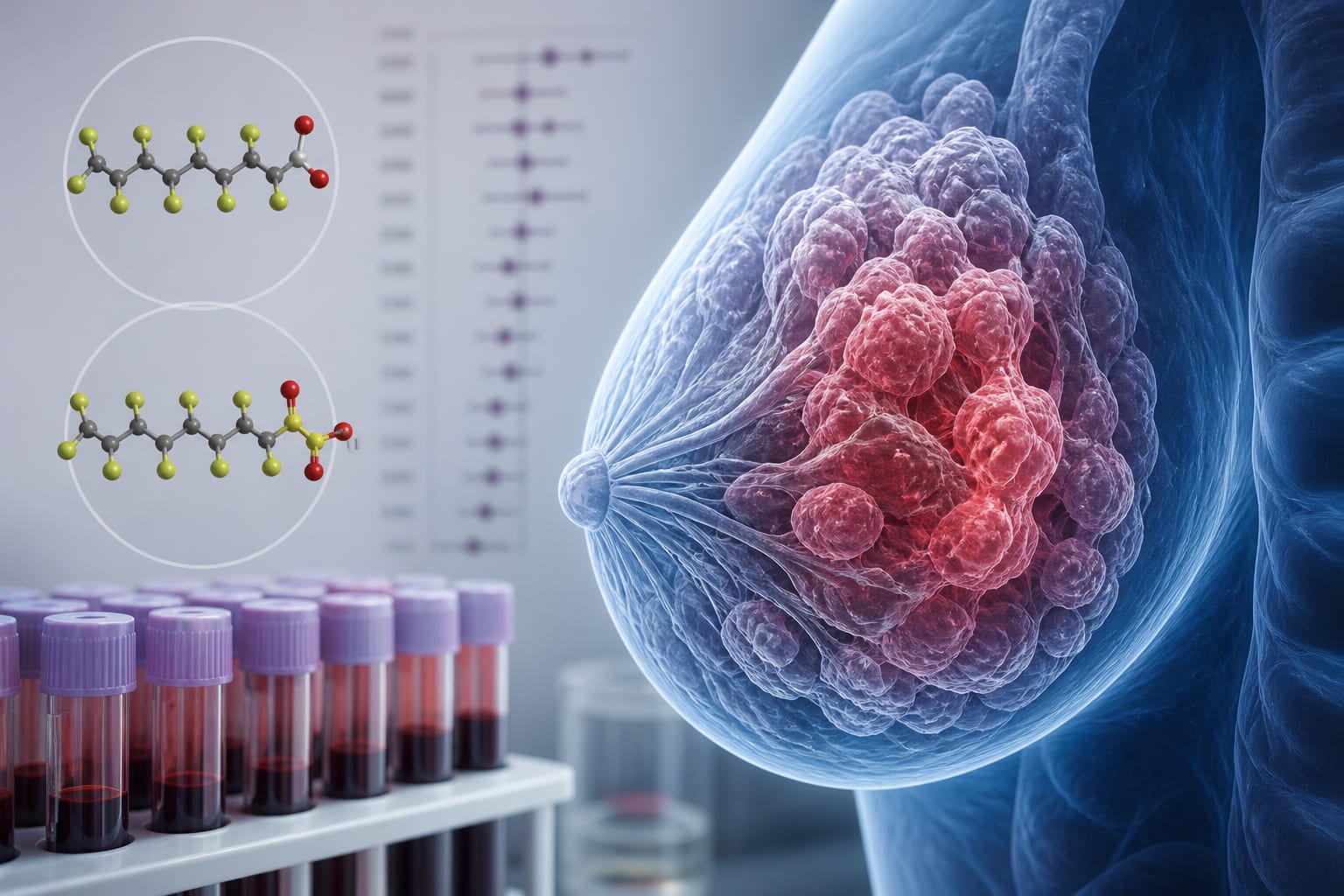
To examine whether blood concentrations of PFAS are associated with breast cancer incidence, including ER-negative breast cancer.
Approach:
Study population: Researchers analyzed 1,609 Sister Study participants who developed breast cancer and 2,269 comparison participants. The larger study enrolled U.S. and Puerto Rico women aged 35–74 who had a sister with breast cancer.
Exposure assessment: Researchers measured 17 PFAS in blood samples collected years before cancer diagnoses and compared breast cancer incidence across concentration groups.
Additional evidence: The reported associations were also examined through a meta-analysis of previous research.
Key Findings:
Higher blood concentrations of PFOA and PFOS were associated with increased incidence of ER-negative breast cancer.
Compared with women in the lowest concentration groups, those with the highest PFOA concentrations had a 67% higher rate of ER-negative breast cancer; the corresponding rate for PFOS was 93% higher.
Neither chemical showed a clear association with overall breast cancer risk.
The reported percentages are relative differences between groups, not individual probabilities of developing breast cancer.
Interpretation:
The authors proposed that PFAS might affect risk through non-hormonal mechanisms, such as changes in gene activity or immune function; these mechanisms were not examined in the study.
Limitations:
The study found associations and does not establish that PFOA or PFOS caused breast cancer.
The proposed biological mechanisms were not tested.
The analysis focused on women with a family history of breast cancer, and the article calls for further research in populations with greater PFAS exposure and those disproportionately affected by ER-negative breast cancer.
The study did not assess breast cancer risk associated with newer PFAS replacement chemicals.
Conclusion:
The authors state that further research is needed, particularly on newer PFAS replacements and populations with greater exposure.