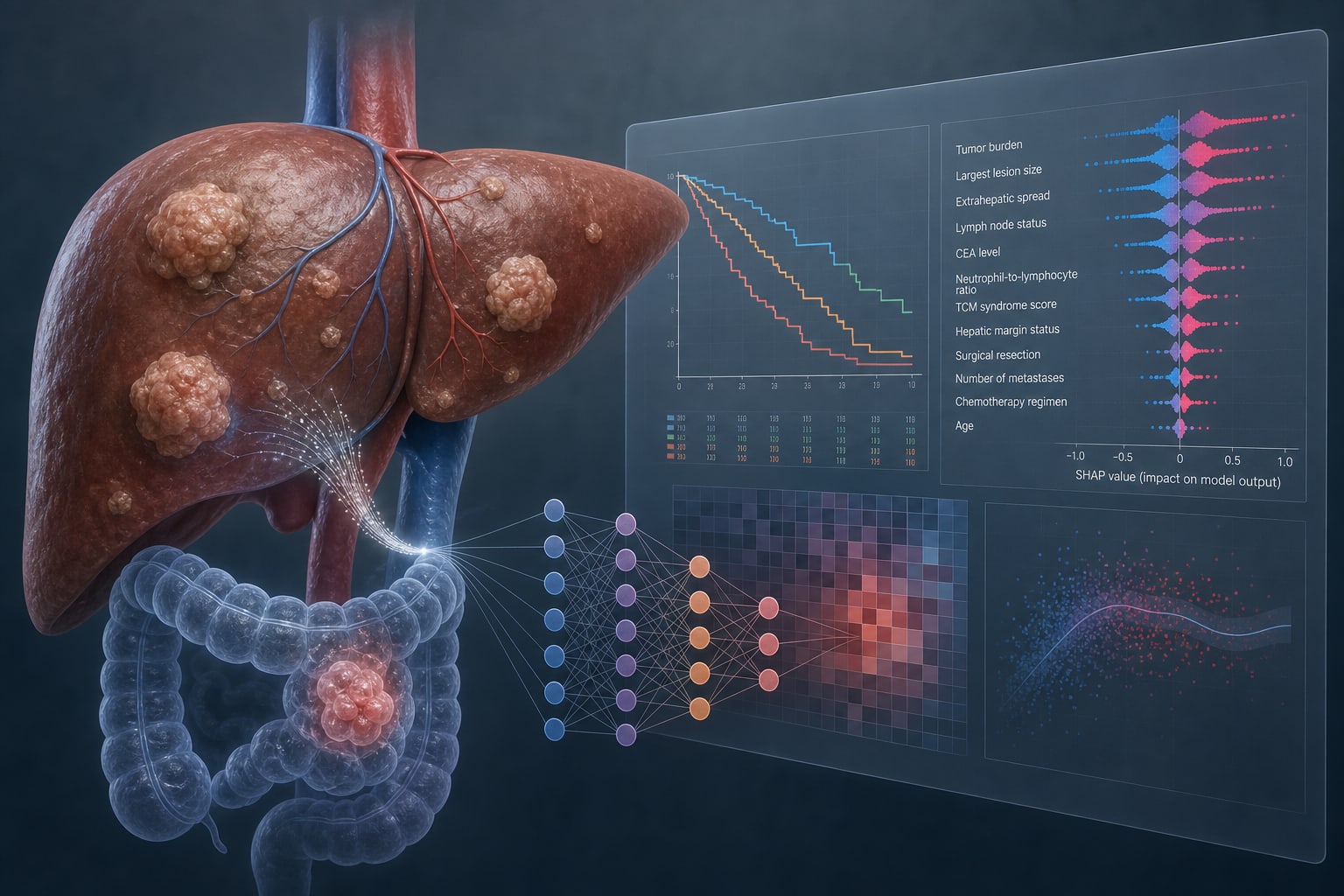
To develop, validate, and deploy an interpretable machine learning model to predict long-term survival in patients with colorectal cancer liver metastasis (CRLM), specifically examining the impact of Traditional Chinese Medicine (TCM) intervention on survival outcomes.
Approach:
Key Findings:
The XGBoost algorithm showed superior predictive performance with an AUC of 0.891 for 36-month survival in the training cohort and 0.833 in the testing cohort.
Key prognostic factors included TNM stage, liver metastasis burden, and TCM intervention intensity, with TCM showing a protective association in a dose-dependent manner.
The web-based tool allows clinicians to input patient parameters for dynamic risk estimates.
Interpretation:
The study successfully developed and validated a machine learning-based prognostic model for CRLM, integrating TCM intervention into predictive modeling.
Limitations:
The study is retrospective and may be subject to selection bias, potentially affecting the reliability of the findings.
Generalizability may be limited to similar patient populations.
Conclusion:
An interpretable ML-based prognostic model for CRLM was developed and validated, offering a practical tool for personalized prognostic assessment.