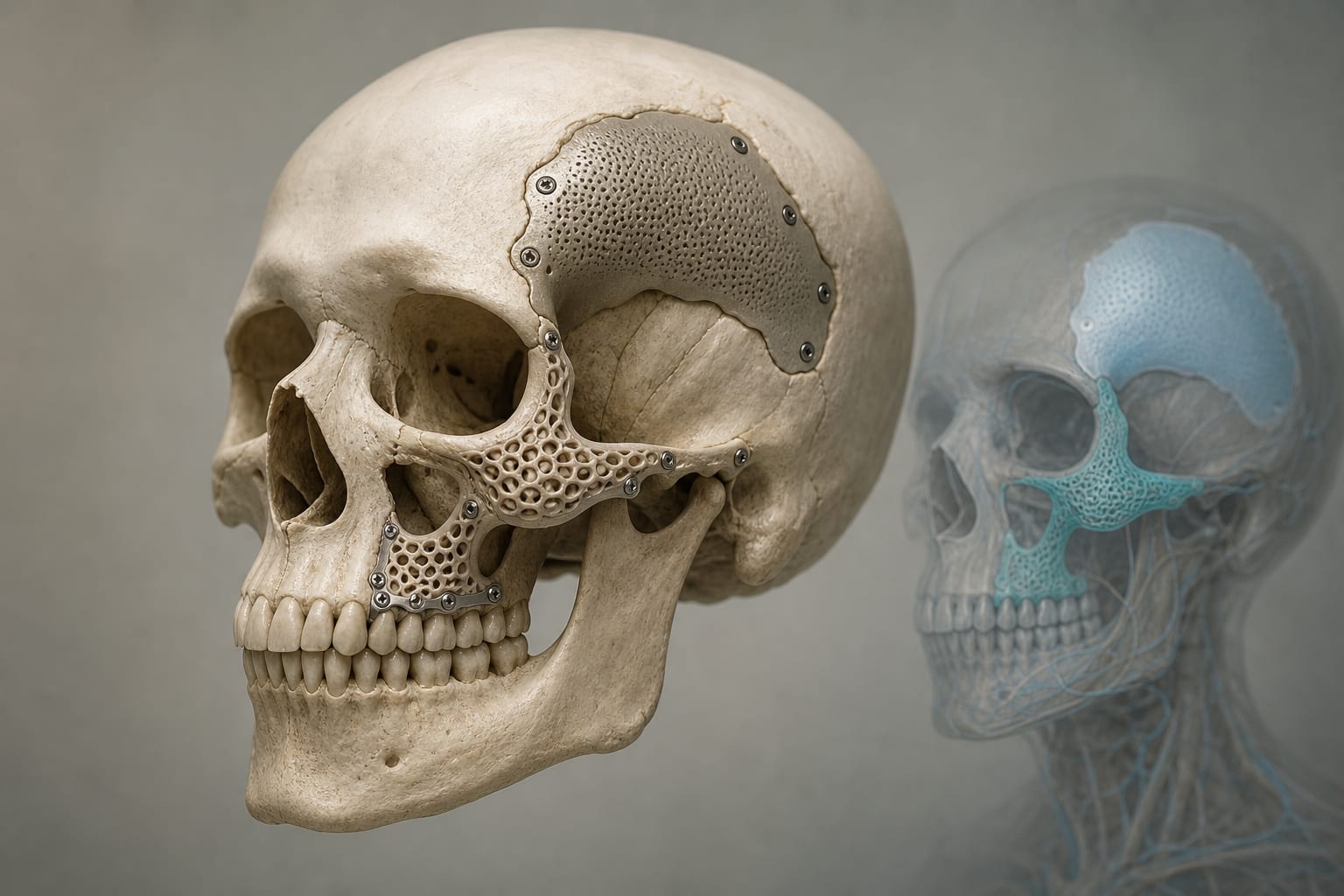
To highlight the advancements and multidisciplinary approaches in craniomaxillofacial reconstructive and regenerative surgery, focusing on specific innovations and their implications for practice.
Key Findings:
Anatomical precision is crucial for surgical planning and reducing complications, impacting overall patient safety.
Multidisciplinary approaches are essential for effective trauma management, leading to better patient outcomes.
Flap salvage strategies are important for minimizing donor site morbidity, enhancing recovery.
Aesthetic interventions must be guided by anatomical knowledge to ensure safety and efficacy in procedures.
The choice of implant materials significantly impacts surgical success, highlighting the need for ongoing research.
Interpretation:
The articles collectively illustrate the evolution and complexity of craniomaxillofacial surgery, emphasizing the integration of anatomy, technology, and multidisciplinary collaboration to enhance patient care.
Limitations:
The editorial does not provide specific quantitative data or outcomes from the studies discussed, limiting the assessment of effectiveness.
Further research is needed to validate the proposed algorithms and strategies, particularly in diverse clinical settings.
Conclusion:
The future of craniomaxillofacial surgery relies on the integration of precision, biology, and clinical judgment to enhance patient outcomes, underscoring the importance of continued innovation and collaboration.
“High-dose intravenous vitamin C administered early after injury did not reduce organ dysfunction or [mortality] and should not be a treatment in severe burns.”