To evaluate multiple supervised and semi-supervised machine learning architectures for classifying age groups and sex from ECG features in pediatric and young adult individuals, highlighting the importance of accurate ECG interpretation in this demographic.
Key Findings:
AI-enhanced ECG analysis can accurately classify age and sex in pediatric populations, achieving [specific accuracy metrics].
The study established a foundation for developing age- and sex-specific ECG standards.
AI models demonstrated potential in identifying subtle electrophysiological signatures correlated with demographic factors.
Interpretation:
The findings suggest that AI-driven ECG analysis can improve the accuracy of pediatric ECG interpretation by leveraging complex data patterns, which is crucial for detecting rare heart conditions compared to traditional methods.
Limitations:
The study primarily focused on a single cohort and may not generalize to other populations, limiting the applicability of the findings.
Less common heart conditions were not modeled by AI in children, which may affect the comprehensiveness of the analysis.
Conclusion:
Developing AI-enhanced ECG analysis for pediatric populations is essential for establishing normative standards and improving diagnostic accuracy, potentially transforming clinical practice.
by Honggen Zhang, Mohammad Zaeri-Amirani, Mojtaba Abolfazli, Narayana P. Santhanam, June Zhang, Anders Høst-Madsen, Chieko Kimata, James C. Perry, Andras Bratincsak
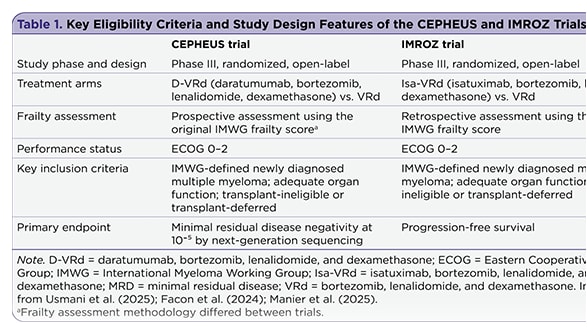
The management of newly diagnosed transplant-ineligible multiple myeloma remains challenging, in part due to the complexity of treatment decisions for frail patients. Recent subgroup analyses provide insight into whether quadruplet therapy may offer advantages over triplet therapy in this population.