To examine sleep-start experiences and their associations with sleep, psychological, and demographic characteristics in adults.
Approach:
Design and participants: Cross-sectional online survey of 194 adults recruited in Austria and Germany between June 2020 and January 2021; 96 met the study’s post hoc criteria for weekly sleep starts.
Measures and analysis: Standardized questionnaires assessed sleep quality, insomnia, daytime sleepiness, sleep-related beliefs, anxiety, and depression. Researchers also asked about sleep-start experiences, triggers, and consequences, and used group comparisons, correlations, and ad…
Key Findings:
Participants reporting weekly sleep starts had poorer sleep quality and greater insomnia severity than the comparison group; mean scores were 7.21 versus 5.19 on the Pittsburgh Sleep Quality Index and 10.67 versus 5.55 on the Insomnia Severity Index.
Weekly sleep starts were also associated with stronger dysfunctional sleep-related beliefs and higher anxiety symptoms. In adjusted analyses, poorer sleep quality, stronger dysfunctional beliefs, higher anxiety, and younger age were independently associated wi…
The final regression model explained 26.9% of variation in log-transformed episode frequency. Daytime sleepiness did not differ significantly between groups.
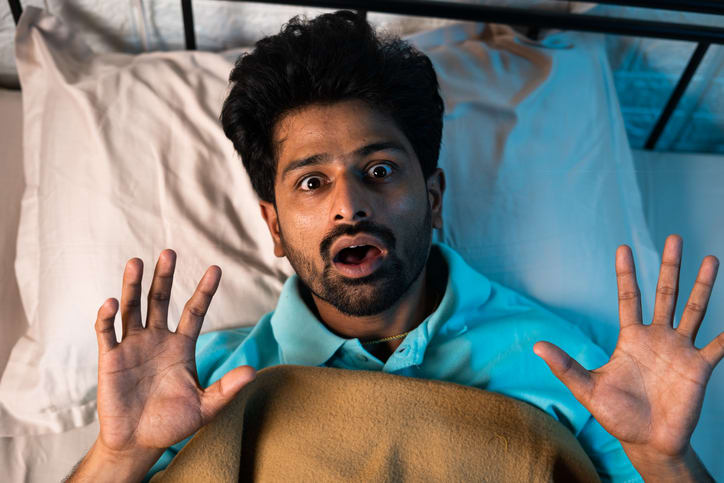
Among participants with weekly episodes, common reported experiences included muscle jerks or twitches (87.5%), dream-like experiences (74%), falling sensations (65.6%), and alarm or confusion (79.2%).
Interpretation:
The authors reported associations between more frequent sleep starts, poorer sleep quality, dysfunctional sleep-related beliefs, and anxiety symptoms. The cross-sectional findings cannot determine whether these factors contribute to sleep starts or follow from them.
Limitations:
Cross-sectional design and retrospective self-report prevent conclusions about causality or timing.
No objective sleep measurements were obtained, and study-specific questions about sleep-start experiences were not formally validated.
The survey could not reliably distinguish sleep starts from related sleep-onset phenomena, including exploding head syndrome and hypnagogic hallucinations.
The weekly-episode threshold was set post hoc, and some findings varied in sensitivity analyses.
A healthy lifestyle was associated with a smaller loss of disease-free life expectancy related to social isolation, but the same pattern did not hold for loneliness.
Researchers found higher antidepressant and antianxiety prescription use and more outpatient visits for depression and anxiety following legalization, with more robust associations among men.