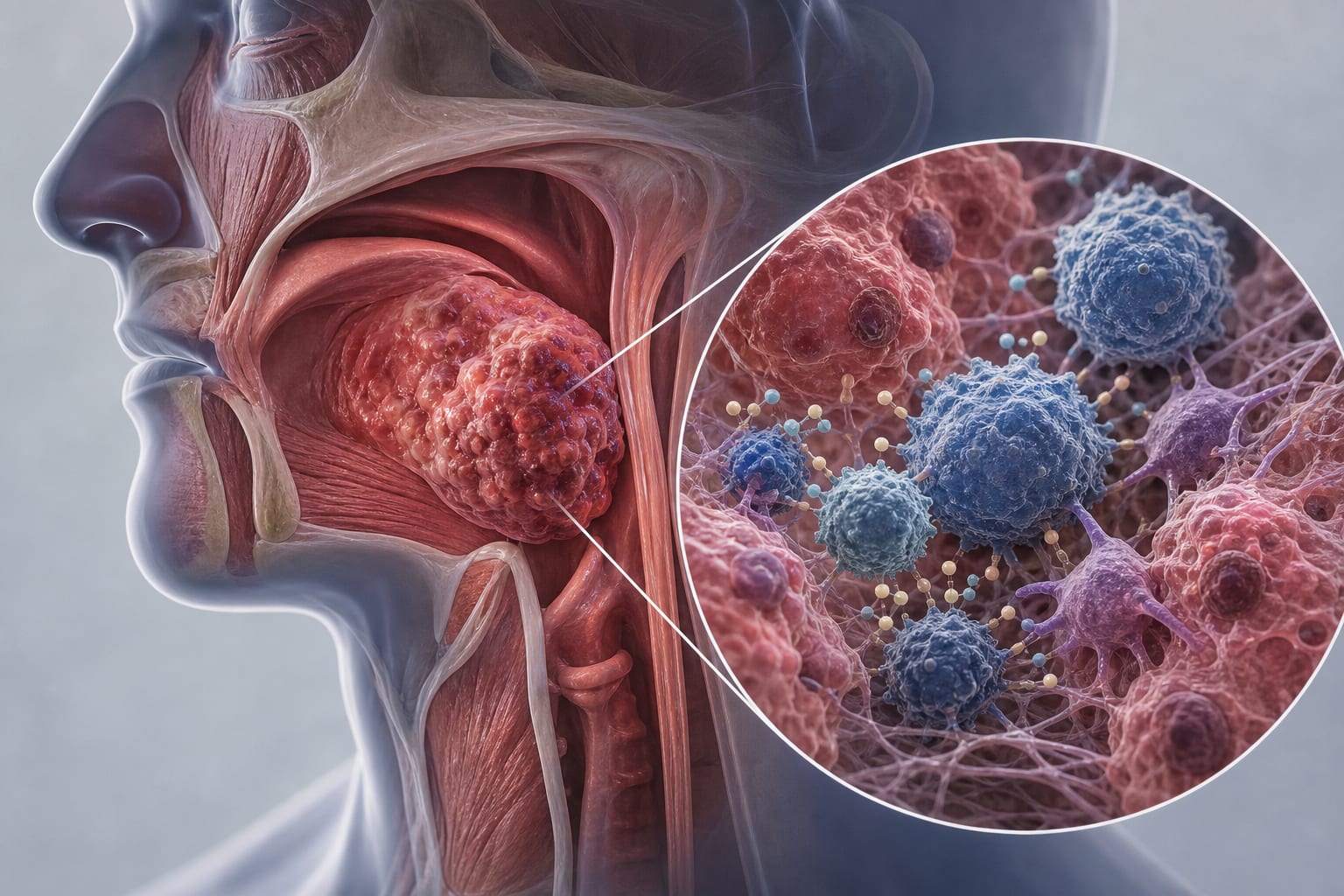
To translate core T-cell biology into practical, perioperative decision-making for the operating surgeon in the context of head and neck squamous cell carcinoma (HNSCC).
Approach:
Introduction: Discusses the traditional treatment approach for resectable HNSCC and the integration of immune checkpoint inhibitors (ICI) into surgical practice.
Biological Rationale: Explains the mechanisms of tumor immunology relevant to perioperative decision-making, including T-cell priming, antigen recognition, immune checkpoint pathways, and the significance of tumor mutational burden (TMB).
Key Findings:
Over 50% of HNSCC patients experience recurrence within 3 years despite surgical interventions.
Objective response rates for ICIs in recurrent or metastatic HNSCC are modest, ranging from 14% to 22%.
High tumor mutational burden (TMB) correlates with improved response to ICIs and serves as a predictive biomarker.
Interpretation:
A functional understanding of tumor immunology is essential for surgical decision-making.
Limitations:
Substantial tumor heterogeneity limits the utility of TMB as a standalone biomarker.
Current studies primarily focus on retrospective analyses, necessitating further prospective validation.
Conclusion:
Integrating immunotherapy into surgical practice for HNSCC necessitates a comprehensive understanding of tumor biology.