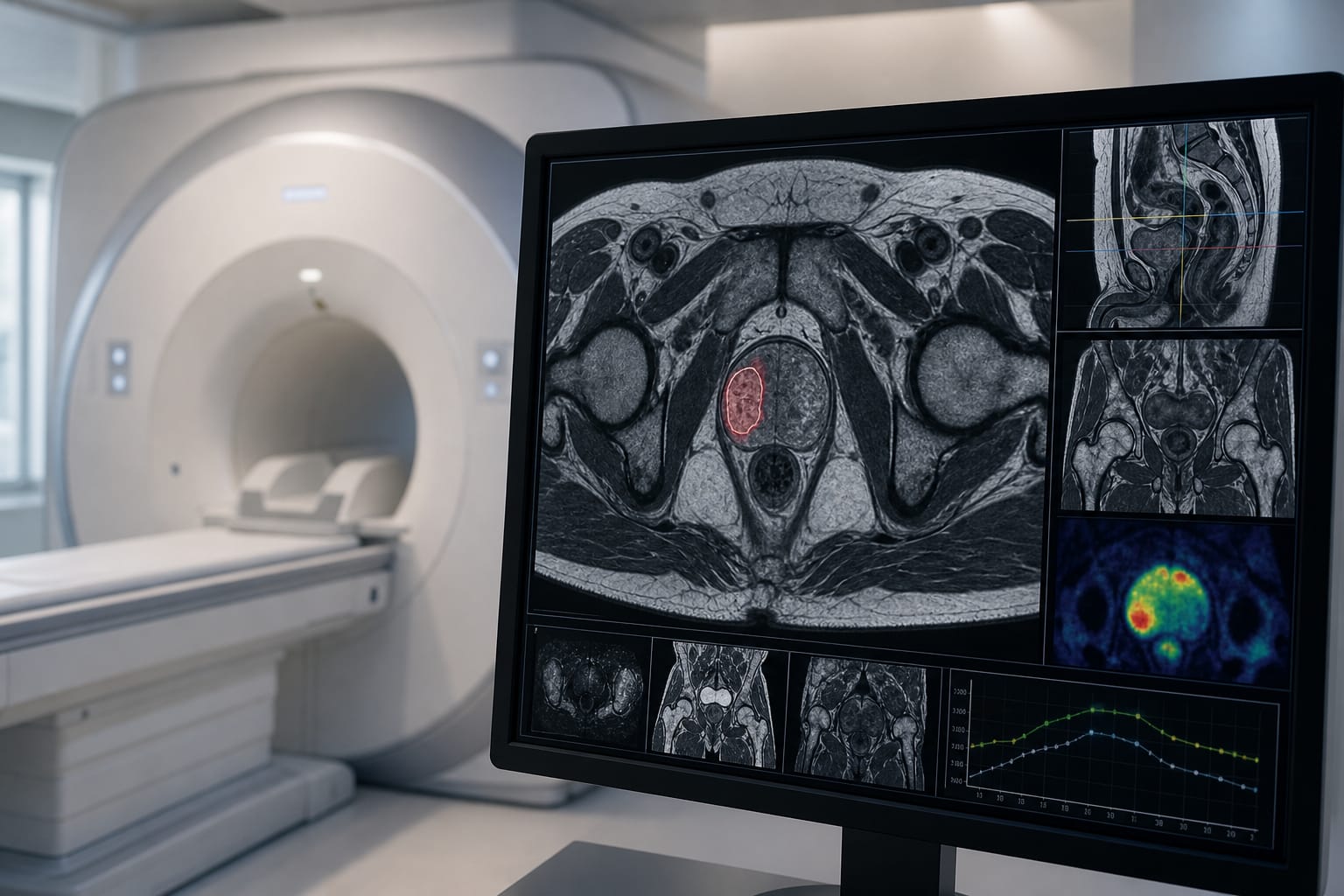
To assess the effectiveness of MRI-based T staging compared to traditional DRE-based clinical staging in prostate cancer prognosis.
Approach:
Study Design: Multicenter cohort study involving 4425 patients treated with radical prostatectomy across 31 European institutions from 2015 to 2021.
Comparison: MRI-based T staging (iT) was compared with DRE-based clinical staging (cT) to evaluate its integration into risk classification systems.
Key Findings:
MRI-based staging showed comparable discrimination to DRE-based staging for biochemical recurrence-free survival, distant metastasis-free survival, and overall survival.
MRI frequently resulted in upstaging, with many patients classified as stage iT3 or higher.
Despite improved anatomical delineation, MRI did not outperform traditional systems in clinical outcomes for localized prostate cancer.
Interpretation:
The study suggests that while MRI enhances anatomical visualization, it does not significantly improve prognostic discrimination, indicating that tumor biology may be more influential than local anatomical extent.
Limitations:
The analysis is retrospective and observational, introducing potential biases.
The cohort is limited to patients undergoing radical prostatectomy, affecting generalizability.
MRI interpretation variability and lack of standardized reporting may impact results.
Longer-term follow-up is needed to assess late outcomes.
No cost-effectiveness comparisons were made between MRI and DRE.
Modest discrimination across models highlights limitations in current risk stratification approaches.
Conclusion:
MRI-derived staging can be integrated into existing risk classification systems without compromising prognostic performance.